


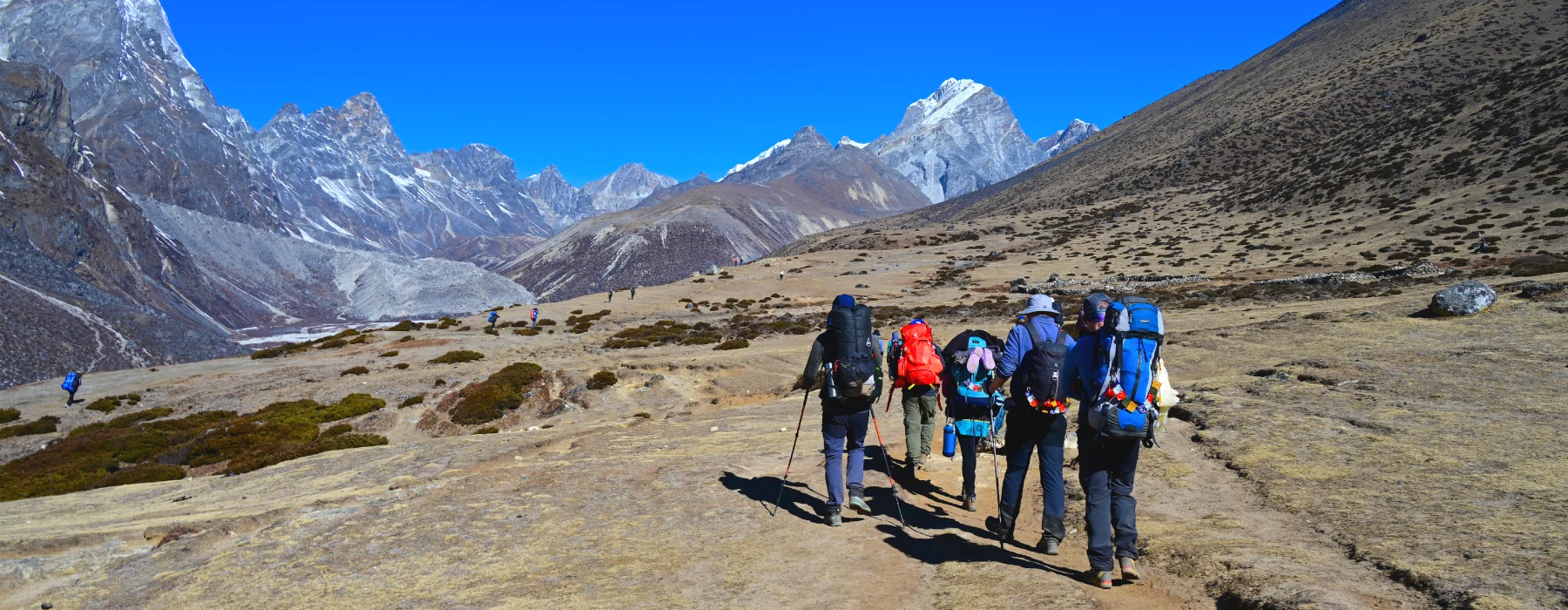

Everest Base Camp Trek Difficulty is generally considered moderate to challenging. Although the trek requires no technical climbing, it demands good physical endurance, proper acclimatization, and careful preparation. The journey is approximately 130 km (80 miles) round trip, and is a 12-14 day hike on generally rough terrain, 5-8 hours a day. Slow pace and preparation is more important than fitness.
The real difficulty of the EBC trek doesn’t come from technical rock climbing, but from overlapping physical and environmental factors like high altitude, terrain, cumulative fatigue, accommodation, and weather
The top concern before most of us take a trek to EBC is just one: Am I fit enough? Fortunately, this is the good news. Each year, thousands of people arrive at Base Camp with no experience in climbing. The actual challenge is not steep trails or technical skills. Its altitude, pacing and acclimatization.
This guide explains Everest Base Camp Trek Difficulty in details, who finds the trek challenging, and how you can prepare to reach Everest Base Camp at 5,364 meters safely.
Ready to conquer the trail? Let Explore Vision Nepal’s expert guides turn this challenging trek into a safe, unforgettable adventure. Book your EBC Trek with Explore Vision Nepal today!
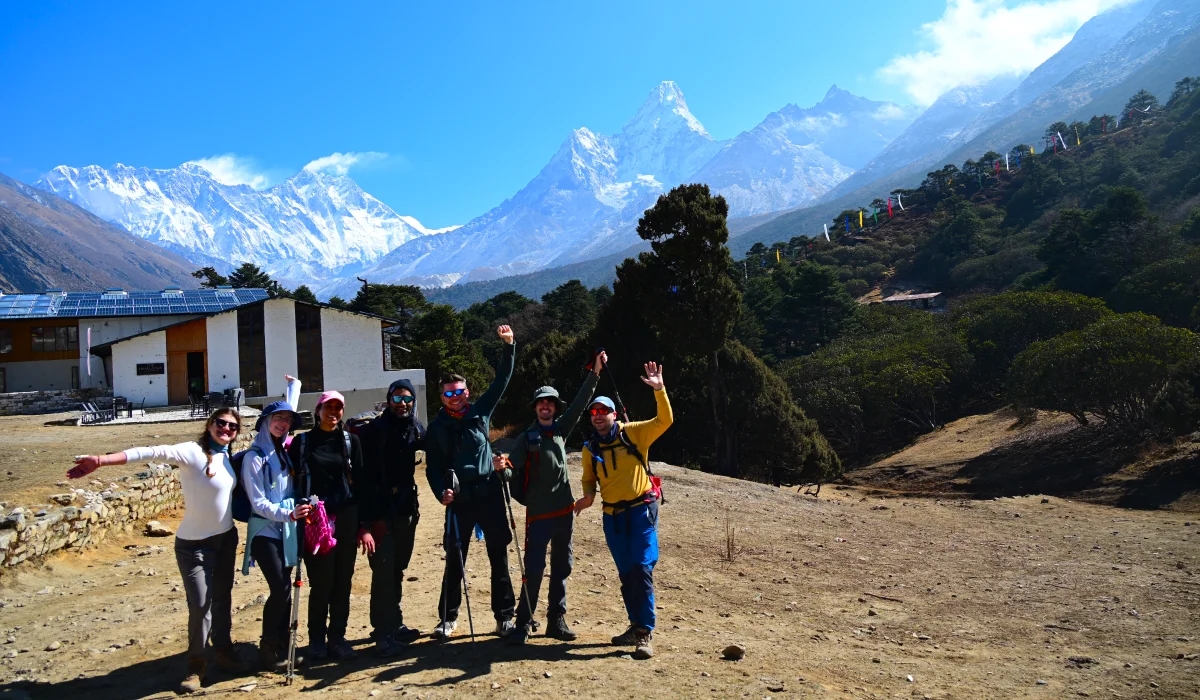
Everest Base Camp Trek Difficulty: At a Glance
Many travelers ask how difficult is the Everest Base Camp Trek before planning their adventure. Actually, the difficulty on this route is not one quality. The trek is straightforward in some respects and genuinely demanding in others, and the parts that trouble trekkers are seldom the parts they expect.
| Factor | Level | What it means on the trail |
| Overall difficulty | Strenuous | A serious multi-day altitude trek. Harder than a normal hike, far short of a climb. |
| Technical skill | None | No ropes, harnesses, or climbing. Trail walking from start to finish. |
| Altitude | High | Base Camp is 5,364 m, Kala Patthar is about 5,545 m. Thin air affects everyone. |
| Daily effort | Moderate to strenuous | Most days run 5 to 7 hours over uneven ground with real ascent and descent. |
| Terrain | Moderate | Forest paths lower down, rocky moraine and exposed ridges higher up. |
| Weather and cold | Moderate to high | Warm afternoons, sub-freezing nights above 4,000 m, and rapid changes. |
| Teahouse comfort | Basic | Simple lodges, cold rooms and limited services above Dingboche. |
| Mental load | Moderate to high | Early starts, slow pace, thin air, and two weeks of sustained effort. |
| Beginner suitability | Possible with preparation | Achievable on a slow itinerary with training, a porter, and a licensed guide. |
The Explore Vision Nepal Difficulty Rating
Any number is a guide and not a verdict, as the difficulty is subjective. We, the Explore Vision Nepal, have many years of experience in this field with all ages and types of trekkers, and believe that it is helpful to mark where the challenge really lies. Our field experience is reflected in these ratings.
| Factor | Rating | What it means |
| Overall, for a prepared trekker | 6.5 / 10 | Higher in winter or on a rushed schedule, lower for trekkers with prior altitude experience. |
| Altitude | 9 / 10 | Everything above 4,000 m becomes harder, and fitness does not protect against it. |
| Endurance and daily effort | 7 / 10 | Five to seven hours a day, repeated for two weeks, is the fatigue most people underestimate. |
| Terrain underfoot | 5 / 10 | Non-technical, but loose moraine and glacier rock higher up demand careful footing. |
| Cold and comfort | 6 / 10 | Unheated rooms and freezing nights slow recovery more than the walking does. |
| Mental load | 6 / 10 | Early mornings, basic conditions, and a long descent after the goal is reached. |
The pattern is telling. Terrain and technical demand, the factors most first-time trekkers associate with Everest, rate lowest. The greatest difficulty is the one that does not show up in photographs: the thin air.
Altitude: The Primary Challenge
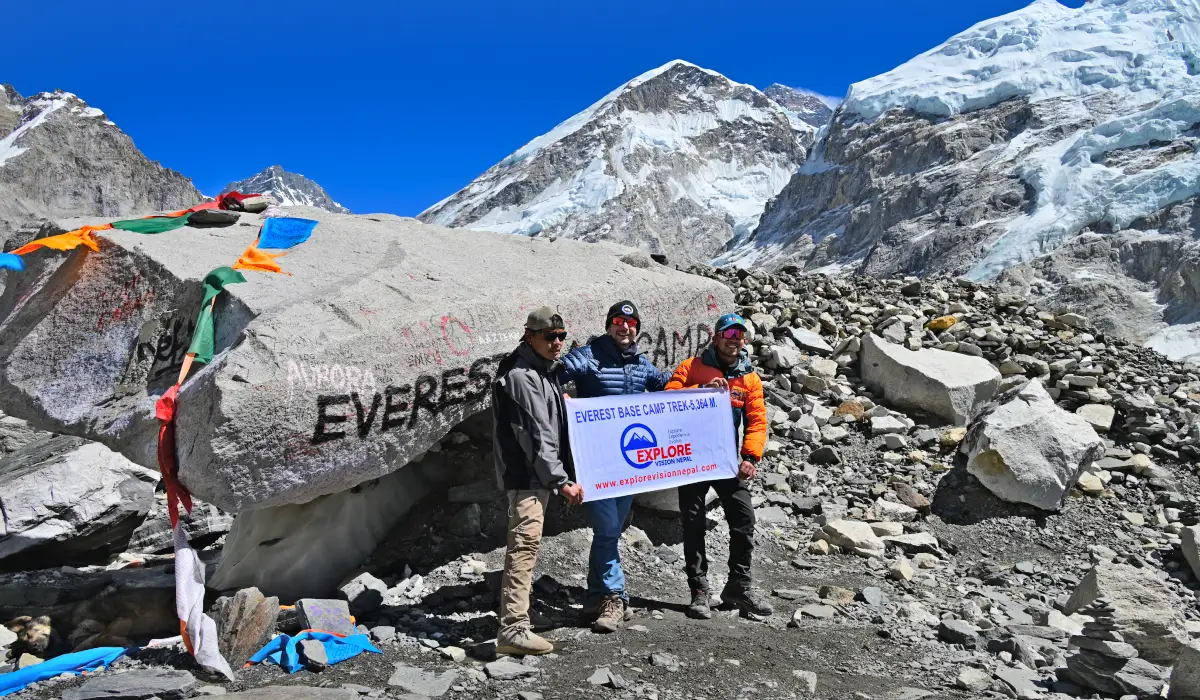
Everest Base Camp is a trek, not a climb! There are no crampons, fixed lines or climbing skill requirements on the standard route, so plan accordingly. It’s not the ground beneath your feet that’s the challenge. It is the level of oxygen at all altitudes above approximately 3000m.
The height of Base Camp is 5364m above sea level. The highest point that most trekkers reach the next morning is Kala Patthar, which stands 5,545m high. The air at this altitude contains nearly half its oxygen content at sea level. Your body has to work harder to perform basic tasks, like walking, eating, sleeping etc. While fitness will help to increase endurance, it does not necessarily mean that you will not suffer from altitude sickness, and faster hounds are often the worst hit. It is good to educate yourself about altitude sickness on the Everest Base Camp trek before you take flight to Nepal.
| Place | Elevation |
| Lukla | 2,840 m |
| Namche Bazaar | 3,440 m |
| Tengboche | 3,860 m |
| Dingboche | 4,410 m |
| Lobuche | 4,910 m |
| Gorak Shep | 5,164 m |
| Everest Base Camp | 5,364 m |
| Kala Patthar | approx. 5,545 m |
Guide note: From Dingboche onward, we closely monitor trekkers and start measuring blood oxygen using an oximeter at Dingboche. A mild headache, loss of appetite or unusual tiredness are easily managed if reported early. Risk increases if a person conceals symptoms of other individuals to keep up the pace with a faster one. On this route, honesty about how you feel is a safety tool.
How the Trek Feels at Each Altitude on EBC Trail
The same trekker performs very differently at the bottom and the top of this trail. Low down, energy is high and the pace feels easy. Higher up, even level ground takes effort. You can distinguish between normal discomfort and a real warning sign by understanding what is normal at each stage.
| Altitude | Where | How it feels | Our advice |
| 2,800 to 3,000 m | Lukla, Phakding | Breathing normal, energy good, most people feel strong. | Do not walk fast. Set an easy pace from day one. |
| 3,000 to 3,500 m | Namche Bazaar | Mild headaches and heavier breathing on the climbs. | Take the two nights and the acclimatization hike. |
| 3,500 to 4,400 m | Tengboche, Dingboche | Breathing effort rises, sleep and appetite begin to dip. | Eat and drink on schedule. The second night in Dingboche matters. |
| 4,400 to 5,000 m | Dingboche to Lobuche | Even gentle slopes feel hard; recovery is slow. | Walk slowly. Report any headache or nausea to the guide. |
| Above 5,000 m | Gorak Shep, EBC, Kala Patthar | Every step takes effort, sleep is broken. | Small steps, stay warm at rest, and start Kala Patthar early. |
Daily Walking Hours and Everest Base Camp Trek Distance
Most days involve five to seven hours of walking, with two longer days near the top. Distance alone is misleading. A 10-kilometer day above 4,500 meters can feel harder than a 15-kilometer day lower down, because thin air slows your pace and the body cannot recover overnight the way it does at sea level. The distances below are approximate and shift with your exact itinerary.
| Day or stage | Distance (approx.) | Hours | Feel |
| Lukla to Phakding | 6 to 8 km | 3 to 4 | Easy, net descent |
| Phakding to Namche Bazaar | 7 to 8 km | 5 to 6 | Strenuous, big uphill finish |
| Namche acclimatization hike | 5 to 7 km | 2 to 4 | Moderate, climb high sleep low |
| Namche to Tengboche | 9 to 10 km | 5 to 6 | Moderate, descend then re-climb |
| Tengboche to Dingboche | 11 to 12 km | 5 to 6 | Moderate, first full day above 4,000 m |
| Dingboche acclimatization hike | 4 to 5 km | 3 to 4 | Moderate but at real altitude |
| Dingboche to Lobuche | 8 to 9 km | 5 to 6 | Strenuous, open, windy moraine |
| Lobuche to Gorak Shep, then EBC | 10 to 13 km | 7 to 8 | Strenuous, the push to Base Camp |
| Kala Patthar, then descent to Pheriche | 13 to 16 km | 7 to 8 | Very strenuous, pre-dawn climb |
| Pheriche to Namche Bazaar | 14 to 15 km | 6 to 7 | Long descent, hard on the knees |
| Namche to Lukla | 13 to 14 km | 5 to 6 | Long final day, still needs care |
Here is something we see season after season that most guides do not mention. In our experience, the second day from Phakding to Namche produces more early turnarounds than the final walk to Base Camp itself. The reason is almost always pace. Trekkers feel fresh and strong on that long climb into Namche, walk far too fast before their bodies have started adjusting, and pay for it over the next two days. The trail rewards patience, and it punishes speed early.
Terrain Along the EBC Route
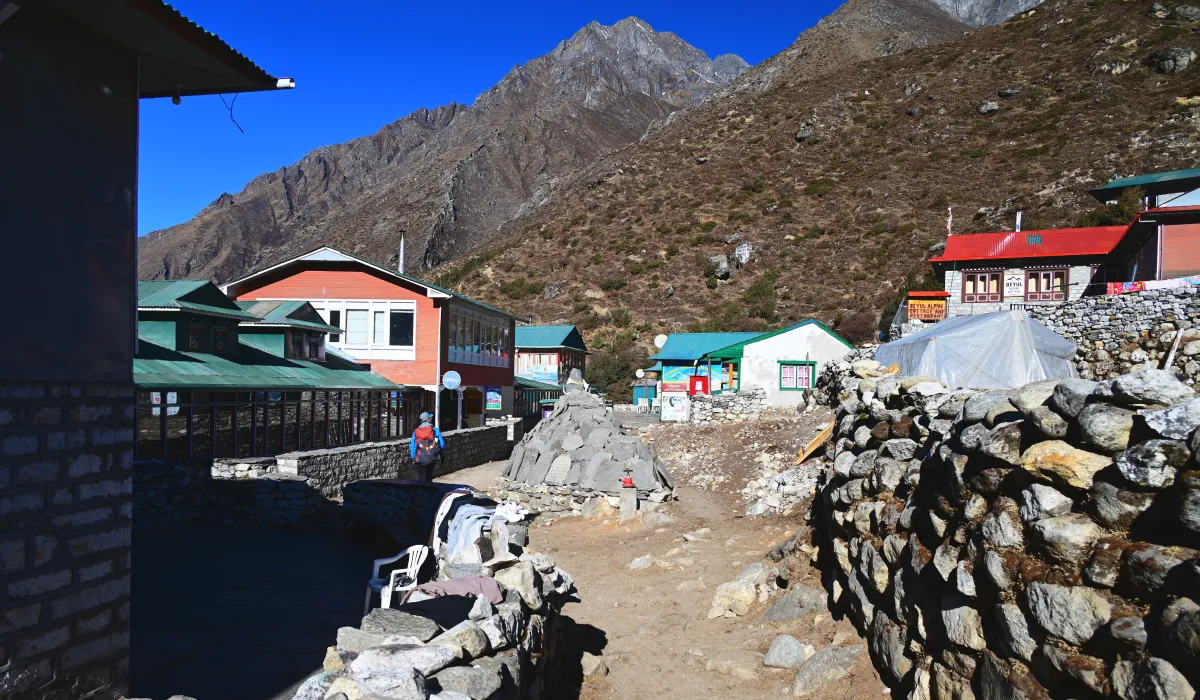
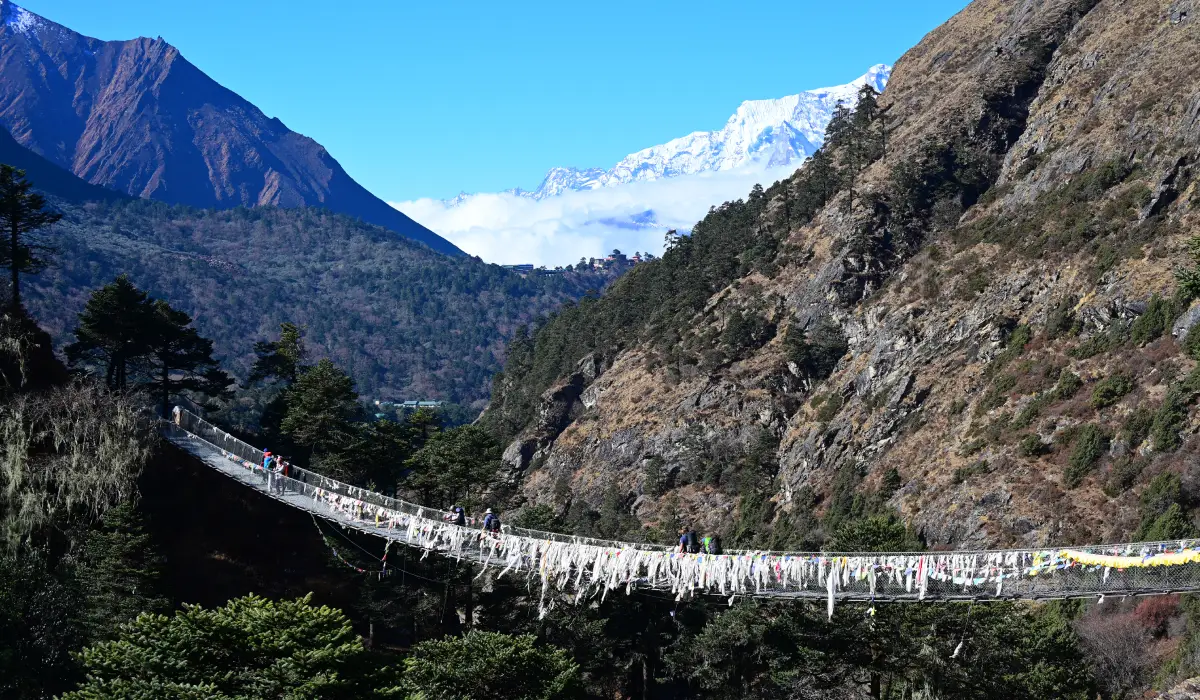
As the path ascends, the nature of the land changes, and it gets harder just when your energy is at its lowest. The trail going down from Lukla to Namche is broad and well-marked through rhododendron and pine forests, where it crosses high suspension bridges over deep gorges and shares the way with mules loaded with goods.
Above Namche, the path is a succession of exposed ridges with frequent ups and downs. Vegetation disappears progressively and near Lobuche and Gorak Shep the ground is dry, covered with rocky moraine. The last stretch from Gorak Shep to Base Camp is done along the side of the Kala Patthar and Khumbu Glacier on loose rocks. There is no need for climbing skills in any of it. You will need good balance and a lot of patience for all of it though.
What Is the Hardest Day of the Everest Base Camp Trek?
Actually, it was not just one single day that brought the main problem but rather several days spent one after another at a high altitude, i.e. Lobuche to Gorak Shep, Gorak Shep to Everest Base Camp and back, and the very early morning climb of Kala Patthar which comes the next day. These days involve highest altitudes, lowest temperatures, most difficult glacial terrain plus the most accumulated fatigue of the entire route.
Many trekkers can’t believe that there isn’t any glimpse of Everest’s summit right from Base Camp in fact. What really makes Base Camp a destination here is the vibe and the environment. From the even higher and colder Kala Patthar, you get that legendary view of Everest, and that’s why the guides take you there at dawn after the tough day at Base Camp.
Is the Everest Base Camp Trek Difficult for Beginners?
For most first-time trekkers, Everest Base Camp Trek Difficulty depends far more on preparation than on age or previous hiking experience, but it won’t be a walk in the park. A first-timer who has good overall fitness, is able to dedicate two to three months to training, can handle a gentle 14-day itinerary, will have porter support, and a licensed guide can definitely get Base Camp and Kala Patthar.
Still, a beginner who is not even training and is on a hurried schedule might find it hard and there is even a strong likelihood of having to turn back. In fact, the deciding factor is being prepared rather than age. We have even taken teenagers and trekkers in their seventies to Base Camp.
Here is a table that categorizes difficulty per the type of trekker you are, since a marathon runner and a very anxious first-timer will be very different aspects of the same trail. This guide helps anyone planning an Everest Base Camp Trek for beginners, explaining, difficulty level, fitness, altitude, and recommendations:
| Type of trekker | Difficulty for them | Success outlook | Our recommendation |
| Trained beginner | Strenuous | High with prep | 14-day itinerary, porter, licensed guide |
| Gym-fit, little hiking | Strenuous | High | Add hill training; do not rush day two |
| Marathon runner or very fit | Moderate | High, with a caveat | Deliberately slow down; speed triggers altitude issues |
| Senior in good health | Strenuous | High with clearance | Extra acclimatization day, medical check first |
| Plus-size or carrying weight | Strenuous | Good with prep | Downhill training, trekking poles, slow itinerary |
| Family with children | Moderate to strenuous | Good | Private guide, flexible pace, extra days |
| Motivated non-hiker | Strenuous | Moderate to good | Two to three months of training before arrival |
Can an Overweight or Plus-Size Person Do the Everest Base Camp Trek?
Definitely, overweight person can get to the Base Camp easily, and the weight is actually much less of a factor than people usually think. What really means is physical fitness, healthy joints, and a well-paced, slow program.
Extra weight does make knees suffer pain during the descents, so going downhill training and the use of trekking poles become a must. Those who have health problems connected with such a physical condition should first see a doctor and get a green light. Then start regular, slow, and steady training for two to three months.
Can Non-Hikers Do the Everest Base Camp Trek?
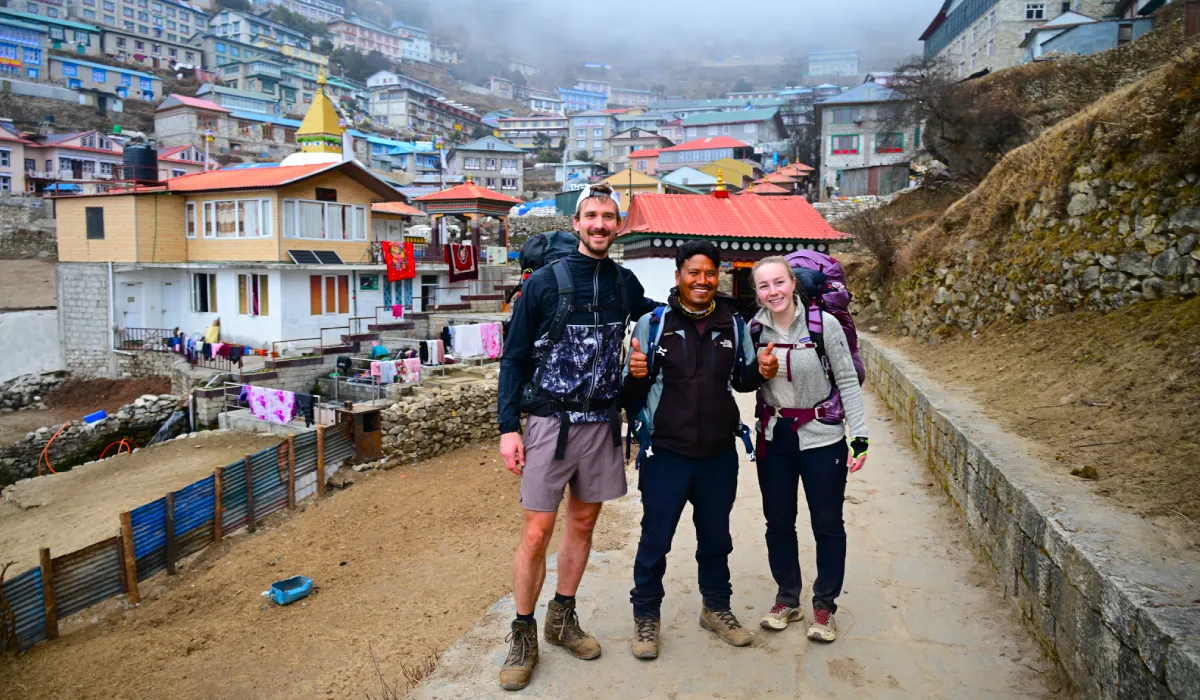
Non-hikers can get to Base Camp, but they really shouldn’t take the trek lightly. If you are a person who doesn’t hike regularly, you will definitely need a proper training period – preferably two to three months of walking on hills with a loaded daypack – before coming to Nepal. This route demands more endurance and patience than technique. Even a beginner can expect to be successful with a slow itinerary, porter support, and a guide setting the pace. If you have never done multi-day walking, it might be hard for you to manage this one, so consider a shorter trek first.
How Fit Do You Need to Be for Everest Base Camp?
Everest Base Camp Trek fitness is less about speed and more about endurance, recovery, and consistent walking. You do not need athlete-level fitness. You need the endurance to walk five to seven hours a day on uneven ground across many consecutive days, decent leg strength for long climbs and longer descents, reasonable balance, and the patience to walk slowly.
Train with a loaded daypack on real hills, practice both uphill and downhill, and build the habit of a steady moderate pace before you arrive. Our how to train for the Everest Base Camp trek guide lays out a week-by-week plan.
There is an important qualification. The fittest trekker is not the safest trekker. Fast walkers tend to ascend too aggressively, slow down, arrive at higher villages under-rested, and struggle when the body has not caught up. Building Everest Base Camp Trek fitness through hill walking, strength training greatly improves your experience, but nothing at sea level fully prepares you for broken sleep at 4,900 meters.
Is the Everest Base Camp Trek Dangerous?
The Everest Base Camp trek carries real but manageable risks, and it is not dangerous in the mountaineering sense. The main hazards are altitude sickness, cold, occasional stomach illness, and Lukla flight disruption.
Serious problems are usually preventable through slow acclimatization, honest reporting of symptoms, safe food and water, and comprehensive insurance that covers high-altitude helicopter evacuation. Relative to the number of trekkers on the route each year, serious incidents are uncommon, and most trace back to ascending too fast or ignoring early warning signs.
How Many People Fail the Everest Base Camp Trek?
There is no official published success or failure rate for the Everest Base Camp trek, so treat any exact percentage you see online with caution. No organization counts every trekker on the route. What we can tell you from experience is that the large majority of prepared trekkers on a sound itinerary reach Base Camp, and those who turn back rarely do so for lack of fitness. Likewise, Everest Base Camp altitude sickness is the most common reason trekkers turn back before reaching Base Camp
Turnarounds cluster around a short list of causes, most of them avoidable:
- Altitude sickness allows progress, usually from ascending too fast or hiding early symptoms.
- Compressed itineraries that cut the acclimatization days which keep trekkers healthy.
- Stomach illness from unsafe water or poorly stored food, reduced by treating water and choosing vegetarian meals higher up. Our Everest Base Camp food guide covers what is safe to eat where.
- Lukla flight disruption, a logistical rather than physical problem, which ends trips for people who built in no buffer days. See our Lukla flights guide for how these operate.
The common thread is clear. The outcome depends far less on fitness than on preparation and a willingness to go slowly.
Is Everest Base Camp Harder Than Kilimanjaro?
Neither is a technical climb, but they test you differently. Kilimanjaro reaches a higher summit, 5,895 meters, over fewer days, so its altitude hits faster and turnaround rates near the summit are high. Everest Base Camp tops out lower, at Kala Patthar around 5,545 meters, across more days, which gives the body more time to adjust.
EBC involves more total walking and more consecutive days on the trail; Kilimanjaro compresses the altitude stress into a shorter window. Many trekkers find Everest more sustainable precisely because it is slower.
Is Everest Base Camp Harder Than Annapurna Base Camp?
Everest Base Camp is harder than Annapurna Base Camp, mainly because of altitude and length. Annapurna Base Camp reaches 4,130 meters over 7 to 12 days, with a gentler altitude profile and simpler logistics.
Everest Base Camp climbs to 5,364 meters, and 5,545 meters at Kala Patthar, over 12 to 14 days, with thinner air, colder nights, and the Lukla flight to manage. This is exactly why Annapurna Base Camp is so often recommended as a warm-up for Everest.
How Everest Base Camp Compares to Other Nepal Treks
For trekkers weighing Everest against other routes, or considering a shorter trek first, this is the quick benchmark. Everest Base Camp is among the higher and longer teahouse treks in Nepal, though not the most technically demanding.
| Trek | Max altitude | Days | Difficulty | Good as a warm-up? |
| Langtang Valley | approx. 4,773 m | 7 to 10 | Moderate | Yes, an excellent first Himalayan trek |
| Annapurna Base Camp | 4,130 m | 7 to 12 | Moderate | Yes, a strong altitude and endurance test |
| Manaslu Circuit | 5,106 m (Larkya La) | 14 to 18 | Strenuous | No, comparable to EBC |
| Gokyo Lakes | approx. 5,357 m (Gokyo Ri) | 12 to 15 | Strenuous | No, comparable to EBC |
| Everest Base Camp | 5,545 m (Kala Patthar) | 12 to 14 | Strenuous | This is the benchmark |
Is the Everest Base Camp Trek Worth It?
For most trekkers, yes. The Everest Base Camp trek delivers close views of the world’s highest peaks, genuine Sherpa culture through the Khumbu, and a sense of achievement few other treks match. It is a serious commitment of time, money, and effort, and it is not the right fit for travelers who want comfort or a short trip. If your priority is standing beneath Everest and you are willing to prepare properly, the reward clearly justifies the difficulty.
Can You Do the Everest Base Camp Trek Solo?
Independent solo trekking has become heavily restricted in Nepal. Since 2023, foreign trekkers are required to hire a licensed guide across most trekking regions, so plan to trek with a guide rather than alone.
Beyond the rule, the altitude on this route makes a guide a real safety asset rather than a formality, someone tracking your symptoms and pace daily. Regulations continue to change, so confirm the current requirements for the Everest region before you travel.
EBC Trek Difficulty by Season
Season changes the difficulty a great deal. The same trail can be a manageable spring walk or a serious winter undertaking, depending on timing. Weather is one of the few difficulty factors you fully control, simply by choosing your dates. For the full picture, see our Everest Base Camp weather guide and our seasonal breakdowns for Everest Base Camp in October and Everest Base Camp in November.
| Season | Difficulty | Main challenge | Best for |
| Spring (Mar to May) | Moderate | Busy trails in peak weeks, afternoon cloud | First-timers and beginners |
| Autumn (Sep to Nov) | Moderate | Cold nights from October, early snow in November | Clear mountain views and photography |
| Winter (Dec to Feb) | Strenuous to severe | Bitter nights, snow up high, fewer services | Experienced trekkers seeking solitude |
| Monsoon (Jun to Aug
) |
Strenuous | Rain, slippery trails, more flight delays | Budget trekkers who accept wet weather |
For most trekkers, spring and autumn are the right call.
Is the Everest Base Camp Trek Mentally Difficult?
Yes, and for some trekkers, the mental side is harder than the physical one. Repeated early starts, cold rooms, basic bathrooms up high, a deliberately slow pace, broken sleep, mild altitude anxiety, and a long descent after the goal is reached all accumulate over two weeks. Individually, none is severe. Stacked together, they add up.
The fix is practical. Break the trek into daily goals and focus on reaching the next village, not Base Camp. Tell your guide honestly when something feels off. Carry one or two small comforts from home. Eat and drink even when appetite drops. And accept that the mountain pace is the correct pace. The trekkers who handle the mental side well are seldom the strongest physically. They are the ones who match their expectations to the conditions.
How to Make the Everest Base Camp Trek Easier
You cannot lower the altitude, but you can stack the odds in your favor. Most of these cost nothing beyond planning and discipline.
- Choose an itinerary of at least 14 days with acclimatization days at Namche and Dingboche. This is the single biggest lever.
- Train for two to three months, with a focus on hiking endurance, leg strength, and downhill conditioning.
- Walk slowly from the first day, no matter how strong you feel low down.
- Use porter support and carry only a light daypack. Our Everest Base Camp packing list shows what to bring and what to leave.
- Drink three to four liters of water a day, and treat or buy safe water rather than drinking from the tap.
- Eat regularly even when appetite drops. Dal bhat, soup, potatoes, and porridge go down easier than heavy meals up high.
- Dress in layers to manage the big temperature swings across a single day.
- Build buffer days at both ends for Lukla flight delays, so you are never trekking against a plane ticket.
- Do not compare your pace to anyone else’s. Everybody acclimatizes differently.
How Explore Vision Nepal Manages the Difficulty for You
We handle difficulty before the trail becomes difficult, starting with the itinerary. Every Everest Base Camp trek we run builds in gradual altitude gain and real acclimatization days at Namche and Dingboche. Those are not filler days. They are the stages where your body adjusts, and skipping them is where most trouble begins. As we always concern about the health and safety for high altitude trekking in Nepal, we always recommend travelers, not to avoid the acclimatisation day on their Everest Base Camp trek itinerary.

Everest Base Camp Trek – 14 Days
Everest Base Camp Trek is an iconic journey that follows in the footsteps of legendary mountaineers Sir Edmund Hillary and Tenzing Norgay Sherpa. It is done in eastern Nepal within the internationally recognized...
 14 Days
 Difficult
US$ 1440
On the trail, our licensed local guides manage the daily pace and watch each trekker closely, tracking appetite, sleep, breathing, and energy, with oximeter checks as you climb. They carry a first-aid kit and know when to slow down, rest longer, or begin a controlled descent if symptoms call for it.
Porter support means you carry only a light daypack, which cuts fatigue on every day above 4,000 meters. We arrange your permits, coordinate Lukla and Ramechhap flight logistics in peak season, and stand ready to organize evacuation, including a helicopter, in a genuine emergency. If cost is part of your planning, our Everest Base Camp cost guide breaks down what a well-run trek includes.
The Verdict: Is the Everest Base Camp Trek Hard?
Everest Base Camp Trek difficulty is often overestimated. While the trek is physically demanding, thousands of well-prepared trekkers successfully reach Base Camp every year. It is not a technical climb. The difficulty comes from altitude, repeated long days, cold nights, basic lodges, and the patience to keep moving for two weeks. Fitness alone does not carry you through, but preparation does.
With proper preparation, Everest Base Camp Trek Difficulty becomes manageable for most healthy trekkers. The keys are train before you arrive, walk slowly from day one, respect the acclimatization schedule, keep your pack light, eat and drink consistently, and listen to your guide. Do that, and Base Camp is well within reach.
Frequently Asked Questions
How high is Everest Base Camp?
Everest Base Camp sits at 5,364 meters (17,598 feet). Most trekkers climb higher the next morning to Kala Patthar at about 5,545 meters, the highest point of the standard itinerary and the best viewpoint for Everest itself.
Do you need supplemental oxygen for Everest Base Camp trek?
No. Trekkers do not use bottled oxygen on the standard route. The trek stays well below the extreme altitude mountaineers face on the summit, and a slow, properly paced itinerary lets the body adjust on its own. Guides carry oximeters and, on some trips, emergency oxygen for safety.
Can you get altitude sickness even if you are fit?
Yes. Altitude sickness has little to do with fitness. It depends on how fast you ascend and how your body handles thin air, and it can affect anyone. Slow ascent, well hydrate, enough rest and honest reporting of symptoms are the real protection to avoid Everest Base Camp altitude sickness.
How many days is the Everest Base Camp trek?
With travel days in Kathmandu at either end, the majority of itineraries last 12 to 14 days on the trail. We advise 14 days with two acclimatization stops because the additional time reduces the risk of altitude and increases the likelihood of success and enjoyment of the trek.
What happens if you get sick on the trek?
Every day, your guide keeps an eye on your symptoms and determines when you should rest, descend, or get assistance. Rest and a slower pace often alleviate mild altitude symptoms. The quickest treatment for anything serious Everest Base Camp altitude sickness is to descend, and evacuation—including helicopter rescue—can be planned. It is crucial to have comprehensive trekking insurance that includes coverage for high-altitude helicopter evacuation.