





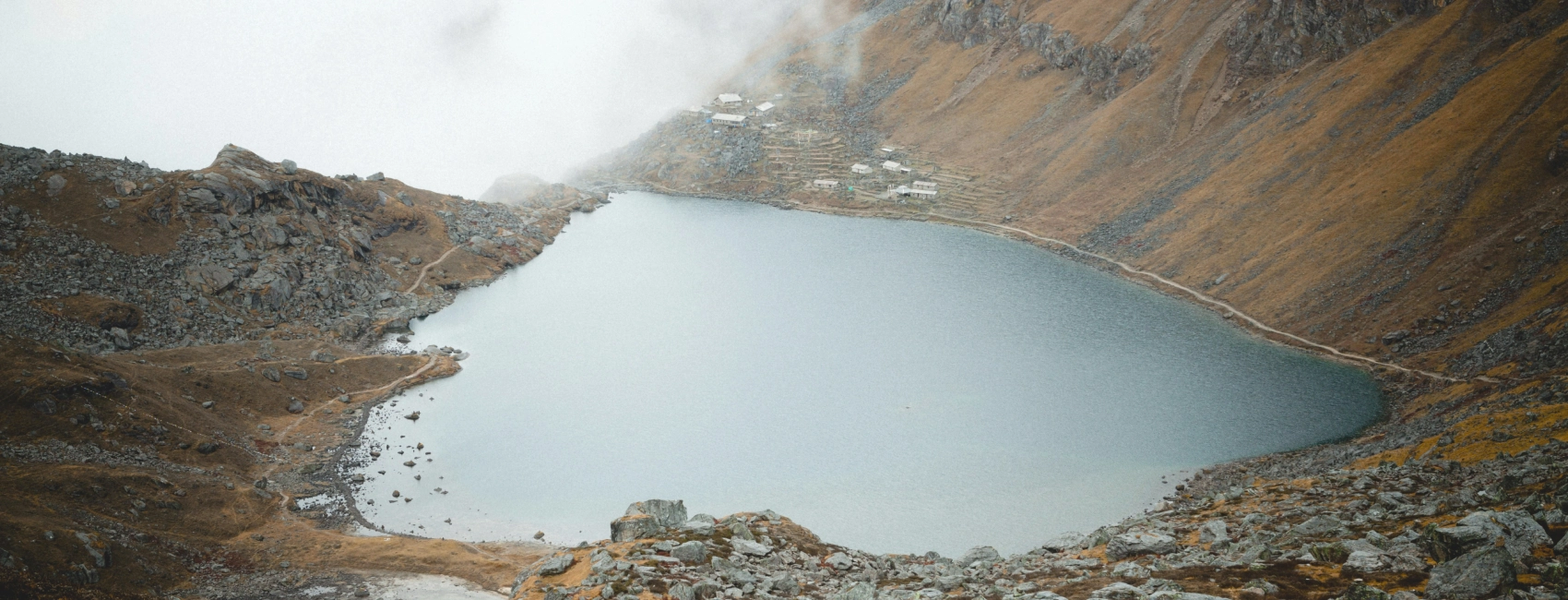

Janai Purnima is one of the holiest days for the Gosainkunda Lake. It falls on the full moon of the Hindu month of Shrawan, usually in August (the exact Gregorian date shifts each year according to the lunar calendar). On this full moon night, Gosaikunda transforms from a quiet high-altitude lake into a living, breathing temple under the sky and the Himalayas. It is a powerful landscape for shamanic traditions rooted in indigenous Himalayan cultures.
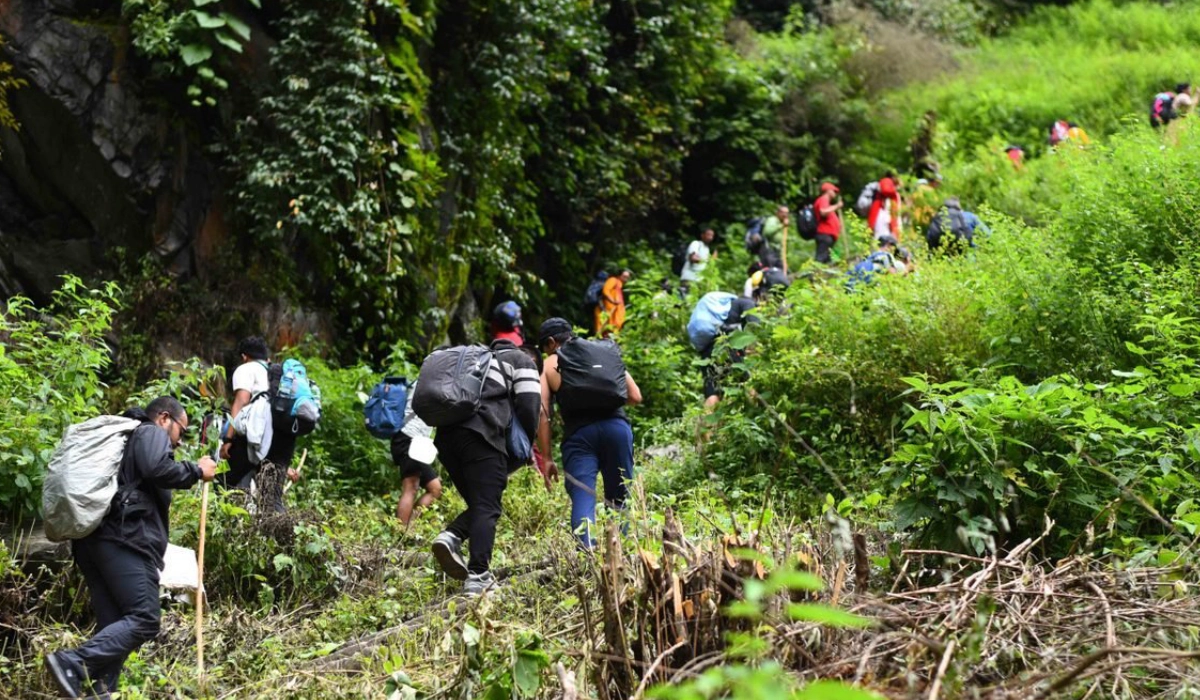
At Janai Purnima, thousands of pilgrims from all over Nepal, sadhus, shamans, Bompos, Jhankris and seekers from foreign lands undertake the journey. Many of them, in deep devotion, walk barefoot from the trailhead all the way to Gosaikunda. Some local Shamans, Jhankris, Bompos perform short rituals at night, away from the crowded paths, calling on mountain deities, local guardians, and their teachers from the invisible realms.
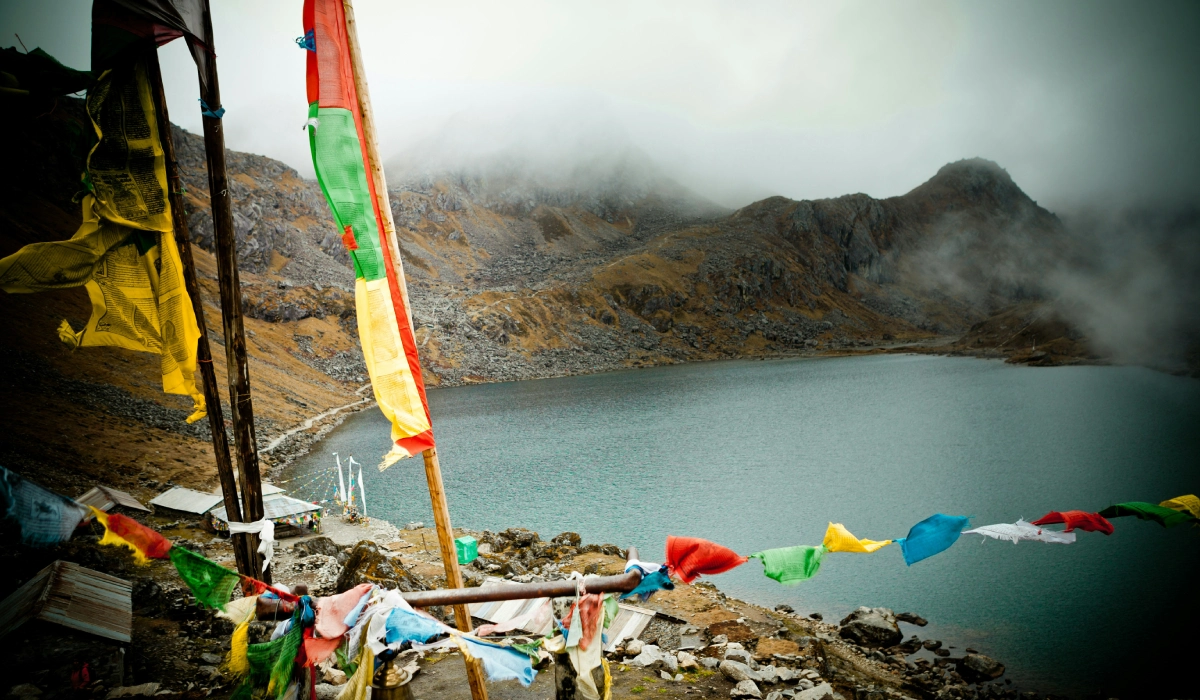
Temporary tent settlements and locally built huts are made around the lake and on the slopes just for this day. They are pilgrims’ shelters, simple, smoky, full of life. Families huddle together over firewood stoves, cooking rice, lentils, potatoes, and local greens. Strangers become companions, offering home-cooked food and prasads, blessed sweets, fruits, and simple meals. People share blankets, stories, mantras, and ginger tea as if they’ve known each other for lifetimes.
The air smells of juniper smoke, butter tea, incense, and human hope. For three nights, social boundaries blur and you will connect with lost spiritual sides of yours.
- Saraswati Kunda– Named after the goddess of knowledge and wisdom. Students and artists often offer prayers here.
- Bhairav Kunda– Connected to the fierce protective aspect of Lord Shiva. People seeking courage and protection visit these waters.
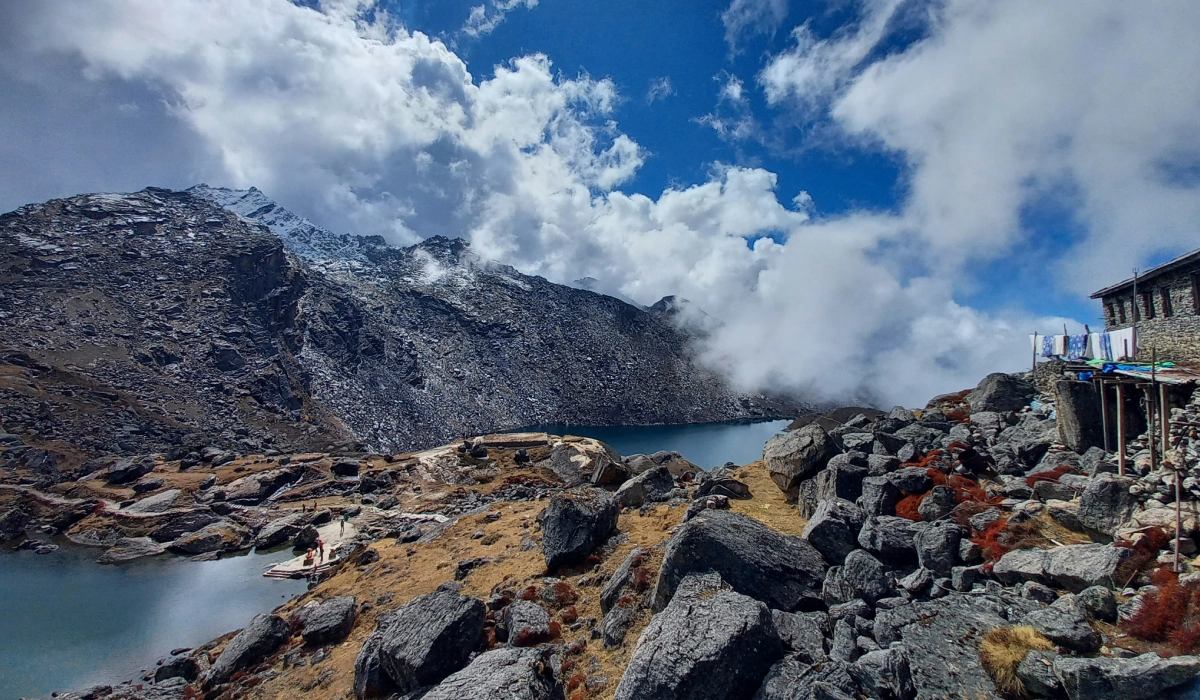
- Gosaikunda– The main holy lake. The most powerful. Where Shiva’s trident struck the mountain.
Nearby spiritual Lakes you can reach, with a small hike
- Surya Kunda– Dedicated to the Sun god. Best visited at sunrise when golden light first touches the water.
- Ganesh Kunda– Named after the elephant-headed god of beginnings. Pilgrims starting new ventures pray here.
- Nag Kunda– Associated with serpent deities. Nagas. Protectors of water and underground treasures.
Buddhist Traditions at Gosainkunda: The Other Half of the Story
Hinduism gets most attention when discussing Gosaikunda. But Buddhism runs equally deep here.
The local Tamang people have called these mountains home for generations. Their spiritual practices blend ancient shamanic traditions with Tibetan Buddhism. They don’t see Gosaikunda as exclusively Hindu. They see it as everyone’s.
In the Tamang belief, powerful spirits called Lu (or Nagas) dwell within mountain lakes. These beings protect the land. They control the weather. They can bless or curse depending on how humans behave. Approaching sacred lakes with respect is essential.
They believe Lu is watching.Guru Rinpoche, the great master who brought Buddhism to Tibet, is said to have traveled through this region. Some believe he meditated near Gosaikunda. His spiritual power left permanent imprints on the landscape.
Buddhist monasteries dot the trekking route. Sing Gompa features an ancient 700+ years old monastery where monks still practice daily. The sound of their chanting echoes through rhododendron forests. Prayer flags snap in wind. Mani stones carved with sacred mantras line the path.
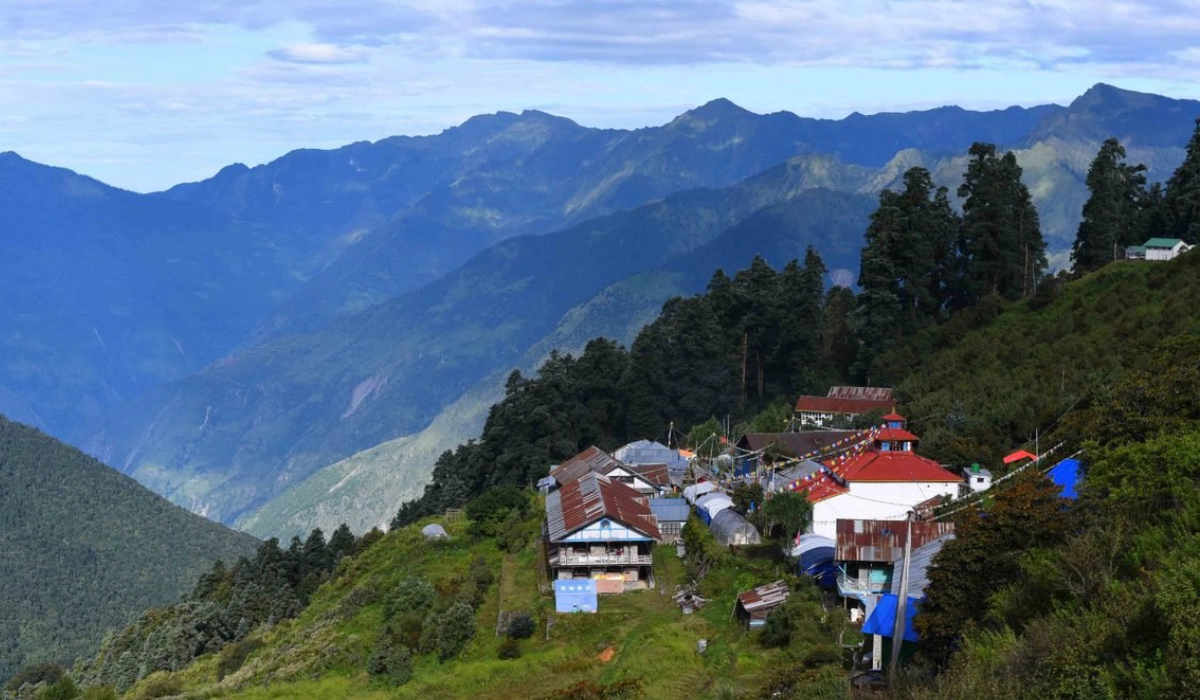
This mixing of Hindu and Buddhist traditions creates something unique.No competition. No conflict. Just shared reverence.A Hindu pilgrim and a Buddhist monk can stand side by side at Gosaikunda. Both praying. Both receiving. Both have transformed. This is the true Himalayan spirit.
Unity within diversity!
Night Rituals: Full Moon Over Sacred Gosaikunda Lake
As the full moon rises over the ridges, the lake becomes a mirror and spiritual gateway. Flames from butter lamps tremble along the shore. Priests sit by the water, reciting Vedic mantras, changing sacred threads (janai), and tying protection cords (rakshya sutra) around devotees’ wrists. Men who wear the janai renew it, symbolically letting go of old impurities and committing to a life of cleaner thought and action. You sense different energy everywhere.
As the night deepens, the shorelines come alive. Local musicians beat traditional drums, blow long horns, and play simple string instruments fashioned in mountain villages. Sometimes you hear the Madal (a double-headed hand drum), the Damaha, or the long, resonant notes of the Narsingha (ceremonial trumpet), turning the environment more spiritual. The Dhyangro, the shamanic frame drum, is the most prominent, its deep, repetitive pulse echoing across the stones.
Gosaikunda in Daily Spiritual Life
Most people only visit Gosainkunda once or twice in their life. To reach Gosaikunda once in their lifetime is a dream of most spiritual people. Yet the lake quietly travels back with them. For many devotees, the journey does not end at the lake. They carry Gosaikunda home in:
- A small bottle of water, used in rituals or sprinkled in houses as a blessing.
- Memories of hardship and beauty, which later become strength during difficult times.
- A renewed commitment to live more honestly, more gently, and more consciously.
Gosainkunda Lake is a living pilgrimage that continues to shape every person who reaches for it. People in faraway towns, who may never physically reach Gosaikunda, find it’s holy water as the best souvenir, which no amount of money can buy. People save the holy water to use on special occasions only. Some keep it near the family shrine, beside images of Shiva, Parvati, Ganesh, local deities, or ancestors. A few drops are used in daily puja, sometimes on new projects, new homes, or vehicles.
Food as Spiritual Practice
Nobody talks much about diet in spiritual contexts anymore. Traditional Gosaikunda pilgrimage involves very specific food practices that deserve mention for their spiritual rather than physical purposes.
Many pilgrims begin dietary modification weeks before departure. Meat disappears first, then alcohol, then garlic and onion, foods considered tamasic or spiritually dulling in Hindu classification. By the time actual trekking begins, the pilgrim’s body has already shifted into more sattvic state, lighter and theoretically more receptive to subtle experiences.
During the climb itself, simplicity rules. Dal-bhat provides nutritional foundation, rice for energy, lentils for protein, pickle for flavor and digestive stimulation. Tea appears constantly, both for warmth and altitude adjustment. Occasional treats emerge from mysterious depths of someone’s pack, dried fruits, roasted soybeans, the glucose biscuits that seem to exist in every Nepali trekker’s emergency supply.
But, the real spiritual eating happens around shared prasad. This blessed food carries accumulated merit from the offerings it represented before distribution. Receiving prasad creates subtle debt to the deities involved—obligation to act rightly, to honor the blessing through subsequent behavior. Sharing prasad generates merit for the giver. Refusing prasad insults both human and divine generosity.
The Future of Sacred Gosaikunda
Climate change threatens everything. Glaciers that feed the lakes are shrinking. Weather patterns that pilgrims relied upon for generations now fluctuate unpredictably. Some years the monsoon comes too early, some years too late, and both variations create problems for traditional pilgrimage timing.
Meanwhile tourism pressures increase. Teahouses multiply along trails. Helicopter services now offer quick access that bypasses all the preparatory suffering traditional pilgrimage requires. Garbage accumulates faster than carrying capacity can remove it. The sacred and the commercial exist in uneasy proximity, and nobody quite knows how to navigate their relationship.
Yet the lake persists. The prayers continue. Families who’ve been walking this path for centuries keep walking it, now sometimes carrying smartphones but still carrying also the mantras their grandparents carried.
Something about truly sacred places seems to protect them, not from all harm, obviously, but from complete corruption. Forces we don’t fully understand work to preserve what deserves preserving. Perhaps Shiva himself maintains his resting place. Perhaps accumulated prayer forms protective field. Perhaps the land possesses its own agency, its own way of defending what it holds.
Or perhaps we’re the ones who must act. The sacred places persist only as long as humans continue treating them as sacred, visiting with respect, maintaining traditions, teaching children, fighting political battles when necessary to prevent exploitation or destruction.
The future remains unwritten. What happens to Gosainkunda depends partly on vast forces beyond any individual’s control and partly on choices made by those who love this place and refuse to abandon it to carelessness.
What to Pack for this Trek
Practical items:
- Layered clothing (temperature swings wildly)
- Umbrella or poncho (as it is usually monsoon)
- Quality hiking boots (already broken in)
- Down jacket for freezing nights
- Sunscreen SPF 50 minimum
- Quality sunglasses (UV protection essential)
- Water bottles and purification method
- Headlamp with extra batteries
- Basic first aid supplies
- Cash in small denominations
- Passport and permit copies
Spiritual items to collect if you want to participate in the ritual:
- Journal and pen
- Mala beads if you practice
- Small offerings (flowers, rice, incense)
- Photos of loved ones for prayers
- Meaningful personal object
- Prayer flags to tie at sacred sites
- Khata (white offering scarf)
- Small Buddha or deity image if desired
How can you participate Janai Purnima at Gosainkunda: To the Holy Lake
Usually, the festival is held for three days. Local people and pilgrims complete trekking during these days. However, for the first timer and beginners following the Short Gosainkunda Trekking itinerary is Ideal.
Day 01: Drive from Kathmandu to Dhunche
Day 02: Trek from Dhunche to Chandanbari
Day 03: Trek from Chandanbari to Lauribina
Day 05: Trek from Lauribina to Gosainkunda Lake
Day 06: Trek from Gosainkunda to Chandanbari
Day 07: Trek from Chandanbari to Dhunche, then drive to Kathmandu in Jeep.
And if you are looking for a longer and standard trek during Janaipurnima festival, more glacier views, a Pass, and a dive into two national parks, classical Langtang Gosainkunda Trek is perfect for you.