



24x7 Support
+977 9851349597
Unbeatable Holiday Offers - Save Up to 20% on Your Next Adventure!



Discover the Majestic High Mountain Pass Adventure in Annapurna Circuit
Short Annapurna Circuit Trek – 12 Days
Based on 50 reviews

Duration
12 Days
Trip Difficulty
Moderate
Max Altitude:
5,416m. / 17,769ft.
Activity
Trekking
Group Size
1-20
Best Season
Autumn, Spring
Meals
Breakfast, Lunch & Dinner
Accommodation
Hotel, Lodge, Guesthouse
Transportation
Private and Tourist Bus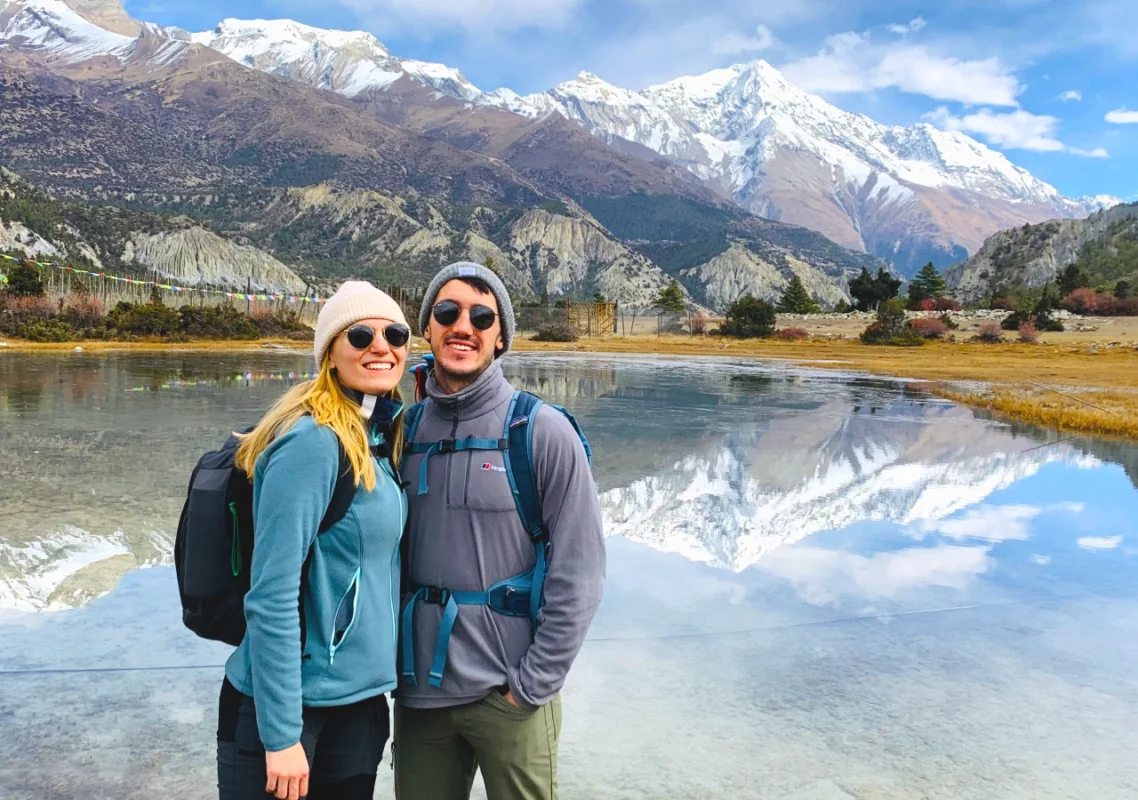
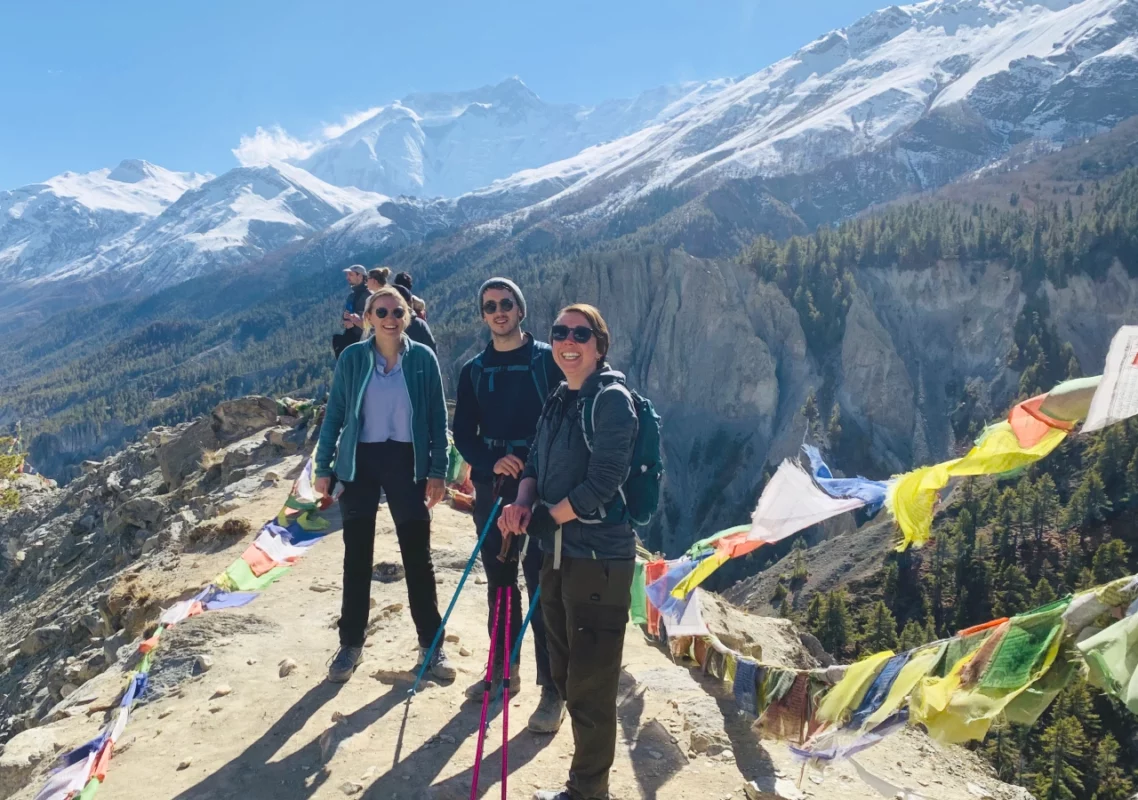
Overview of Short Annapurna Circuit Trek – 12 Days
Short Annapurna Circuit Trek is one of the best multi days trek in Nepal that encircles the Annapurna Himalayas. It showcases the beauty of dense subtropical foothills, arid desert terrain, and the thrill of crossing the highest mountain Pass in Nepal, Thorong La Pass (5,416m). You can witness popular sunrise viewpoints, Majestic Mountain ranges, and stunning glaciers within the short period of time.
The trek is done in mid-western part of Nepal, starting from the rich valley of the Marshyangdi River and ending at the deepest gorge, Kali Gandaki. The journey involves visits to the sacred temples, ancient monasteries, and pilgrimage sites that connect travelers to the spiritual heart of the region.
Starting the trek from Dharapani, you pass by the traditional villages of Chame and Pisang to the charming village of Manang, which has a desert-like landscape. On this part of the trail, you shift from the forested to the deserted pattern route. In Manang, the journey takes a break for acclimatization and to discover the side destination. Then it stretches towards Yak Kharka, Thorong Pedi, and after conquering the Thorong La Pass, you end this trek in a sacred place of Muktinath.
Take an exciting opportunity to dive into the beauty of diverse terrain, culture, and experience in the prominent Annapurna region of Nepal. For a reliable trek experience that gives comfort like home, join us on this Short Annapurna Circuit Trek adventure with Explore Vision Nepal!
Short Annapurna Circuit Trek Difficulty – Who Is This Trip For?
The Short Annapurna Circuit Trek is rated as moderate to hard, depending on the chosen path and the season. You have to walk 4 to 8 hours daily through a variety of landscapes including forests, terrace fields, steep hills, arid valleys, moraine fields, and a few passes at very high elevation like Thorong La Pass (5,416 m). The good news is that you do not require special climbing skills. But proper fitness, stamina and effective altitude acclimatization are necessary.
One of the major problems during the trek is altitude sickness, mostly in areas over 3,500 meters. If you ignore proper acclimatization, symptoms like a headache, nausea, dizziness, shortness of breath and fatigue could occur. The risk can be minimized by drinking adequate water, going up slowly and resting more often. Likewise, avoiding alcoholic drinks and smoking, planning extra acclimatization days in Manang or Muktinath or taking preventive medication is necessary.
Besides, unpredictable mountain weather, remoteness and isolation of the place and limited services and facilities add to the trek’s challenges.
The Short Annapurna Circuit Trek is appropriate for:
- Proficient walkers who have previously done long hikes and are looking for a longer high-altitude adventure
- Newbies who are moderately fit and willing to train beforehand and follow a strict acclimatization plan
- Adventurers wanting a mixture of culture, landscape, and mountain views
If you are well prepared, physically fit, and aware of the trail’s challenges, then the Annapurna Circuit Trek will turn out to be a unique and unforgettable adventure in the Himalayas.
What Makes the Short Annapurna Circuit Trek Unique?
The Annapurna Circuit Trek is well-known as one of the most varied and scenic treks. It is a singular opportunity to experience the world’s stunning mountain landscapes, the richness of local cultures and the variety of ecosystems.
The Short ACT trail crosses the whole range of climatic zones, from lush subtropical forests in the lowlands to deep river gorges, dry high-altitude deserts and the high mountain pass of Thorong La. This variation gives you the unique opportunity to see the beauty and richness of nature changing dramatically with every step taken.
One of the main attractions of the trek is the fantastic all around view of the Annapurna and Dhaulagiri mountain ranges. From the first rays of the sun illuminating the Himalayas to walking through the rugged valleys every moment is rewarding and memorable.
Likewise, the trek offers a cultural experience that is very distinctive. You will meet with the Gurung, Thakali, and Tibetan-origin peoples who live in the most traditional ways. The centuries-old practices, monasteries, mani stones, and chortens are all part of the locals’ lives. Furthermore, the travel experience is made unforgettably personal through the warmth and friendliness of the locals.
Moreover, access to less frequented trails is a further exceptional quality. Though the main Annapurna Circuit is already a classical trekking route, there exist variations such as the Tilicho Lake side trip or the Manang valley loop which grant you access to serene areas with equal beauty.
Cultural Encounters During the Annapurna Circuit Trek
Going on the Annapurna Circuit trek is not only about mountain scenery but it is also a very deep cultural experience in the Himalayas.
The trail takes you to the settlements of different ethnic groups such as Gurung, Thakali, and Tibetan descendants who mostly follow Tibetan Buddhist cultures and possess their own customs and lifestyle. You can visit old monasteries and see prayer wheels, chortens, and mani walls. You will learn more about the religions in the region that have been influencing the lives of people for centuries.
Similarly, the locals’ warm hospitality, from serving the traditional meals to inviting you into their homes, makes each stop unforgettable. Overall, the festivals, rituals, and the simplicity of mountain life give you a rare chance to see living traditions in a pristine mountain environment.
Accommodation and Food During the Journey
The Annapurna Circuit Trek has teahouses and lodges as its main accommodations, which are primarily found in the villages along the path. The lodges are not luxurious, but basic and comfortable.
The adventurers can expect to find beds with blankets, pillows and mattresses in the twin sharing rooms. But it is strongly advised that they carry a warm sleeping bag for the nights in high-altitude villages such as Yak Kharka, Ledar, Thorong Phedi, or Thorong High Camp. The common areas in the lodges are often fitted with a fireplace or stove offering a cozy corner to unwind and chat with other trekkers. Some lodges might provide Wi-Fi, charging, and hot showers, but availability is limited and often comes at a small extra charge as you ascend the trail.
As for the food, it is wholesome, healthy, and satisfying that is prepared to supply the hiker’s stamina for a whole day of walking. The usual menu consists of Dal Bhat (rice with lentil soup), noodles, soups, vegetable curries, eggs, pancakes, and simple Western options such as pasta or sandwiches. Tea, coffee, and hot lemon are popular drinks, and boiled water and snacks can be bought during the trek. Vegetarian meals are the norm and most lodges will meet the dietary requirements if given notice in advance.
It is wise to pack high energy snacks like nuts, chocolate or energy bars. It helps you to sustain yourself during long hikes or the more difficult parts of the trail where food might be extremely limited. Water intake must be high, and thus, carrying a refillable water bottle along with purification tablets or a filter is very advisable.
Best Time to Do Short Annapurna Circuit Trek
Annapurna Circuit Trek is doable all around the year. Every time of the year, there is a unique natural beauty and challenges in the region. So, the best time differs depending on what kind of trekking experience a trekker wants to acquire. However, the absolute best seasons are Spring (from March to May) and Autumn (September to November). Here is a short guide to the Annapurna Trekking seasons to make it easier to choose.
Spring Season(March to May): It is the time of perfect blossoms, dramatic views, and hiking weather. In this period, the temperature is mild, and the trails are covered with colorful Rhododendrons. The days are longer, and you do not have to rush to your destination.
Autumn Season(September to November): It is a peak season for trekking on the trails of the Annapurna Circuit. This time offers clear and stable weather conditions that are perfect for trekking. You can get stunning mountain views of the Annapurna and Dhaulagiri ranges.
If you are interested in diverse cultures, then Autumn is a suitable time as it is a festive month in Nepal. You can witness the major festivals of Nepal, Dashain and Tihar. You get to meet many fellow trekkers on the way, which makes it safer and comforting.
Summer/Monsoon Season(June to Mid-September): Annapurna Circuit passes through the heavy-raining areas as well as the rain-shadow areas of Nepal. The southern side and the foothills are covered in lush green forest and great waterfalls. Whereas, the northern part of the Circuit that includes Thorong La Pass, Manang, and Mustang has less rainfall and is drier.
A quiet trail with green landscapes is perfect for photography, and trekkers are interested in a solitary experience.
Winter Season(December to February): This season is for all challenge seekers and adventurers. The trails have only a few trekkers, and the views are breathtaking. The lakes are frozen, and the peaks are heavily snow-capped. The nights are freezing cold, and the mornings are beautiful with sunrises. Note: Sometimes, the Thorong La Pass gets blocked due to heavy snow, so you need to consult with us about the route conditions.
Experience the Best Short ACT With Explore Vision Nepal
Exploring the Short Annapurna Circuit with Explore Vision Nepal is guaranteed to be safe, enjoyable and remarkable. We have several years of experience in organizing Himalayan adventures. Our dedicated team is able to provide guides of expert level, supporting staff with wide knowledge, and itineraries that are well-planned according to the physical abilities and the preferences of every hiker.
Explore Vision Nepal takes care of the entire process which includes getting permits, booking places to stay, arranging meals and domestic transport, as well as giving advice on acclimatization and safety.
We make sure that every aspect of your trip is comfortable, enriching and authentic. You will get personalized support. You will receive the necessary information regarding trekking gear, meals, and local customs. Overall, you can experience the Annapurna Circuit completely, securely and according to your own time schedule.


Outline Itinerary of Short Annapurna Circuit Trek – 12 Days
Day 01: Arrive at Tribhuvan International Airport (TIA), Kathmandu
Day 02: Drive from Kathmandu to Dharapani (1860M/6100Ft), Distance: 225 Km, Duration: 8 Hours
Day 03: Trek from Dharapani to Chame (2630M/8625Ft) Distance: 15 Km, Duration: 6-7 Hours
Day 04: Trek from Chame to Pisang (3,300M/10825Ft), Distance: 14-15 Km, Duration: 6 Hours
Day 05: Trek Pisang To Manang (3540M/11610Ft) Distance: 18 Km, Duration: 7 Hours
Day 06: Acclimatization Day, Hike to Gangapurna Glacier Lake and Chongkar Viewpoint. Distance: 6 Km, Duration: 3 Hours
Day 07: Trek from Manang to Yak Kharka (4050M/13250Ft), Distance: 11 Km, Duration: 4-5 Hours
Day 08: Trek from Yak Kharka to Thorong Phedi (4450M/14595Ft), Distance: 7 Km, Duration: 4 Hours
Day 09: Trek from Thorong Phedi to Muktinath (3,800M/12465Ft) Crossing Over Thorong La Pass (5,416M/17765Ft), Distance: 16 Km, Duration: 8 Hours
Day 10: Drive from Muktinath to Pokhara (820M/2690ft), Distance: 170 Km, Duration: 7 Hours
Day 11: Drive from Pokhara to Kathmandu, Duration: 6 Hours
Day 12: Departure/Farewell Day
Trip Highlights
- The trek is done winding through the Annapurna Conservation Area, a rich protected area of Nepal popular for its diverse wildlife.
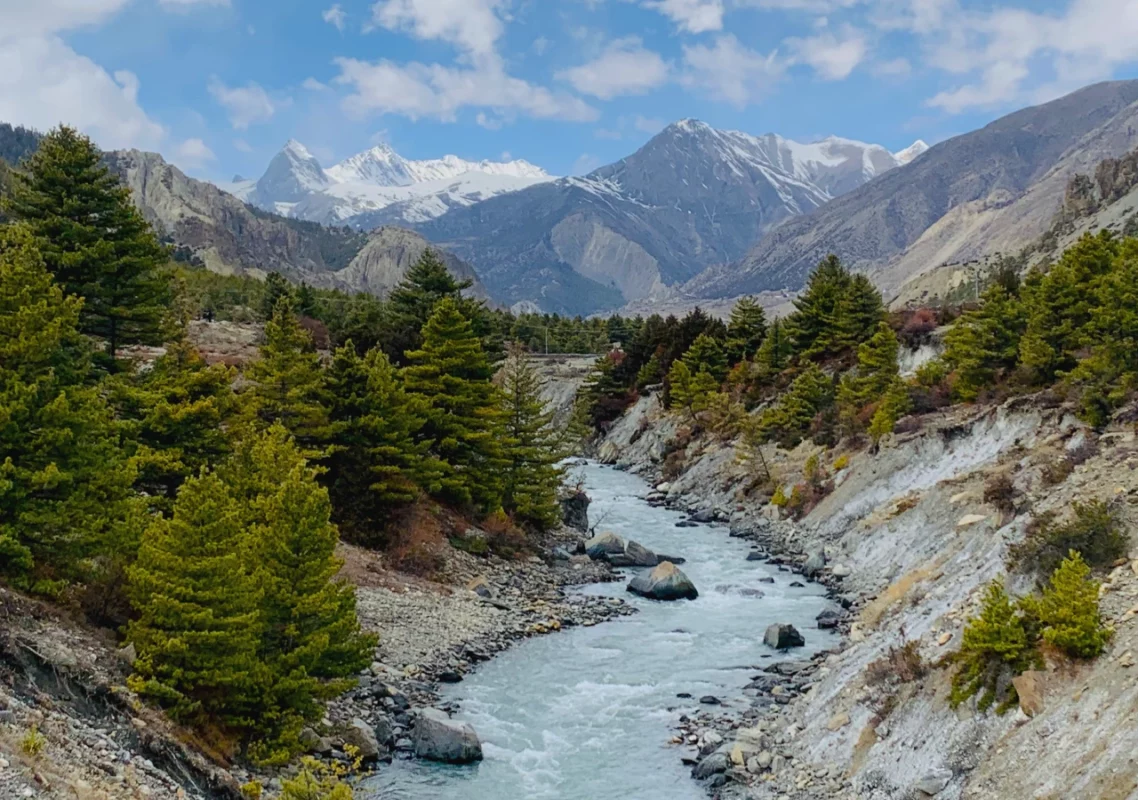
- Sparkling waves of the beautiful Marshyangdi River guide the way to destinations while providing a scenic experience.
- The foothills of Annapurna are worth exploring with their evergreen forests of Rhododendron, Fir, Oak, and pine forest.
- As you ascend, the journey introduces you to the biggest apple farm in Nepal in Bhratang Village. You can enjoy the delicious foods in the farm restaurant like Apple Pie, Donuts, local apple drinks, and pastries.
- The highest Himalayan Pass in Nepal, Thorong La Pass (5,416m), excites the journey with its challenge and thrill.
- Visits to the ancient monastery of Braga, Milarepa cave, and a temple in Muktinath are deep spiritual highlights of the Annapurna Circuit Trek.
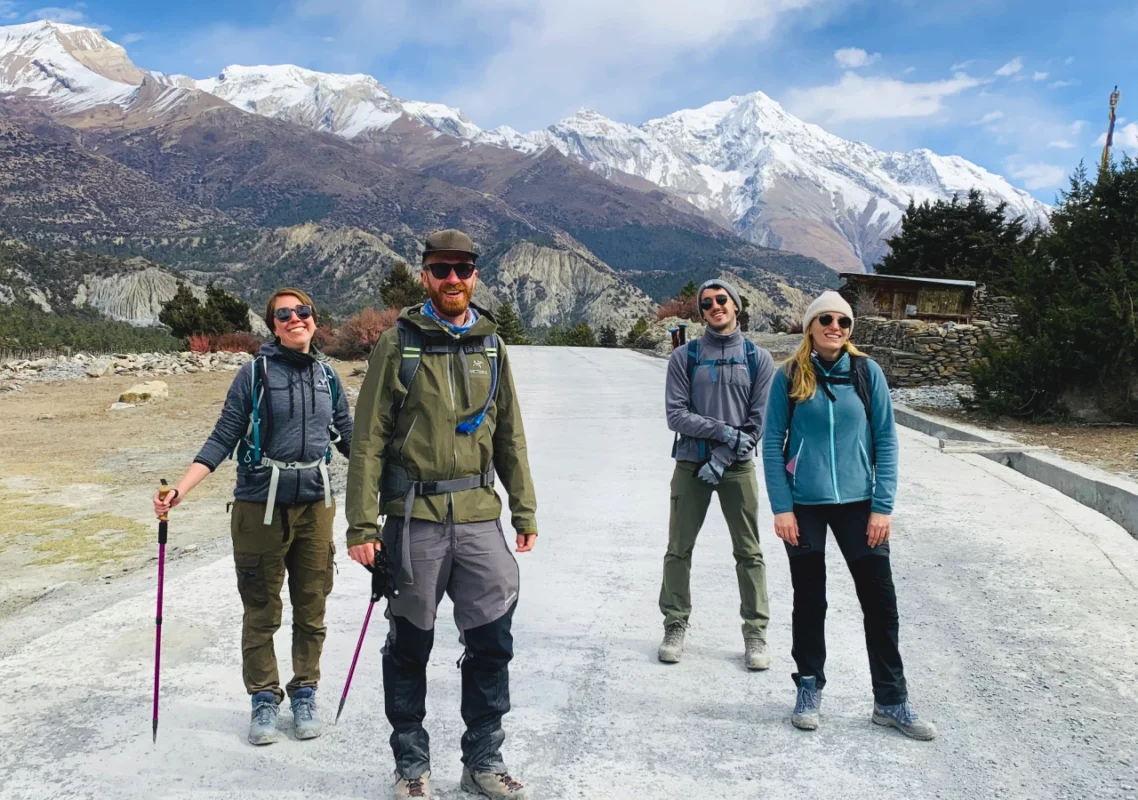
- Jaw-dropping Mountain Views of the Annapurna ranges, Chulu ranges, Gangapurna, Tilicho Peak, and Fishtail (Machhapuchhre).
- Popular viewpoints in Pisang and Ghyaru villages are ideal break points, great opportunities for great photos, and rest.
- Dal-Bhat, Yak Cheese, Apple pie, Butter tea, and Tibetan noodles are some of the local delicacies that are popular on the route.
- This journey offers unreal landscapes that wind from lush forests that turn into cliffs, deserts, and snow.
Short Annapurna Circuit Trek – 12 Days Itinerary
01
Day 01: Arrive at Tribhuvan International Airport (TIA), Kathmandu
Welcome to the country of the Himalayas! As you land at the airport and get off, our representative warmly welcomes you and assists with your arrival. Then, accompany you to your hotel in a private vehicle. During this time, we will let you know about the trip meeting time and location.
Once the check-in procedure is complete, feel free to rest, prepare for the trip, or enjoy a walk around the area if the time permits!

Activity: Drive

Accommodation: Hotel
02
Day 02: Drive from Kathmandu to Dharapani (1860M/6100Ft), Distance: 225 Km, Duration: 8 Hours
Your guide picks you up at your hotel for the drive. It is a long road journey on the smooth highways and the rugged roads as you approach the Marshyangdi Valley. You move from the bustling Kathmandu to the remote countryside of Nepal. You come across green hills, terraced fields, and small settlements. There are no physical treks today, so after you reach the destination, you can plan for the following day and prepare yourself with a warm rest.
Activity: Drive

Meal: Breakfast, Lunch, Dinner
Accommodation: Guesthouse
03
Day 03: Trek from Dharapani to Chame (2630M/8625Ft) Distance: 15 Km, Duration: 6-7 Hours
Today, you start trekking on the dense Pine, Fir, and Oak forest trail of Annapurna Circuit. You walk on a mix of stone stairs, off road and rocky terrain through the wide Marshyangdi River valley. There are ancient monasteries, chorten, and prayer flags enriching the spiritual ambiance of the environment.
On your way to Chame, you pass by Odar, Bagarchhap, Dnakyu, Timang, and Koto teahouses. You get to see dramatic views of Lamjung Himal, Annapurna II as you pass by the point of Dnakyue. The day is peaceful with the chirping birds, fallen leaves, water waves, and beautiful waterfalls on the way. The incredible landscapes with glimpses of mountains when approaching the destination are eye-catching.
Activity: Trekking
Meal: Breakfast, Lunch, Dinner
Accommodation: Guesthouse
04
Day 04: Trek from Chame to Pisang (3,300M/10825Ft), Distance: 14-15 Km, Duration: 6 Hours
This day provides an exotic experience along the biggest Apple Farm, Cliffside paths, thrilling suspension bridges, and a walk through the Gate of Heaven (Swargadwari Dada). The vegetation changes to the alpine spark as you ascend to high altitude.
After Chame, you cross a metal bridge, pass by Mani Walls carved by Buddha mantra, and continue on the flat rocky trail. Then you come across the large apple farm alongside the trails that lead to Bhratang village. After the village, curved rock trails of Paungda dada take you to the viewpoint of Swargadwari hill (Gateway of Heaven). It is a popular view on the trek for its unreal giant, sloppy cliffs. Enjoying a scenic break a short uphill crosses your path to Dhikur Pokhari before you reach Pisang. After some rest at guesthouse, you will take a visit to the upper Pisang monastery that overlooks the valley. Enjoy the wonderful glimpses of Annapurna II and Pisang mountains.
Activity: Trekking
Meal: Breakfast, Lunch, Dinner
Accommodation: Guesthouse
05
Day 05: Trek Pisang To Manang (3540M/11610Ft) Distance: 18 Km, Duration: 7 Hours
Waking up for early sunrise with Annapurna II is the best way to start this morning! The cool air is scented with junipers and the echoes of the prayer chants. The trekking starts on the steep trail to Ghyaru Village. It has a beautiful viewpoint from where you can get breathtaking mountain views of the Annapurna II, Pisang Peak, Tukuche Peak, and Tilicho Himal. Enjoy the scenic views before continuing to the next stop, Ngawal.
Continuing from Ngawal you can find many Gompas and stupas around the area. The trails slowly take on the long gradual ridges and descend to the Manang Village passing by the Braga. As you reach the village of Manang, the landscape takes a drastic change into the arid highland. It is the major rest and acclimatization point of the Annapurna Circuit Trek, popular amongst trekkers.
Activity: Trekking
Meal: Breakfast, Lunch, Dinner
Accommodation: Guesthouse
06
Day 06: Acclimatization Day, Hike to Gangapurna Glacier Lake and Chongkar Viewpoint. Distance: 6 Km, Duration: 3 Hours
Today you give your body some rest and explore the popular side destinations. It is necessary to give your body a chance to acclimate at high altitude. There are couple of side trips from Manang that holds special place for the Local people and travelers. Among all, we do Gangapurna Glacier Lake and Chongkar Viewpoint.
Gangapurna Lake and Chongkar Viewpoint: Gangapurna Lake is a popular glacial lake formed by the Glacier of Gangapurna Peak. You can enjoy the stunning clam blue lake of Gangapurna and marvel at the Gangapurna Glacier above it. Continue, with a short steep climb from Gangapurna viewpoint, you reach Chongkar Viewpoint. You get breathtaking mountain views of Annapurna II, IV, Tilicho peak, Chulu, Gangapurna and more from here. Also, you can see the top beauty of Manang village and Marshyangdi River. The trail is steep down and up, with some rugged rocky part. However, it rewards you with more solitude and dramatic panoramic mountain views.
Activity: Hiking
Meal: Breakfast, Lunch, Dinner
Accommodation: Guesthouse
07
Day 07: Trek from Manang to Yak Kharka (4050M/13250Ft), Distance: 11 Km, Duration: 4-5 Hours
The journey climbs gradually in the eastern Valley of the beautiful Marshyangdi River to the Thorung River. It includes gentle uphill and downhill with thinning air. There are large alpine meadows, rocky paths, and small glacier streams, adding to the scenic beauty of the remote area. As you leave Manang village and pass by the Ghusang (Gunsang) teahouses stunning Chulu Mountain ranges offer stunning views.
Now, you are in a high-altitude zone, and it is a short trekking day, so stay hydrated and take short breaks while ascending slowly. Fairly enjoy the dwarf vegetation and unique arid Landscapes. Take a peaceful walk and be alert, as you might encounter blue sheep, marmots, and golden eagles around the area as you approach Yak Kharka.
Activity: Trekking
Meal: Breakfast, Lunch, Dinner
Accommodation: Guesthouse
08
Day 08: Trek from Yak Kharka to Thorong Phedi (4450M/14595Ft), Distance: 7 Km, Duration: 4 Hours
It is the day before you cross Thorong La Pass! The terrain grows drier, arid, and desert-like. Ascend until Ledar Village are steady before it gets steep and rocky towards Thorong Phedi. The slopes of Thorong Hill catch your eye as you start getting close to Phedi, increasing the thrill for the next day. The last section of the walk near to Phedi is rock falling risky area, need to be careful.
Activity: Trekking
Meal: Breakfast, Lunch, Dinner
Accommodation: Guesthouse
09
Day 09: Trek from Thorong Phedi to Muktinath (3,800M/12465Ft) Crossing Over Thorong La Pass (5,416M/17765Ft), Distance: 16 Km, Duration: 8 Hours
Get ready for the ultimate challenge of the Annapurna Circuit Trek, Thorong La Pass! It is one of the highest mountain Passes of Nepal. The morning starts with a steep climb to the Thorong High Camp. On the way, keep your ascent slow and eyes high for the stunning sunrise aroma behind the mountains. The evaporating top of the snow-capped mountains marks the start of this stunning journey to the high-altitude Pass.
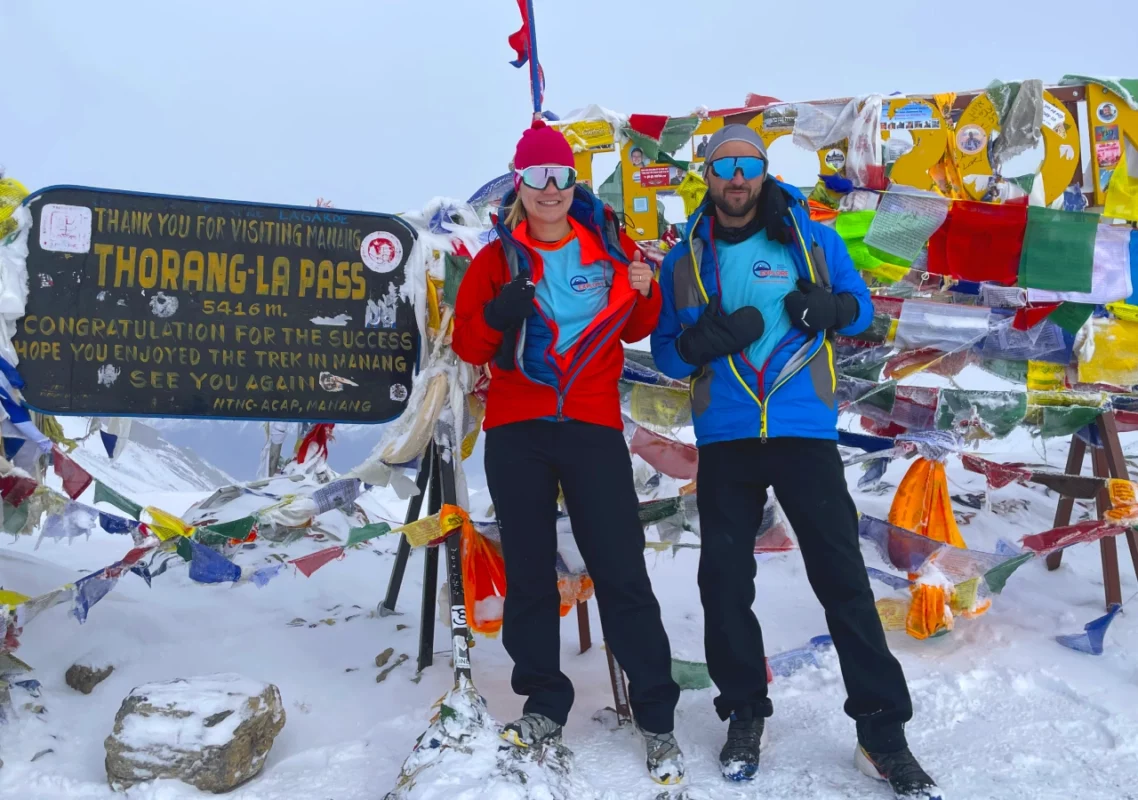
After the High Camp, you continue the journey to the Thorong Pass. It is a nerve-racking experience with mixes of excitement and thrill. Continuing on the final ascent, each step rises with rewarding mountain views. The steps and breath keep a heavy weight of the altitude and striking views. While you are moving with the great enjoyment of experience you come across a point decorated with colorful prayer flags meaning you have reached the High Pass.
Celebrate your moment with the team and acknowledge the fact you have completed the hard course of the Annapurna Circuit Trek. There is a teahouse on the point if you want to enjoy a short tea break to celebrate. Now it is time for the long descent so, keep your knees ready for it. The trails can be slippery due to the slippery snow and mud that slowly start to get easier and dry as you get closer to the final destination of the day, Muktinath. With a suspension bridge and a signboard mentioning ‘Welcome to Muktinath’ you get a breath of relief that you are finally at your destination.
Activity: Trekking
Meal: Breakfast, Lunch, Dinner
Accommodation: Guesthouse
10
Day 10: Drive from Muktinath to Pokhara (820M/2690ft), Distance: 170 Km, Duration: 7 Hours
The trekking days have ended, and you take a drive back to the bustling city of Pokhara alongside of the Kaligandaki River. Leaving the alpine landscapes and snowy mountains, you enjoy the scenic drive through the wide and beautiful Kaligandaki valley. Once you reach Pokhara, Take a rest, relax and enjoy the lively beautiful city of Pokhara. Celebrate the achievement and wonderful journey you had with your team.
Activity: Drive
Meal: Breakfast, Lunch
Accommodation: Hotel
11
Day 11: Drive from Pokhara to Kathmandu, Duration: 6 Hours
It is the final drive back to Kathmandu, where you started the Annapurna Circuit Journey. You leave the countryside and move back to the busy highway, echoes of people laughing and talking. Regardless of the bustle, you still feel peace, ease, and comfort as you have been through tough days.
Activity: Drive
Meal: Breakfast
Accommodation: Hotel
12
Day 12: Departure/Farewell Day
Your wonderful Annapurna Circuit Trek journey has come to an end. Your guide or representative from the Explore Vision picks you up at the hotel and takes you to the airport 3 hours before the scheduled flight. Take a short farewell moment and see you next time for another adventure!
Activity: Drive
Meal: Breakfast

Note:
If you have a private group and prefer a personalized experience, we can organize a custom trip tailored to your requirements and group size, running it any day you choose.
Price Includes

Price Excludes

What's included?
- All ground airport transfers are done in a private vehicle
- Two nights’ accommodation with breakfast at the best 3-star category hotel in Kathmandu
- One nights’ accommodation with breakfast at the best 3-star category hotel in Pokhara
- Full board meals (breakfast, lunch and dinner) with tea/coffee during the trek
- Kathmandu to Dharapani and Muktinath to Pokhara drive by private vehicle
- Pokhara to Kathmandu drive by luxury tourist bus
- Best available twin sharing lodge to lodge accommodation during the trek
- One highly experienced, helpful, and friendly guide and a porter including their food, accommodation, salary, accidental insurance & and an assistant guide for more than five people group size.
- Seasonal fruits – after dinner during the trek
- Duffle bag, down jacket and sleeping bag during the trek
- Company t-shirt, trekking map and trip achievement certificate
- A comprehensive first-aid medical kit
- ACAP (Annapurna Conservation Area Project permit) and TIMS (Trekkers’ Information Management System) card fees (please bring three passport photographs for the permit.
- All government taxes and entry fees
What's not included?
- International airfare to and from Nepal
- Nepal visa fee (it is payable upon arrival at Tribhuvan International Airport, (USD in cash is recommended)
- Travel insurance (it must include high altitude trekking above 4,000m, emergency evacuation)
- Accommodation, meals, and extra nights in Kathmandu outside the itinerary
- Personal expenses during the trek, like snacks, beverages, hot showers, charging electronics, and internet
- Tips for guide, porter, and driver (Expected but not mandatory)
Trip Information
Short Annapurna Circuit Trek Cost
Annapurna Circuit Trek price is different as it is very much determined by duration, accommodation, season, group size, and level of service. A 12 to 15 day trek usually costs between $1,100 and $1,800 per person for a standard package that includes a licensed trekking guide, transportation, teahouse accommodations, three meals a day and the necessary permits.
If you opt for staying in luxury lodgings and having expensive meals or personalized itineraries, then the costs will probably increase. It would be additional to the cost of porters for carrying luggage, or even extra acclimatization days, all of which can increase the total budget.
The high trekking seasons, spring and autumn, make prices go up. The increasing demand for flights, lodges, and guides generally pushes up the costs. While the off season trekking lowers the expenses, it also brings a possibility of unpredictable weather, trail closures or limited services.
Explore Vision Nepal provides all-inclusive packages that not only cover most of the trek’s expenses but also save you from having to deal with unexpected costs along the trail.
Annapurna Circuit Trek: A Classic Himalayan Adventure
The Annapurna Circuit Trek is an iconic Himalayan journey. It is one of the best treks offering alluring nature, cultural richness, and adventurous alpine terrain.
The Annapurna trail covers a variety of landscapes, lush subtropical forests and terraced farmland of the lower altitudes to the alpine meadows, glacial valleys, and dramatic high mountains at upper regions. Along the way, you can see marvelous views of the snow-clad summits of Annapurna I, II, III, Machapuchare, and Dhaulagiri.
Besides, you make scenic river crossings with suspension bridges, and pass local villages where the traditional cultures thrive. You will interact with the villagers, visit ancient monasteries and take part in the rituals and festivals. This way, the trek reconnects you with nature and takes you a little deeper, spiritually and culturally.
Whether you are a pro trekker seeking new challenges or just a nature lover who wants to witness the Himalayan wildness, the Annapurna Circuit Trek is a trek to consider.
Annapurna Circuit Trek Thorong La Pass Navigation
Crossing the Thorong La Pass, which is 5,416 meters above sea level, is the main highlight of the trek. It requires absolute skillfulness, strong physical endurance, mental determination and careful acclimatization. The way to the pass is tough with steep climbs through rocky landscapes, sometimes under very harsh weather conditions: snow, strong winds, and quick drops in temperature.
Generally, you will start the journey very early in the morning to benefit from the firm ground and also to avoid the winds and cloud cover that may come up later in the day. Although the path is marked, at that height, physical fatigue, sickness from the altitude, and suddenly changing visibility can add to the challenges.
The presence of guides and porters is invaluable as they provide support in terms of recommending the right pace and the best way to go. The hard work is compensated by the heavenly views of the surrounding ridges, glaciers and valleys from the top of Thorong La. The right and comfortable pair of shoes, trekking sticks, layered clothing, and knowing the basics of navigation and safety are important for a successful and safe crossing of the pass.
Short Annapurna Circuit Trek Trail Map
The Annapurna Circuit Trek map is a must-have for everyone venturing on this legendary Himalayan trip. It not only gives a clear-cut depiction of the Annapurna Circuit Trek route but also aids the trekkers in picturing the daily stages, heights, and the villages scattered along the path.
Generally, the trek goes for approximately 160–230 km in total which varies according to the selected variations and side trips. The map underlines the must-see areas such as Manang, Thorong La Pass, Muktinath, and Tatopani. An Annapurna Circuit Trek Map with distance helps you plan for acclimatization days, overnight stops, and possible shortcuts or alternate trails. Knowing the Annapurna Circuit Trek km between the key points is vital for planning the energy, food, and water supplies throughout the journey.
Besides that, the map also shows the rivers, suspension bridges, high passes, and the neighboring peaks which aids in understanding the terrain, estimating trekking times, and being ready for the different kinds of landscapes. The use of a precise map guarantees that the trekkers will have a safe, planned, and close to nature experience of the most magnificent trekking circuit in the world.
Annapurna Circuit Trek in Off Seasons
Monsoon
During the monsoon (June to August), trekking is not advised particularly in the lower and mid-hill regions. Heavy rainfall can complicate the situation, making the paths slippery and risky for landslides. Along with that, leeches and swollen rivers are the other possible hazards. The views of the mountains are very often hidden from sight by clouds and rain.
However, part of the Annapurna Circuit lies in the rain shadow area receiving less precipitation due to the mountains’ blocking effect. In this case, the northern segments of the circuit, especially the areas around Manang, Upper Mustang, and Thorong La Pass are relatively dry. The reason for this is that the heavy monsoon rains, which are predominant in the south, are stopped by the high peaks of the Himalaya range. However, the southern low-lying areas like Ghorepani, Chame, or the lower Pisang regions receive heavy rain.
This rain shadow effect allows you to reach the northern circuit without a problem during the monsoon period. But at the same time, the southern trails are muddy, slippery, and risky.
Winter
Trekking in winter (December to February) is possible, but the extremely low temperatures, snow-covered trails, and limited accommodation at the high-altitude places make it very challenging. Passes like Thorong La may become risky or blocked due to snow and ice. This means that winter treks are only for the very fit and well-equipped adventurers.
Annapurna Circuit Trek Permits
Trekking to the Annapurna Circuit necessitates getting the Annapurna Conservation Area Project (ACAP) permit which is the sole compulsory permit for this area. This permit grants you access to the protected conservation area. On the other hand, it supports projects associated with the conservation of the environment, maintenance of the trails, and upliftment of the local communities.
The ACAP can be obtained from the Nepal Tourism Board offices in Kathmandu or Pokhara, and to get it a valid passport and passport-size photos are required. If you book your trek with Explore Vision Nepal, the entire permit process is arranged on your behalf, thus saving you time and hassle before the trek.
The approximate cost of the ACAP is NPR 3,000 (USD 21) for foreigners and NPR 1,000 (USD 7) for SAARC nationals. The permit must always be in possession during the trek since it is checked at several points along the Annapurna circuit.
Mountains Seen During the Annapurna Circuit Trek
The Annapurna Circuit Trek presents a reward of stunning vistas of great Himalayan peaks. The trekking path provides changing perspectives of the towering mountains as you walk from lush valleys to high cold, desert landscapes. Some notable peaks that will catch your eye during the trek are:
- Annapurna I (8,091 m): The most towering summit of the area. Its visibility can be especially enjoyed from areas such as Manang and the Thorong La Pass.
- Annapurna South (7,219 m): The areas of Chame, Pisang and Upper Manang give the best views.
- Machapuchare (6,993 m): Popular for its sharply pointed summits. Ghandruk, Chame, and Upper Pisang are the best places to spot it.
- Gangapurna (7,455 m): Upper Manang and near Tilicho Lake are the two locations where this mountain is clearly visible.
- Hiunchuli (6,441 m): This mountain is often seen from the areas of Pisang and Upper Manang.
- Lamjung Himal (6,983 m): This mountain will mostly be a part of the view from Bhulbhule and Chame.
- Dhaulagiri (8,167 m): Visible almost all the time during the trek. However, it is especially stunning from Pisang or Upper Pisang.
- Nilgiri (7,061 m): Can be observed from near Upper Manang and at Thorong Phedi.
Annapurna Circuit Trek – Key Attraction
- Thorong La Pass (5,416 m): The highest trekking pass in the world, which gives you incredible views of the Himalayas all around.
- Muktinath Temple: An important holy pilgrimage site for Hindus and Buddhists in Mustang.
- Tilicho Lake: One of the world’s highest lakes that is stunningly beautiful with snowy peaks all around.
- Poon Hill: A high point for all sunrise watchers, who come to see early morning light turning the Annapurna and Dhaulagiri ranges into mesmerizing golden hues.
- Manang: A scenic alpine Valley that consists of vantage points for the whole mountain range and acclimatization spots.
- Marpha Village: Apple orchards, artistic houses and local brandy are among the few attractions here.
- Chame Village: The administrative center of Manang which is heavily influenced by Tibetan culture.
- Pisang and Upper Pisang: Traditional settlements that reward visitors with wonderful views of Annapurna South and Machapuchare.
- Hot Springs at Tatopani: The soothing hot baths of these natural hot springs are a lovely treatment for the stiff and sore muscles of trekkers.
Himalayan Rescue Association (HRA) and Information Centre in Manang
This Aid post in Nepal was established in 1981 for the trekkers’ safety and health. It is operated seasonally on the popular route of the Annapurna Circuit. You can get affordable medical help when needed. The services are available for trek-related health issues and counselling about High Altitudes.
High altitude on the Annapurna Circuit Trail: A Short Guide
Another challenge of this trek is that it takes you to a high altitude above 5000 meters. Thorong La Pass is the highest point on this trek, where the altitude risks are strongest. While you move from the tropical foothills of Annapurna to the Alpine zone, the air starts to thin, exposing you to illness.
Some of the symptoms you need to look for are:- Headache
- Trouble during sleep
- Fatigue
- Short breathing
- Loss of appetite
However, simple actions like a slow walk, hydration, proper food, and rest help to avoid sickness.
FAQs for Short Annapurna Circuit Trek – 12 Days
 General
First you have to go to Besishahar which can be reached by road from Kathmandu (approximately 6 hours) or from Pokhara (about 4 hours), then you have to take local drive to trekking starting point for about 3 hours from Besishahar. The trek usually starts at Jagat or Dharapani. Further, you can also take Chame as your starting point depending on your schedule and the itinerary.
Thorong La Pass, at a height of 5,416 m (17,765 ft) above sea level, is the highest point of the Annapurna Circuit Trek. It is necessary to acclimatize well before going up to this height. It is also very important to move slowly and take the necessary precautions to avoid getting sick due to high altitude.
The Annapurna Circuit has the possibility to combine with other treks such as the Annapurna Base Camp (ABC), Tilicho Lake or Upper Mustang. However, it will take more time and also need special permissions as well as meticulous planning because of the high altitude that you will encounter.
The entire round trip takes about two to three weeks depending mainly on the starting point, trekking speed, acclimatization and the number of side trips or extensions to the Annapurna Circuit Trek Itinerary.
The entire round trip takes about two to three weeks depending mainly on the starting point, trekking speed, acclimatization and the number of side trips or extensions to the Annapurna Circuit Trek Itinerary. These days two weeks, 13/14 days standard itinerary is commonly in practice for Annapurna Circuit Trek.
While there are no age restrictions for trekking in Nepal, the majority of people from 12 to 65 years old are able to complete this trek without any problem. Still, the elderly and very young should get a doctor’s check up and make sure they are physically and mentally ready.
Annapurna Circuit Trek
- Highest point: Thorong La Pass at 5,416 meters
- Terrain: A combination of paths, long walks, river valleys, and hills
- Duration: 14 to 21 days
- Difficulty: Moderate to Difficult
Everest Base Camp Trek
- Highest point: Everest Base Camp at 5,364 meters, Kala Patthar at 5,545 meters.
- Terrain: Wild, usually steep with icy or rocky parts
- Duration: 12 to 18 days
- Difficulty: Moderate to challenging
So although the Annapurna Circuit and Everest Base Camp trek duration is pretty similar. Overall. Annapurna Circuit’s ascent is less steep except the Thorong La Pass day. Everest Base Camp trek is more demanding one due to the rapid altitude gain and rougher terrain in the higher part.
- Greet the locals politely and respect their cultural practices
- Always ask first if you want to take a picture of someone or something
- Do not litter and keep the environment clean
 Preparation & Fitness
Sure thing! To enhance your endurance, begin with cardio exercises such as jogging, cycling or swimming. After that, you can go for leg and core strength training with squats, lunges, planks, deadlifts, etc.
Hiking with a weighted backpack also conditions the body for the real trek. In addition, stretching and balance exercises can be beneficial in preventing injuries during the trip.
To some extent, prior trekking experience is an advantage and recommended as well but not a mandatory requirement. The beginners can complete the trek just through the proper fitness training, gradual acclimatization, and assistance from a knowledgeable guide.
Simply prepare for the long walking days, unpredictable weather, high altitudes and very simple living conditions. Likewise, a positive outlook, a good mood, patience and adaptability are the essentials to experiencing the trek in a pleasant way.
 Insurance & Visa
All foreign visitors (except for Indian nationals) need to secure a tourist visa beforehand before entering Nepal. This can be acquired at Tribhuvan International Airport in Kathmandu right after arrival. Besides this, another option is to apply for a visa online in advance or at a Nepalese embassy.
The tourist visa usually has 15-day, 30-day, or 90-day duration. If you plan on staying for a longer period you can have your visa extended at the Department of Immigration in Kathmandu.
Airport pickup, hotel transfers, initial briefing, and logistics will be set up by us, thus guaranteeing a hassle-free start to your trek. Our airport representative officials, guides and expert team members are always available to provide you with all the necessary support.
No doubt, travel insurance is the most important thing that every trekker should have. Policy should cover high-altitude trekking (up to 5,500 m), medical treatment and emergency evacuation.
Prior to when the trek begins, we might ask, just to make sure you have a valid travel insurance policy. This is to ensure your safety and facilitate the effective arrangement and handling of emergencies.
It is a must to have either a digital or a hard copy of your insurance policy, together with emergency contact numbers with you for the entire trekking duration.
 Guides & Support Staff
Experienced trekkers might do the trek on their own, but getting a licensed guide is highly advised. They ensure safety, provide navigation assistance and let you learn about the local area. They also help you in providing emergency arrangements if needed and valuable support in difficult sections like Thorong La Pass.
Trekking guides are usually multilingual. Some can even speak languages such as French, German, Spanish or Chinese besides English. We are able to provide guides in accordance with your specific language needs.
No, not all your gear has to be carried by you. A porter will usually handle your main luggage and you can walk easily with only a daypack.
A porter typically lifts 25 to 30 kg. This is usually the combined luggage weight of two trekkers. This ensures safety and follows ethical guidelines while also not overburdening the porters.
 Health & Safety
Typically, teahouses along the trail offer a simple first aid kit. Whereas guides also usually have some common medications for pain relievers, stomach issues or minor injuries with them. In addition, we advise you to bring along a personal first aid kit that has the basic items and your essential medications. Likewise, some big village like Chame, Manang, Muktinath, Jomsom and Ghorepani has local health post and first aid treatment center along the Annapurna Circuit Trek route.
In the outlying villages, medical coverage is extremely limited, and the only available healthcare facilities are a few basic clinics or health centers. If you get very sick, you will be moved to a larger town such as Manang or Jomsom or flown to Pokhara or Kathmandu hospitals. We will assist in making arrangements for this.
Apart from getting altitude sickness, trekkers can suffer from dehydration, sunburn, frostbite, hypothermia and minor accidents. Proper dressing, applying sunscreen, and wearing reliable boots are some of the precautions that can help minimize the risks.
In emergency situations, alert your guide, porter, or lodge owner without any delay. They will provide you with immediate medical help or facilitate evacuation if necessary. Having patience and following your guide’s instructions are of utmost importance.
In emergencies, we are backed with trained guides, communication networks and rescue coordination. If you happen to be in an extreme situation, a helicopter evacuation can be organized provided you have a valid travel insurance covering high altitude trekking.
 Packing & Gear
Pack lightweight garments that can be layered in various temperatures. Water, snacks and rain gear which you will often need should be put on top for quick access. To keep clothes and electronics safe from the rain and snow, use Ziploc and dry bags or have waterproof covers for your backpacks.
Purchasing and renting trekking gear is possible in Kathmandu, Pokhara and major trekking towns along the trails. An extensive variety of boots, jackets, sleeping bags, and other outdoor gear is available through various firms, sports outlets, and specialized outdoor stores at Thamel, Kathmandu.
You will be able to store extra luggage, as we (Explore Vision Nepal) and hotels in Kathmandu and Pokhara have luggage storage facilities. Hence, you can keep the non-essential items safe and lighten up your load during the trek.
A 50 to 75 liter backpack is perfect for your main gears for the Annapurna Circuit Trek. It will be able to fit in the necessary things such as clothes, trekking equipment and medical supplies. Likewise, it is a manageable size for walking the trails comfortably. And a 25 to 45 liter comfortable daypack is recommended for this trip.
Your backpack should weigh only 10–15 kg (22–33 lbs). Carrying more makes you tired quicker and exposes you to the risk of injuries. We also have porters available in case you do not want to carry the heavy load. Likewise, you day pack should be about 5 to 7 Kg for nice and comfortable walking experience.
 Booking & Payment
You can book your Annapurna Circuit trek filling out an online form through a licensed trekking agency of Explore Vision Nepal. You can contact us by email, call or personally visit our office in Kathmandu. We will confirm your itinerary, permits, guide/porter arrangements, and other logistics after you make the reservation.
We accept bank transfers, credit/debit cards or cash (USD or NPR). To secure your booking, a certain percentage deposit is usually required.
Generally, a partial refund is possible if you cancel at least a 30 days before the actual date of the trek. However, last-minute cancellations are usually nonrefundable.
Usually, if the guide and the accommodation are available, the dates can be modified. Trekking can be prolonged but it has to be communicated in advance so we can arrange the permits, accommodation, and meals as per the new itinerary.
 Optional Expenses
If you have full trekking package brought from the trekking company then you just need to carry equivalent of 200 to 300 USD in Nepali rupees for your extra personal expenses for the whole trip. If not, you need to carry as much cash as you will require for all the meals, accommodation, snacks, drinks, charging, and Wi-Fi during the whole trek. Normally NPR 3,000–5,000 per day is enough. But it really depends on your spending habits and the services you use during the trek.
While tipping is not compulsion, it is a common practice. You will be expected to tip the guide, the porter and the driver. It is entirely your decision to determine the amount based on the quality of service and your satisfaction.
Tips are usually given at the end of the trek once you receive all services. For the longer trails like Annapurna Circuit some trekkers opt to give their tip halfway through and the other half at the end.
Either currency can be accepted though NPR is usually preferred. Especially in remote areas, it can be used immediately and avoids exchange hassles.
 Connectivity & Transaction
The mobile network coverage is available in the villages located along the Annapurna circuit, especially the ones at the lower and middle section. But, in the higher places such as the Yakkharka, Ledar, Thorong Phedi and Thorong La high pass, the signal might be really weak or just non-existent. Additionally, some teahouses provide Wi-Fi but you have to pay extra for it.
You can find banks and ATMs in Besishahar, Chame, Manang and Jomsom but their availability and reliability may vary. There are no ATMs in the remote villages so make sure you withdraw enough money before you start your trek.
The most common way of paying along the trail is by cash in Nepali Rupees (NPR). In fact, credit cards are not usually accepted at tea houses or in small shops.
Trip Reviews


