



24x7 Support
+977 9851349597
Unbeatable Holiday Offers - Save Up to 20% on Your Next Adventure!



Discover an Unforgettable Trekking Experience at the Top of the World
Everest Base Camp Trek – 14 Days
Based on 50 reviews

Duration
14 Days
Trip Difficulty
Difficult
Max Altitude:
5,550m. / 18,209ft.
Activity
Hiking | Trekking
Group Size
1-30 people
Best Season
Autumn, Spring
Meals
Breakfast, Lunch and Dinner
Accommodation
Hotel, Lodge, Guesthouse
Transportation
Private Vehicle | Flight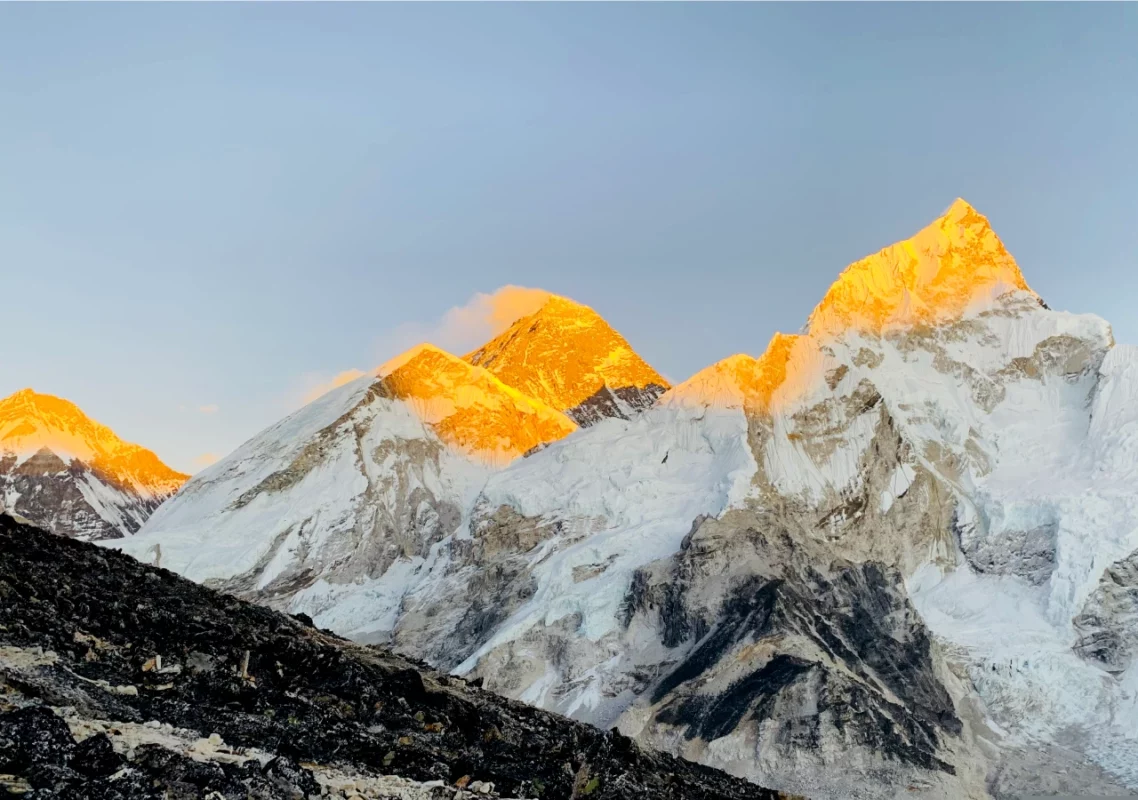
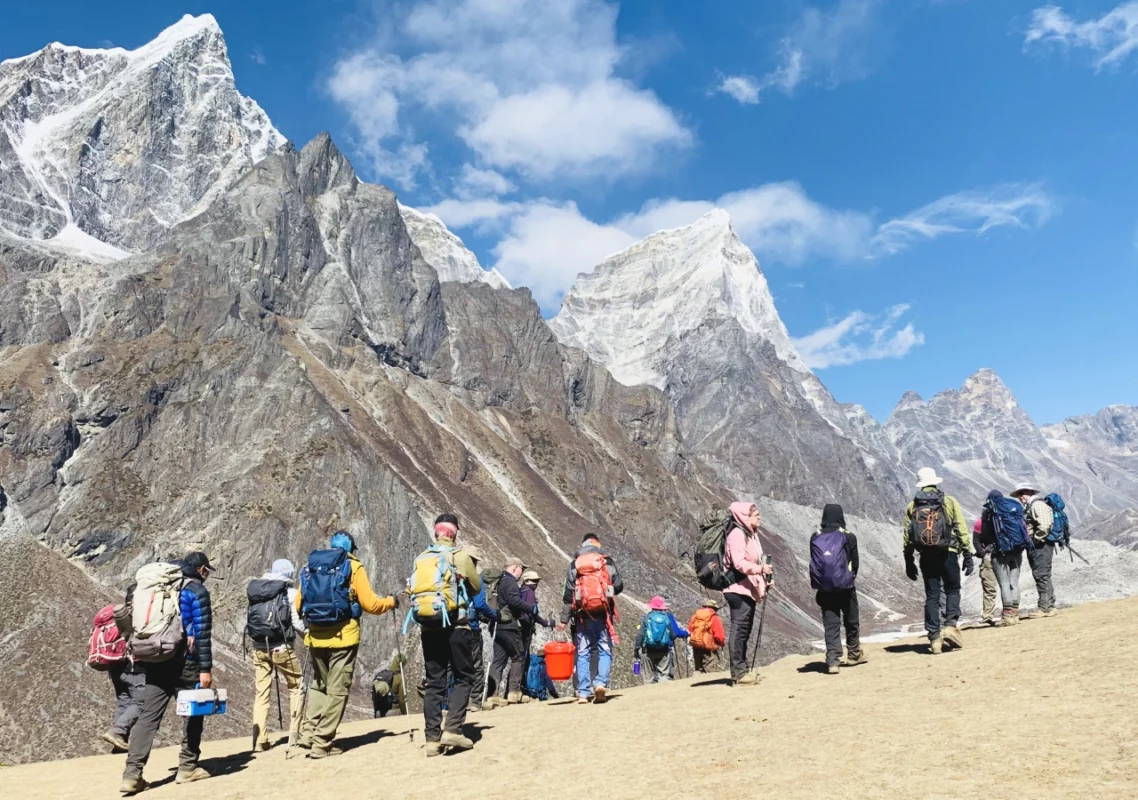
Overview of Everest Base Camp Trek – 14 Days
Everest Base Camp Trek is an iconic journey that follows in the footsteps of legendary mountaineers Sir Edmund Hillary and Tenzing Norgay Sherpa. It is done in eastern Nepal within the internationally recognized UNESCO World Heritage Site, Sagarmatha National Park. The trek winds through the beautiful Solukhumbu district of the Khumbu region.
The EBC trek offers a stunning Himalayan experience that reflects the resilience of the Sherpa community, the natural beauty, and the spirituality. On this adventure, you touch the base of the world’s highest mountain, Mount Everest (8,848.86m). You get to enjoy timeless sunrise views from popular viewpoints like Kala Patthar.
Stay in the warm homes of the Khumbu people and experience an authentic local life in the Mountains. Visit sacred ancient monasteries, witness traditional houses, and taste home-cooked local foods. Walk through the foothills of Everest to the glacial zones and discover dramatic landscape changes.
Get a life-changing experience, recreation, and rejuvenation you are searching for if you love mountain adventures! We, Explore Vision Nepal, aim to provide proper guidance and help for organizing the best Everest Base Camp Trip. You can directly contact us for more information regarding the Everest packages!
Why choose Everest Base Camp Trek?
The EBC trek is mostly known for the nearby view of Mt. Everest. However, the journey has a lot more to offer than just Mt. Everest’s view. A few things that set it apart from other treks and why you should choose the trek are mentioned below:
Sagarmatha National Park: Located at an altitude ranging from 2,800 meters to 8,848 meters, it is the highest national park in the world and one of the major highlights of the EBC trek. Also, it inhabits a wide range of endangered wildlife, flora, and fauna.
Diverse landscapes: EBC’s route passes through landscapes like rhododendron and pine forests, high alpine shrublands, meadows, and moraines and ends with the rocky terrain of the glacial area. Likewise, the trails traverse through the Khumbu valley along with other small river valleys like the Dudh Koshi river valley, Imja Khola valley and Gokyo valley.
Ngozumpa and Khumbu Glaciers: Similarly, the view of the Khumbu glacier and the Ngozumpa glacier is another special experience of the trek to the Everest Base Camp. With its source situated at an elevation of 7,600 meters, the Khumbu glacier is named the world’s highest glacier. And the Ngozumpa is the longest glacier in Nepal (36 km).
Mountain view: Close view of four of the world’s fourteen above 8,000 meters mountains, namely Mt. Everest, Mt. Lhotse, Mt.Makalu and Mt. Cho Oyu. Moreover, arriving at the lap the world’s highest mountain is mentally and emotionally rewarding in itself.
Kala Patthar viewpoint: It is one of the best viewpoints of the Everest Base Camp Trek. It is known for the sunrise and sunset views that reflect on the snowy white Everest, making it appear golden.
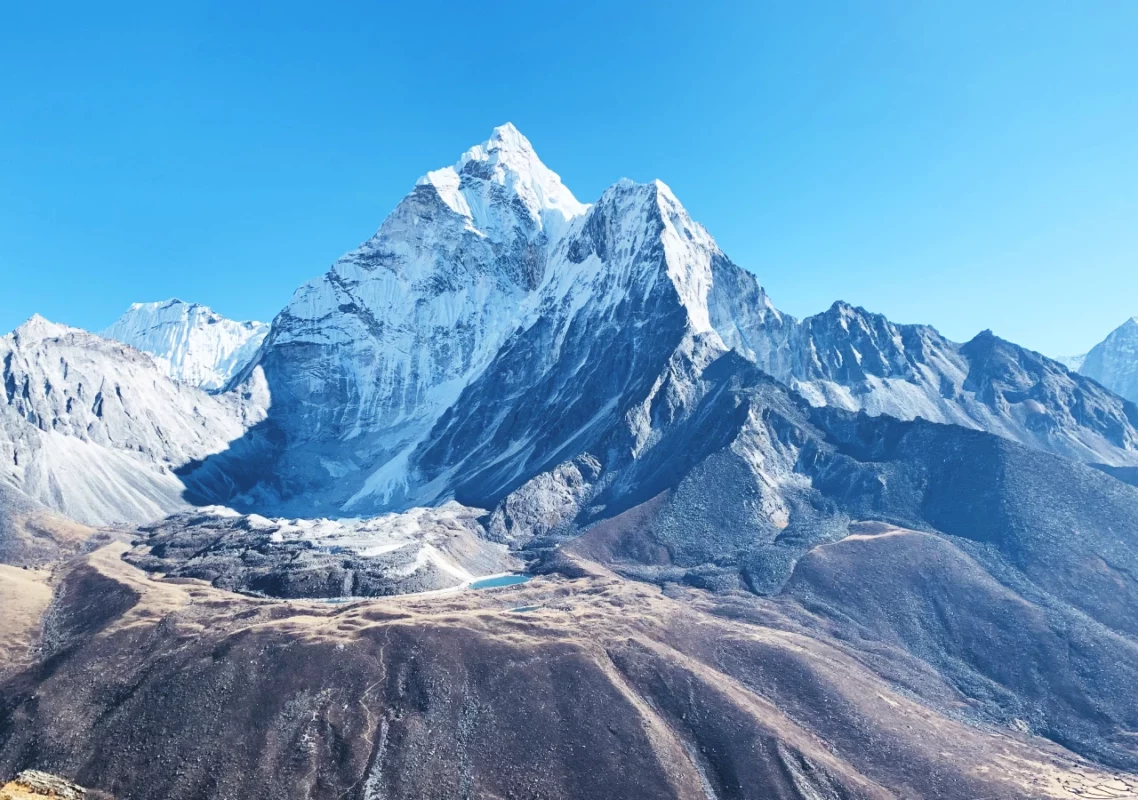
Tengboche Monastery: It is one of the most sought-after attractions of the trek. Tengboche holds religious value for Buddhists and also offers a stunning backdrop of Mt. Ama Dablam. You can also be part of the Mani Rimdu festival celebration during October or November in Tengboche Monastery.
Cultural immersion: The Trekking route of the region takes you through the Sherpa land, known for its centuries-old traditions, ancient monasteries, heritage, and deep-rooted himalayan cultures.
What Is The Difficulty Of The Everest Base Camp Trek?
The Everest Base Camp trek’s difficulty level is moderate to strenuous. This trek does not need any advanced climbing skills. However, it does need a 5 to 6-hour-long walk per day that lasts for almost two weeks. The main reason for the challenges of the trek is its sustained high altitude, as most of the trails are well above 3,000 meters. This demands a slow and steady pace and physical preparation from the trekkers.
However, even with a fair altitude challenge, the EBC journey is highly achievable. Especially because the governmental bodies and local committees are putting extra effort into keeping the routes well-maintained. Such effort has improved the security and accessibility of the trek.
This dedication has resulted in increased successful completions of the trek. Not just by experienced young people but also by beginners, juniors, and seniors. Proving that proper preparation, safety precautions, and determination are enough to conquer the EBC trek.
Understand the Difficulty Factor of the Everest Base Camp Trek:
Distance with altitude: The higher you get, the less oxygen you get to breathe. Even a short distance makes you feel tired and tough after you cross an altitude of 4,000 meters.
Limited services: Trekking to the highlands comes with the detachment from your daily routine of hustle, luxury, and media. It means you get basic facilities, shared rooms, toilets, and limited hot baths. You need to adjust to the simple living near a typical mountain life.
Average walking hours: The average walking hours can be tough for the trekkers who are new to trekking. Each day has 5 to 7 hours average walking, including several steep walks and uphill with a gain in altitude.
Number of trekking days: Trekking daily for 11 days requires determination and passion to reach the top. Considering its hard terrain and altitude, you require more stamina and a strong endurance level.
Drastic terrain changes: You need to be comfortable walking on stone stairs, suspension bridges, glaciers, rocky, narrow ridges, and forested paths. The terrain leading to the base camp has a variety of terrain switches, steep uphill, downhill, rocky, and glacial.
Unpredictable weather and temperatures: Even choosing the best time cannot fix the weather and temperatures in the mountains. The numbers and probabilities are just based on the majority case. Everyone must know that the mountain weather is unpredictable and changeable. You need to prepare yourself for the cold mornings, nights, winds, and possible snow.
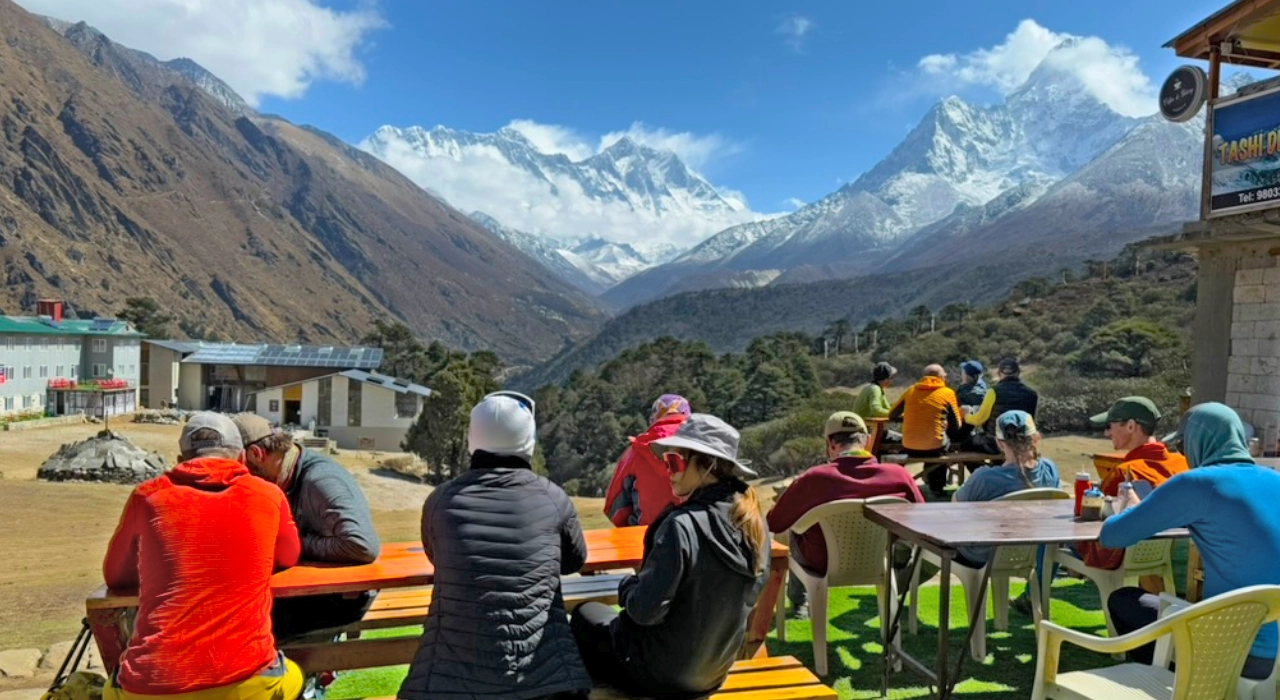
Local People and Cultural Experiences Along the EBC Trek
The most prominent ethnic group, or the local people of the Everest Base Camp trek, are the Sherpas, especially in the upper region. In the lower to mid-region of the trek, there are a few Rai, Gurung, and Magar communities as well. With a diverse ethnic group comes various cultural and traditional experiences.
This trek offers a window to immerse deeper into the cultural practices of the brave Sherpas. Alongside their culture, you also get a chance to delve deeper into their normal life. After all, haven’t we all thought about what makes the Sherpas the way they are!
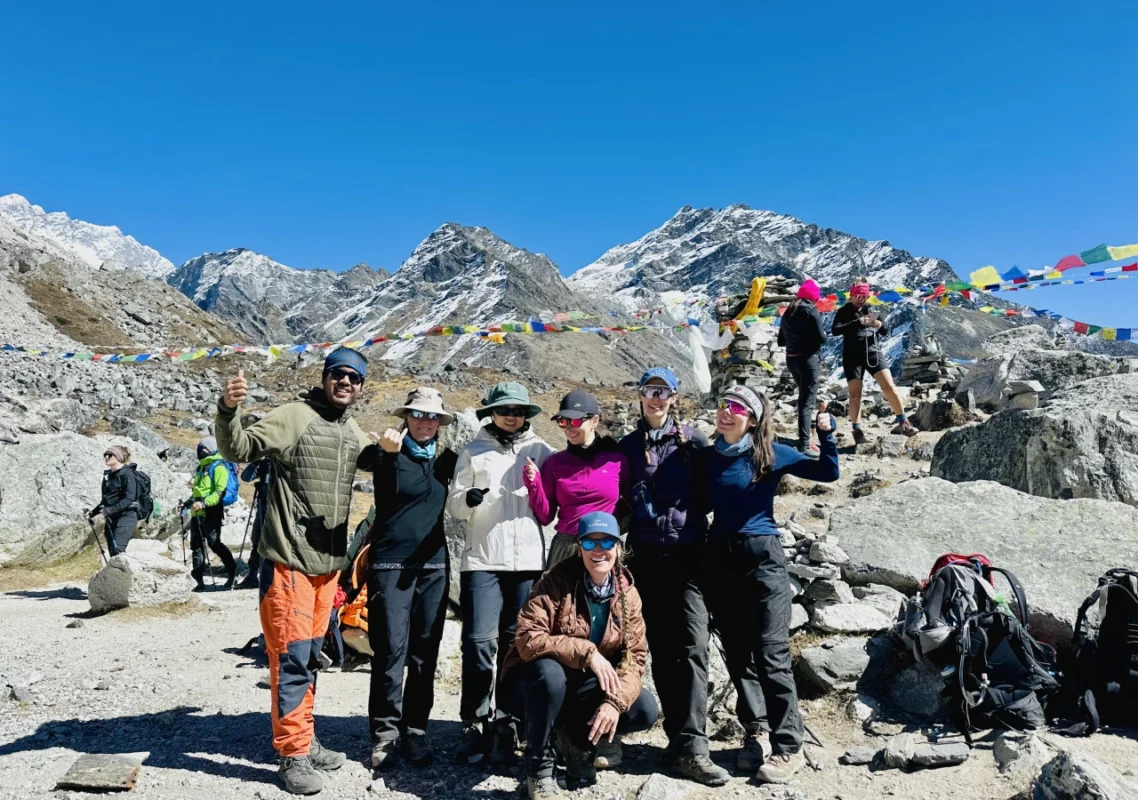
Moreover, at the Tengboche Monastery, every year, a sacred Buddhist festival called Mani Rimdu is celebrated. It starts from the tenth month’s first day in the Lunar calendar. This 19-day-long festival celebrates the founding of Buddhism. Lastly, the prayer flags, prayer wheels, chortens, mani walls, and shrines reflect the cultural beauty of Everest throughout the trail.
Accommodation on the Everest Base Camp Trek
The basic and most common accommodations of the Everest Nepal are Teahouses. A lot of the teahouses in the Everest trekking zone are upgraded, they have proper rooms with warm and cozy dining halls. Up to the Dengboche teahouse, accommodation is very safe and comfortable. As you ascend to Thukla, Locuche, and Gorakshep, rooms are basic but still provide proper beds, pillows, and warm blankets. These rooms do not have personal heater services. Only a wood fire heater is available in the common dining area.
In Lukla, Namche and Phakding, guesthouses and luxury lodges are available. Rooms in these accommodations are significantly more comfortable and offer additional amenities. These accommodations come with services such as a personal bathroom, a shower, and premium food options. If you want to upgrade your normal package accommodation to a guest house or lodge, it is no issue at all.
So far, there are no 5-star hotels on the Everest trail. However, the Hotel Everest View is the most luxurious option in the Sagarmatha region. Even though not officially classified as a 5-star hotel, they offer upgraded rooms and premium services.
Food on The EBC Trek Route
The most loved and served food is the Dal Bhat Tarkari set. The complete set comes with steamed rice (bhat), lentils (dal), vegetables (tarkari), spinach, pickle (aachar), and salad (usually sliced cucumber and carrots). Other than that, teahouses also offer breads, pancakes, chowmein (stir-fried noodles), momo (dumplings with meat and veggies), Tibetan bread, boiled eggs, omelettes, etc.
Most of the teahouses on the Everest Base Camp trail offer a good selection of Western food as well. Their menus incorporate foods like French toast, muesli, oatmeal, porridge, pizza, pasta, burgers, etc.
Moreover, they also offer various hot drinks, including different types of tea and coffee. Some of the most common teas are milk tea, black ginger tea, lemon tea and honey lemon ginger tea. Other herbal and special teas served are mint tea, green tea, chamomile tea, jasmine tea, and mixed herbal tea. Trekkers can enjoy other traditional hot drinks like butter tea (salted Tibetan tea) and Sherpa tea (a mix of milk and butter tea). Most of the towns in the trek now have bakery cafes as well, where you can try a wider variety of drinks and other bakery items.
Best Time for the Everest Base Camp Trek
The Everest Base Camp trek is achievable the entire year. However, the Spring and Autumn provide the best weather, temperature and trail conditions.
Spring starts from March in Nepal, and it ends in May. This season offers mild temperatures, blooming rhododendron, and clear, stable skies. In early March, late-winter cold can linger, but the days get sunnier and warmer from mid-March onward. This brings stable and warm weather conditions through April and May.
Autumn season (September to November) is also considered to be one of the best times for Everest trekking. September starts with late-Monsoon environmental status. So, expect sparse to moderate rainfall. However, by October and November, the skies are clear and free of any dark clouds. This offers calm, predictable weather with unobstructed panoramic views.
Furthermore, observations over the past few years indicate that Including October, November and early December offers some of the best trekking conditions, including excellent visibility, peaceful weather, and dry trails.
The rainy or Monsoon season begins in June and ends in August. Continuous rain in the monsoon make the trails slippery and muddy pretty often. But the overall trek is still doable for those who do not mind walking in wet surroundings. Do carry waterproof jackets, trekking pants and sturdy boots though. In fact, the trails in the rainy season are less crowded, providing a more personal trekking experience. Moreover, the vistas are more vibrant and luscious.
Lastly, the Winter season (December to January) offers views no lesser than a winter wonderland. But it also brings extreme cold and snowfall, deeming it more appropriate for pro trekkers. However, even for those with limited trekking experience, the EBC is achievable with proper winter gear, a slow pace, and good prior physical training.
Why Book With Explore Vision Nepal For Your EBC Trek?
Explore Vision Nepal is a local company with a solid foundation and over 15 years of experience in the trekking and touring industry. We are led by a founder who knows the trail inside out, having started his career as a guide and a porter.
Furthermore, we are legally registered, meaning we meet all the legal and safety standards, and our staff are licensed and fully insured. To help convince you even more to choose us, here is a detailed breakdown of who we are and what we have to offer:
Legally Registered
Explore Vision Nepal is governmentally registered to provide trekking and touring assistance. We are based in Nepal and understand that foreign travellers often worry about scams. So, when you trek with us, you need not worry abut them at all. Moreover, we are affiliated with authoritative bodies like TAAN, NMA, and NTB.
Licensed Guides and Insured Staff
All of our team members have the required licenses and certifications. They are well insured and have years of experience in trekking. Our team members are friendly and dedicated to providing the best possible service.
Strong Foundation
With over 15 years in the field, the owner of Explore Vision Nepal has extensive proven experience in the trekking sector. Moreover, he has worked as a guide, expedition leader, and porter, making him familiar with every aspect of the treks and their routes.
Safety Guidelines
Our guides monitor your oxygen level with an oximeter and keep track of your pulse to avoid health hazards on the Everest Base Camp Trail. If any trekker is unable to continue trekking, we will even provide an extra acclimatization day. All of our guides are well-trained to provide first aid and know how to handle AMS symptoms. They are trained in rescue protocols that should be followed during emergencies.
Quality Guide and Local Expertise
All the guides in our team are officially licensed by the Department of Tourism. They have experience in guiding big groups to rural areas of Nepal. Having local Nepali people in our team provides you with better insight into historical monuments and traditional practices. Moreover, they can fluently communicate in english.
Transparent Pricing
Our goal as a trekking and touring company is to provide good service at an affordable price. Service inclusion and exclusion in the package are mentioned clearly. Also, we have a transparent and thorough breakdown of the package cost.
Customizing Trek Itineraries
Explore Vision Nepal offers easy customization of the standard package. If you want something more than the standard package, or you feel the trek does not match your pace, then we can modify the itinerary accordingly.
Client Reviews and Testimonials
Our customers’ words online showcase our quality of service. There are several 5-star reviews on Google and TripAdvisor, where our clients have praised our professionalism and expert guidance. This has led to them returning to us for more service and referring us to loved ones.
Responsible and Ethical Tourism
Explore Vision Nepal, as a company, stands by responsible trekking principles. We do not pollute the trail or damage the environment. Likewise, we also encourage our clients to carry their trash back from the trail and dispose of it properly. None of our guides and porters are overworked, and we do not compromise with their safety and wages.


Outline Itinerary of Everest Base Camp Trek – 14 Days
Day 01: Arrive At Tribhuvan International Airport (TIA), Kathmandu (1350M/4430Ft)
Day 02: Fly from Kathmandu or Ramechhap to Lukla (2840M/9315Ft) and Trek to Phakding (2610M/8560Ft), Distance: 8 Km, Duration: 3-4 Hours
Day 03: Trek from Phakding to Namche Bazaar (3440M/11285Ft), Distance: 11 Km, Duration: 7 Hours
Day 04: Acclimatization Day at Namche Bazaar, Hike to Everest View Hotel (3880M/12725Ft), Distance: 6 Km, Duration: 4 Hours
Day 05: Trek from Namche Bazaar to Tengboche (3860M/12660Ft), Distance: 10 Km, Duration: 6 Hours
Day 06: Trek from Tengboche to Dingboche (4410M/14465Ft), Distance: 11 Km, Duration: 6 Hours
Day 07: Acclimatization Day at Dingboche, Hike to Nangkartshang Hill (4700M/15415Ft-5000M/16400Ft), Duration: 4-5 Hours
Day 08: Trek from Dingboche to Lobuche (4910M/16105Ft), Distance: 8 Km, Duration: 6 Hours
Day 09: Trek from Lobuche to Everest Base Camp (5364M/17594Ft) to Gorakshep (5180M/16990Ft), Distance: 9 Km, Duration: 7 Hours
Day 10: Hike to Kala Patthar (5550M/18205Ft), Distance: 4 Km, Duration: 3 Hours and Trek from Gorakshep to Pheriche (4240M/13907Ft), Distance 12 Km, Duration: 6 Hours
Day 11: Trek from Pheriche to Namche Bazaar (3440M/11285ft), Distance: 19.5 Km, Duration: 7 Hours
Day 12: Trek from Namche Bazaar to Lukla (2840M/9315Ft), Distance: 19 Km, Duration: 7 Hours
Day 13: Fly from Lukla to Ramechhap orKathmandu
Day 14: Departure/Farewell Day
Trip Highlights
- The journey begins with one of the most thrilling flights in the world, the Lukla flight of Everest.
- Get to explore the living museum of the glaciers, Sherpa cultures, and historic footprint, the Sagarmatha National` Park.
- Journey along the routes covered with beautiful Rhododendrons, pine forests, and glacier rivers.
- Discover the highest placed luxury hotel, the Everest View Hotel, which is recorded in the Guinness World Records.
- A spiritual visit to the sacred Tengboche Monastery, the largest monastery of the Khumbu region.
- Hike to the Nangkartshang viewpoint lets you take a glimpse of the world’s 5th-highest mountain, Mount Makalu.
- Stand at the base of the tallest mountain in the world, the Everest Base Camp.
- Climb Kala Patthar, a worldwide-recognized best viewpoint of Everest. Take a face-to-face moment with the snow-capped peaks.
- Witness stunning views of the Khumbu icefall used by the climbers.
- Take this life-changing challenge and open your doors to many awakenings and knowledge.
Everest Base Camp Trek – 14 Days Itinerary
01
Day 01: Arrive At Tribhuvan International Airport (TIA), Kathmandu (1350M/4430Ft)
Welcome to the country of Himalayas! As you land at the airport and get off, you can feel a sensation of thrill, excitement, and energy. Our representative waits for your arrival with a warm heart and a postcard in hand. Then, you are transferred to your hotel.
On the way to the hotel, the representative provides you with brief information about the trip. You are free to ask any questions and discuss the trip expectations with him/her. Unpack your luggage, freshen up, and take a rest!

Activity: Drive

Max. Altitude: 1,400m/4,593ft. (Kathmandu)

Accommodation: Hotel
02
Day 02: Fly from Kathmandu or Ramechhap to Lukla (2840M/9315Ft) and Trek to Phakding (2610M/8560Ft), Distance: 8 Km, Duration: 3-4 Hours
The journey begins with a thrilling flight to Tenzing Hillary /Lukla Airport. The take-off place depends on the time of travel and air traffic conditions.
Mostly during the peak months (March, April, May, September, October, and November), it operates from the Ramechhap Manthali Airport. You take an early morning drive of 4-5 hours to the airport from Kathmandu. And if you choose to trek during the off seasons in January, February, June, July, August, December, there are more chances of air operations from Kathmandu. For this, you prepare for the trek in standard morning time.
Whether the journey starts from Kathmandu or Ramechhap, the flight experience gives you chills. The top views of the city, slowly melting into the layers of the Himalayas, are breathtaking. You get majestic panoramas of the Langtang, Rolwaling, and Everest ranges as you slowly enter the Khumbu Region.
After the flight, you start the trek to Phakding with a slow descent, stepping into the foothills of Everest. It begins with a walk along terraced fields, dense forests, and passing local villages, Chheplung and Thado Koshi. Even the snow-capped peaks of Kongde-Ri and Kusum Kanguru appear through the hills, welcoming you in the Khumbu region. Continuing, you reach Phakding after crossing a beautiful suspension bridge where prayer flags are lined with prayers. Above the roaring river and the cascading waterfall, it is a mark of reaching your destination.
Activity: Drive/flight/Trekking

Meal: Breakfast, Lunch, Dinner
Accommodation: Guesthouse
03
Day 03: Trek from Phakding to Namche Bazaar (3440M/11285Ft), Distance: 11 Km, Duration: 7 Hours
Continuing on the trails of Dudh Koshi River, today you trek through the dense Pine forests, Villages, terrace fields, and cross suspension bridges. You get wonderful glimpses of the cultural richness as the Mani walls guide, and prayer flags decorate the area.
You pass by the picturesque riverside teahouse of Bengkar, Toktok, and reach Monjo (National Park Entry Point). Until the stop, it is steady uphill and downhill before you cross the bridge over the Iconic Hillary Bridge. It is a popular stop for those who pay keen attention to the history of Everest. On the way, you get stunning views of Mt Thamserku and Kusum Kanguru, especially around Bengkar and Monjo village.
The trail starts to get steep and demanding, with around 600 meters of forested ascent to reach Namche Bazaar. Along the Path, you walk with the scents of Himalayan Blue Pine, Rhododendron trees, Ferns, and Mosses. If you are lucky, you might get a sighting of the Himalayan Monal and mischievous langurs. The first glimpse of Mount Everest near Namche Bazaar is one of the major highlights of the day if the weather is clear. Look out for the major stops and take short breaks to enjoy each moment.
Activity: Trekking
Meal: Breakfast, Lunch, Dinner
Accommodation: Guesthouse
04
Day 04: Acclimatization Day at Namche Bazaar, Hike to Everest View Hotel (3880M/12725Ft), Distance: 6 Km, Duration: 4 Hours
This day is a wonderful opportunity to explore the cultural and natural gems of the Everest Foothills. It is an essential day that gives a time to rest, prepare, and provides a glimpse of the Khumbu region’s beauty.
On this day, we take a hike to a popular viewpoint, the Everest View Hotel. The trail has a slow uphill and passes by the National Park Headquarters. It stretches through a pine forest, Syangboche airport, and climbs to the Everest View. If the weather is clear, the viewpoint offers stunning panoramic mountain views of Mount Everest, Ama Dablam, Lhotse, and Thamserku.
If you want to hike further, you can extend the hike to Khumjung Village. It is beautifully nestled before the dramatic Khumbi Yul Lha peak. In the village, you can visit the popular Khumjung monastery, well-known for the preserved Yeti scalp. It shows the religious and historical faith of the Sherpa community.
After the hike is completed, you return to the Namche Bazaar. If you have more time in the evening, don’t forget to visit the Sherpa Culture Museum and Photo Gallery! This museum represents the history and courage of the Sherpa people, trekkers, and mountaineers. You can find different historical photographs and old mountaineering gear used by legends.
Activity: Hiking
Meal: Breakfast, Lunch, Dinner
Accommodation: Guesthouse
05
Day 05: Trek from Namche Bazaar to Tengboche (3860M/12660Ft), Distance: 10 Km, Duration: 6 Hours
On this trekking day, you get to enjoy stunning mountain views, walk by the ridgelines along the hills, challenge yourself with the steep descent, and climb uphill with the stone stairs. The trek starts with a gradual uphill from Namche and winds through the pine forest path with Blue pine, Rhododendron, and juniper trees along with mosses and lichens.
Moving forward, you can enjoy stunning panoramic mountain views from the popular stop, Tenzing Norgay Memorial. After that, you reach another point that offers a first view of Ama Dablam, Lhotse Shar, Taboche, Kangtega, and Thamserku. As the journey stretches, majestic Ama Dablam becomes a great supporter for continuing.
From there, the trail steeply descends toward Dudh Koshi River alongside the village of Pungi Tenga. Then you cross a small bridge and continue on stone stairs uphill to your spiritual stop, Tengboche. It is known for the largest monastery in the Everest Base Camp trekking route, Tengboche monastery.
Activity: Trekking
Meal: Breakfast, Lunch, Dinner
Accommodation: Guesthouse
06
Day 06: Trek from Tengboche to Dingboche (4410M/14465Ft), Distance: 11 Km, Duration: 6 Hours
Morning in Tengboche starts with soothing scents of burning junipers and the bells in the monastery. Leaving the spiritual hub behind, the trek begins with a gradual descent on a forested trail of dense rhododendron and Birch trees toward Deboche, where you can visit an old Deboche nunnery established in 1913 AD.
Moving forward, it goes uphill and reaches a village with the oldest monastery in the Everest region, Pangboche. There are the best views of Ama Dablam till Pangboche, so appreciate every interaction with Mt. Ama Dablam.
As the altitude increases, forests start to thin, and the alpine meadows dominate the area. The valley widens at the riverbanks of Imja Khola and exposes glimpses of Lhotse, Nuptse, and Makalu. You can see more Yaks and Naks on the grazing fields and pass by the teahouses of Somare and Orso before completing the ascent at Dingboche.
Activity: Trekking
Meal: Breakfast, Lunch, Dinner
Accommodation: Guesthouse
07
Day 07: Acclimatization Day at Dingboche, Hike to Nangkartshang Hill (4700M/15415Ft-5000M/16400Ft), Duration: 4-5 Hours
You are in a high-altitude zone, so it is necessary to acclimatize before continuing the journey. Ascending quickly can cause the risk of Acute Mountain Sickness. To adjust your body while enjoying it is the main purpose of this day.
On this day, you hike to the Nangkartshang Hill. It is the only day on the Everest Base Camp trail from where you can view Mount Makalu (the 5th highest mountain in the world). Mount Lhotse, Ama Dablam, and Island Peak are also visible from the Nangkartshang Peak. It takes around 4-5 hours round-trip, depending on the walking pace. You have option to hike only half way about 4700m-4800m or all the way to the top.
Activity: Hiking
Meal: Breakfast, Lunch, Dinner
Accommodation: Guesthouse
08
Day 08: Trek from Dingboche to Lobuche (4910M/16105Ft), Distance: 8 Km, Duration: 6 Hours
The trail starts with a gradual ascent through alpine landscapes and pasture lands that gets rugged and rocky with ascent. Slowly, you approach a popular stop, Thukla Memorial Pass via Thukla (Dugla). It is a sentimental and inspiring place where you can find the tombstones of great climbers who passed away while on the expedition to Everest. The pass is a challenging and thrilling part of the day.
After that, the landscape gets glacial, icy, windy, and steep. Crossing the Pass, the trail gets easy and has a gradual uphill that leads to Lobuche. You get stunning mountain views of the Taboche, Cholatse, Lobuche Peak, Pumori, and distant views of Nuptse along the way. You might witness Tibetan snow-cocks, golden eagles, Himalayan griffins, and crows.
Activity: Trekking
Meal: Breakfast, Lunch, Dinner
Accommodation: Guesthouse
09
Day 09: Trek from Lobuche to Everest Base Camp (5364M/17594Ft) to Gorakshep (5180M/16990Ft), Distance: 9 Km, Duration: 7 Hours
It is the ultimate day of this trek when the journey stretches towards the Everest Base Camp. The trail has a dramatic landscape with glacial moraines, snowcapped mountains, glaciers, and frozen grounds. You get to enjoy stunning mountain views of Pumori, Lingtren, Khumbutse, and Nuptse. Views on this day are breathtaking and surreal with no steep uphill and downhill.
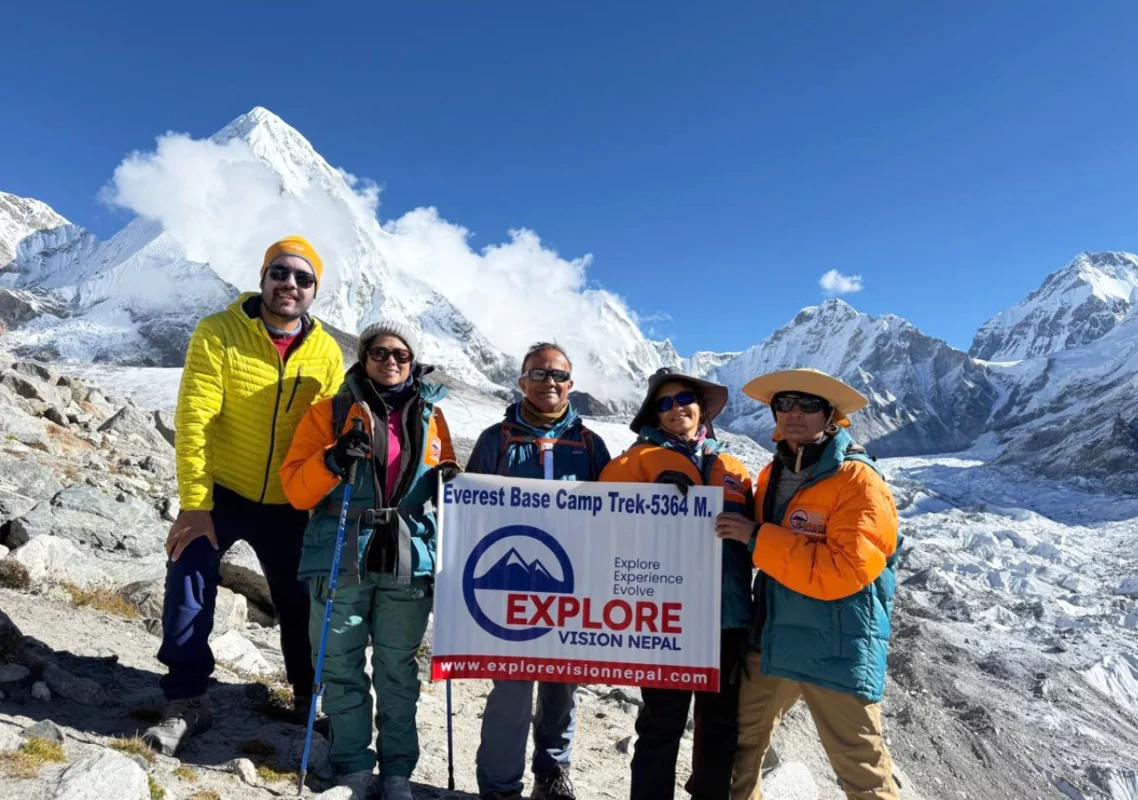
As you reach Gorakshep, you leave your belongings and take a final ascend to the Everest Base Camp. With the stunning sights of the Khumbu Glacier, you get to see Mount Everest as you are nearing the Base Camp. On reaching, enjoy your achievement of reaching the base of the top of the world, Mount Everest, and celebrate it with your team.
From the Base Camp, marvel on the panoramic mountains and the popular Khumbu Icefall at the distance. With the heartwarming moment at the EBC, the journey wins back to Gorakshep for the stay overnight.
Activity: Trekking
Meal: Breakfast, Lunch, Dinner
Accommodation: Guesthouse
10
Day 10: Hike to Kala Patthar (5550M/18205Ft), Distance: 4 Km, Duration: 3 Hours and Trek from Gorakshep to Pheriche (4240M/13907Ft), Distance 12 Km, Duration: 6 Hours
On this day, you hike to one of the popular viewpoints of Everest, Kala Patthar early in the morning. The trail to the Kalapatthar is rocky and steep uphill. From the halfway you start to notice the slow rise of Everest and the Sun aligning together. As you reach the summit, capture the timeless sunrise and witness the beauty of Khumbu. A golden sunrise with breathtaking mountain panoramas of Everest, Pumori, Lingtren, Khumbutse, and Lhotse from the viewpoint of Kalapatthar.
After the lovely moment, you return to Gorakshep, pass by Lobuche in between, and descend to Pheriche. It is steep and challenging to the knees as it is mostly downhill. However, you start to readjust to the altitude. From the non-vegetation, it starts to reconnect to the dwarf plants. You leave behind the glacial valley and approach the sub-alpine valley of Pheriche.
Activity: Hiking/Trekking
Meal: Breakfast, Lunch, Dinner
Accommodation: Guesthouse
11
Day 11: Trek from Pheriche to Namche Bazaar (3440M/11285ft), Distance: 19.5 Km, Duration: 7 Hours
The journey descends to the wide pastures, Rhododendron, and pine forests. The landscape changes into the wide river valley and open fields. You pass by the villages of Somare, Pangboche, and Tengboche in a gradual and steep downhill. After that, it starts to get a steep descent to your last stop of the day, Namche Bazaar.
Reaching Namche, it feels like you have reached a small city. You can celebrate the moment with sweet bakery items in Namche. It is a popular trend among the trekkers to devour cakes in Namche after they complete the trek. It gives a sweet ending to the wonderful journey in the Khumbu region.
Activity: Trekking
Meal: Breakfast, Lunch, Dinner
Accommodation: Guesthouse
12
Day 12: Trek from Namche Bazaar to Lukla (2840M/9315Ft), Distance: 19 Km, Duration: 7 Hours
Today, you take a final descent through the lush foothills, the river valley, charming Sherpa stops, and suspension bridges of the Everest region. Along with the flowing river of Dudh Koshi, the trek takes a steep descent through the lush forests.
The trail hugs mosses, lichens, and ferns. Enjoy the songs of birds that express farewell to the EBC trekking journey. Take a final glance at the snow-capped mountains that slowly hide behind the green hills. Pass by the small stops of Jorsalle, Monjo, Toktok, Phakding, Cheplung, and reach Lukla.
Activity: Trekking
Meal: Breakfast, Lunch, Dinner
Accommodation: Guesthouse
13
Day 13: Fly from Lukla to Ramechhap orKathmandu
A great ending to the iconic Everest Base Camp Trek! Final goosebumps to your skin and a final wave to the Himalayas until next time.
Enjoy your final views of the snow-capped peaks as the remote ridges slowly disappear beneath you. Have a hearty conversation with your team and remember the memories you created during the adventure.
The flight takes you back to the city life, you can feel the warm air and the busy streets. After that, reaching the hotel, take your well-deserved rest!
Activity: Flight/Drive
Meal: Breakfast
Accommodation: Hotel
14
Day 14: Departure/Farewell Day
For the air transfer, your guide or a representative from our team picks you up at the hotel. Then, drop you off 3 hours before the scheduled flight. Catch the final glimpses of Kathmandu valleys, stupas, temples, and prayer wheels on the drive.
At the airport, our representative provides a short farewell section with a see you next time!
Activity: Drive
Meal: Breakfast

Note:
If you have a private group and prefer a personalized experience, we can organize a custom trip tailored to your requirements and group size, running it any day you choose.
Price Includes

Price Excludes

What's included?
- All ground transfers are done in a private vehicle to/from Tribhuvan International Airport
- Round-trip flight between Kathmandu or Ramechhap and Lukla
- Two nights’ accommodation with breakfast at the best 3-star category hotel in Kathmandu
- Full board meals (breakfast, lunch and dinner) with tea/coffee during the trek
- Best available twin sharing lodge to lodge accommodation during the trek
- All the necessary permits are included: Sagarmatha National Park Entry Permit and Khumbu Pasang Lhamu Rural Municipality Permit, TIMS (Trekkers’ Information Management System) card
- One highly experienced, helpful, and friendly guide and a porter including their food, accommodation, salary, equipment and accidental insurance
- Seasonal fruits – after dinner during the trek
- Duffle bag, down jacket and sleeping bag during the trek
- Company t-shirt, trekking map and trip achievement certificate
- A comprehensive first-aid medical kit
- All government taxes and entry fees
What's not included?
- International airfare to and from Nepal
- Nepal Visa Fee (it is payable upon arrival at Tribhuvan airport, USD in cash is recommended)
- Travel insurance
- Accommodation, meals, and extra nights in Kathmandu outside the itinerary
- Personal expenses during the trek, like snacks, beverages, hot showers, charging electronics, and internet
- Tips for guide, porter, and driver (there is no specific amount)
Departure Dates
Start Date
07 Apr 2026End Date
21 Apr 2026Price
US$ 1440
 Guaranteed
Start Date
08 Apr 2026End Date
22 Apr 2026Price
US$ 1440
Guaranteed
Start Date
09 Apr 2026End Date
23 Apr 2026Price
US$ 1440
Guaranteed
Start Date
12 Apr 2026End Date
26 Apr 2026Price
US$ 1440
Guaranteed
Start Date
16 Apr 2026End Date
30 Apr 2026Price
US$ 1440
Guaranteed
Start Date
19 Apr 2026End Date
03 May 2026Price
US$ 1440
Guaranteed
Start Date
25 Apr 2026End Date
09 May 2026Price
US$ 1440
Guaranteed
Start Date
29 Apr 2026End Date
13 May 2026Price
US$ 1440
Guaranteed
Start Date
01 May 2026End Date
15 May 2026Price
US$ 1440
Guaranteed
Start Date
04 May 2026End Date
18 May 2026Price
US$ 1440
Guaranteed
Start Date
05 May 2026End Date
19 May 2026Price
US$ 1440
Guaranteed
Start Date
06 May 2026End Date
20 May 2026Price
US$ 1440
Guaranteed
Start Date
12 May 2026End Date
26 May 2026Price
US$ 1440
Guaranteed
Start Date
16 May 2026End Date
30 May 2026Price
US$ 1440
Guaranteed
Start Date
18 May 2026End Date
01 Jun 2026Price
US$ 1440
Guaranteed
Start Date
24 May 2026End Date
07 Jun 2026Price
US$ 1440
Guaranteed
Start Date
01 Jun 2026End Date
15 Jun 2026Price
US$ 1399
Guaranteed
Start Date
07 Jun 2026End Date
21 Jun 2026Price
US$ 1399
Guaranteed
Start Date
19 Jun 2026End Date
03 Jul 2026Price
US$ 1399
Guaranteed
Start Date
01 Jul 2026End Date
15 Jul 2026Price
US$ 1390
Guaranteed
Start Date
15 Jul 2026End Date
29 Jul 2026Price
US$ 1390
Guaranteed
Start Date
25 Jul 2026End Date
08 Aug 2026Price
US$ 1390
Guaranteed
Start Date
01 Aug 2026End Date
15 Aug 2026Price
US$ 1390
Guaranteed
Start Date
07 Aug 2026End Date
21 Aug 2026Price
US$ 1390
Guaranteed
Start Date
22 Aug 2026End Date
05 Sep 2026Price
US$ 1390
Guaranteed
Start Date
01 Sep 2026End Date
15 Sep 2026Price
US$ 1390
Guaranteed
Start Date
08 Sep 2026End Date
22 Sep 2026Price
US$ 1399
Guaranteed
Start Date
14 Sep 2026End Date
28 Sep 2026Price
US$ 1399
Guaranteed
Start Date
22 Sep 2026End Date
06 Oct 2026Price
US$ 1399
Guaranteed
Start Date
25 Sep 2026End Date
09 Oct 2026Price
US$ 1440
Guaranteed
Start Date
29 Sep 2026End Date
13 Oct 2026Price
US$ 1440
Guaranteed
Start Date
01 Oct 2026End Date
15 Oct 2026Price
US$ 1440
Guaranteed
Start Date
02 Oct 2026End Date
16 Oct 2026Price
US$ 1440
Guaranteed
Start Date
03 Oct 2026End Date
17 Oct 2026Price
US$ 1440
Guaranteed
Start Date
04 Oct 2026End Date
18 Oct 2026Price
US$ 1440
Guaranteed
Start Date
05 Oct 2026End Date
19 Oct 2026Price
US$ 1440
Guaranteed
Start Date
06 Oct 2026End Date
20 Oct 2026Price
US$ 1440
Guaranteed
Start Date
07 Oct 2026End Date
21 Oct 2026Price
US$ 1440
Guaranteed
Start Date
09 Oct 2026End Date
23 Oct 2026Price
US$ 1440
Guaranteed
Start Date
11 Oct 2026End Date
25 Oct 2026Price
US$ 1440
Guaranteed
Start Date
12 Oct 2026End Date
26 Oct 2026Price
US$ 1440
Guaranteed
Start Date
13 Oct 2026End Date
27 Oct 2026Price
US$ 1440
Guaranteed
Start Date
14 Oct 2026End Date
28 Oct 2026Price
US$ 1440
Guaranteed
Start Date
16 Oct 2026End Date
30 Oct 2026Price
US$ 1440
Guaranteed
Start Date
18 Oct 2026End Date
01 Nov 2026Price
US$ 1440
Guaranteed
Start Date
22 Oct 2026End Date
05 Nov 2026Price
US$ 1440
Guaranteed
Start Date
25 Oct 2026End Date
08 Nov 2026Price
US$ 1440
Guaranteed
Start Date
27 Oct 2026End Date
10 Nov 2026Price
US$ 1440
Guaranteed
Start Date
29 Oct 2026End Date
12 Nov 2026Price
US$ 1440
Guaranteed
Start Date
01 Nov 2026End Date
15 Nov 2026Price
US$ 1440
Guaranteed
Start Date
03 Nov 2026End Date
17 Nov 2026Price
US$ 1440
Guaranteed
Start Date
06 Nov 2026End Date
20 Nov 2026Price
US$ 1440
Guaranteed
Start Date
11 Nov 2026End Date
25 Nov 2026Price
US$ 1440
Guaranteed
Start Date
21 Nov 2026End Date
05 Dec 2026Price
US$ 1440
Guaranteed
Start Date
25 Nov 2026End Date
09 Dec 2026Price
US$ 1440
Guaranteed
Start Date
29 Nov 2026End Date
13 Dec 2026Price
US$ 1440
Guaranteed
Start Date
01 Dec 2026End Date
15 Dec 2026Price
US$ 1440
Guaranteed
Start Date
05 Dec 2026End Date
19 Dec 2026Price
US$ 1440
Guaranteed
Start Date
09 Dec 2026End Date
23 Dec 2026Price
US$ 1399
Guaranteed
Start Date
15 Dec 2026End Date
29 Dec 2026Price
US$ 1390
Guaranteed
Start Date
16 Dec 2026End Date
30 Dec 2026Price
US$ 1390
Guaranteed
Start Date
17 Dec 2026End Date
31 Dec 2026Price
US$ 1390
Guaranteed
Start Date
21 Dec 2026End Date
04 Jan 2027Price
US$ 1380
Guaranteed
Start Date
22 Dec 2026End Date
05 Jan 2027Price
US$ 1380
Guaranteed
Start Date
23 Dec 2026End Date
06 Jan 2027Price
US$ 1380
Guaranteed
Start Date
24 Dec 2026End Date
07 Jan 2027Price
US$ 1380
Guaranteed
Start Date
25 Dec 2026End Date
08 Jan 2027Price
US$ 1380
Guaranteed
Start Date
26 Dec 2026End Date
09 Jan 2027Price
US$ 1380
Guaranteed
Start Date
30 Dec 2026End Date
13 Jan 2027Price
US$ 1390
Guaranteed
Trip Information
Travel Safety and Useful Information for the Everest Base Camp Trek
The best way to ensure travel safety on the trek is to go slow and steady and have proper trekking gear. Due to long, strenuous walks, trekkers need to have good physical health.
People with heart and pulmonary diseases should exercise caution, as there is a high risk of AMS.
Another important step is to get a good travel insurance policy. Do not forget to check if the insurance includes emergency helicopter evacuation and emergency support, so that in case of unforeseen safety hazards, you will be covered for all the damages.
Likewise, it is essential to have basic knowledge of hiking and trekking before embarking on the trek to Everest Base Camp. Without any prior hiking and trekking experience, this particular trek is difficult to accomplish, but not impossible.
Since April 2023, solo trekking has been prohibited in the Everest region for safety reasons. Therefore, it is mandatory to have a registered guide for both solo as well as group treks. Seek a professional guide via a registered trekking company like Explore Vision Nepal, so we bear all the hassle while you just enjoy.
Incredible Viewpoint on the Routes of the EBC Trek
The Everest View Hotel: first glimpse of Mount Everest and Himalayan panoramas
This viewpoint is a perfect example of where luxury meets adventure. The peaceful atmosphere with protected views of Mount Everest, Lhotse, Kongde Ri, Thamserku, and Ama Dablam is what makes it special.
Tengboche Monastery: beauty of the mountains with a spiritual touch
Nestled on the hilltop, the monastery is boldly set between the striking views of the mountains. As if it were intentional, the views are photogenic and quietly match the ambience of the monastery. Mountains that bless the area are Ama Dablam, Everest, Nuptse, and Lhotse Shar.
Nangkartshang Hill: only point in the EBC trail where you see Mount Makalu
A short hike from Dingboche takes you to this stunning viewpoint. It is the only point on the Everest Base Camp journey from which you can see Mount Makalu. Enjoying the sunrise above the 5th-highest mountain in the world (Makalu) with Mount Taboche, Cholatse, Makalu, and Cho Oyu is just timeless!
Kala Patthar: widely known as the best Everest Viewpoint
One of the best points that every trekker whispers about is Kala Patthar. It is the only viewpoint that sets you face to face with the mighty Everest. The early hike to the point from Gorakshep lets you wonder at the golden sunrays touching the skyline of the Himalayas.
Enjoy the best Panoramas with Mount Everest, Pumori, Lingtren, Lhotse, Nuptse, and Khumbutse. The views dramatically bloom with the stunning Khumbu icefall and surrounding glaciers.
Everest Base Camp: Base of the top Mountain
Although you cannot see Mount Everest from the EBC, the views are no less interesting. Standing so close to Mount Everest is one of the best experiences on the EBC journey. You can closely view the Khumbu Icefall, and the Glacier that represents the resilience of the Himalayas.
Acclimatization/Exploration Days: Do not skip them
There are 2 acclimatization/ Exploration days in this Everest Base Camp Trekking: in Namche Bazaar and Dingboche. Trekking in high places like this requires careful consideration of altitude sickness. As your body needs to adapt to the lower oxygen level, you must not skip the days separated for acclimatization.
Some of the reasons you must take acclimatization days seriously are:
- It helps you prevent the Acute Mountain Sickness.
- Your body gets time to adapt to the new oxygen levels.
- It follows the practice of Climb High, sleep low, which is necessary to prepare your body.
- While you hike on the rest days, it helps you recover and restore your energy for the next day.
- You get to explore the side destinations of the local villages that are overshadowed.
- It helps you reduce the risks of serious conditions like High-Altitude Pulmonary Edema (HAPE) and High-Altitude Cerebral Edema (HACE).
- It increases the chances of success on the trek.
Altitude Sickness on EBC Trek and Some Tips to Prevent It
Trekking to the Everest Base Camp comes with a risk of altitude sickness. Another name for it is Acute Mountain Sickness, which does not discriminate on gender, age, or fitness level. Anyone can get it if they underestimate its chances.
The higher you trek, the higher the chances of altitude sickness due to the lower oxygen levels. So, how do you prevent it? Here are simple methods to follow so you can reduce the risks of getting altitude sickness:
- Ascend slowly and take rest often. Follow the itinerary prepared for the EBC trek.
- Keep your hydration game up. Bring your water bottles for a refill!
- Even if there are chances that you might lose your appetite at higher altitudes, eat a warm meal served by the teahouses.
- Do not ignore the mild symptoms like headache, fever, dizziness, and nausea. Talk to your guide and take a rest!
- Do not push yourself and always listen to your body.
What to pack on EBC Trek?
Especially for a route like Everest Base Camp, packing smart is essential. Here is a basic guide on what you need to bring and what difference it makes:
For clothing
- Thermals for the base. It prevents getting cold and keeps you dry.
- Down jackets for morning and evening cold.
- Windproof and waterproof for protection from wind, rain, or possible snowfall.
- Comfortable trekking pants and T-shirts. Bring at least 2 sets.
- Sunglasses, gloves, and hats to protect from the sun and cold.
- Buffs for your neck and protect yourself from cold throats.
- Extra undergarments and pairs of socks. (Do not overpack)
For your feet
- Choose waterproof and comfortable trekking boots that are ankle supportive.
- Hiking sandals as an alternative while staying at teahouses or short hikes.
Personal essentials: small but always forgetful
- Personal Toilet paper
- Sanitizer for your hands, or you can bring personal soap
- Sunscreen (SPF 40-50)
- Lip balm to avoid crusty lips
- Towel
FAQs for Everest Base Camp Trek – 14 Days
 General
To travel to Nepal, first book an international flight to Tribhuvan International Airport. You will need a passport and a visa that is valid for at least 6 months. Fill out an online form for an on-arrival visa, or you can get a pre-arrival visa from your home country.
Now you can either book a trip with a trekking agency like Explore Vision Nepal. Or you can make your own itinerary, book your transportation, carry some Nepali rupees, book your accommodation and start exploring Nepal on your own.
Nepal is known for the tallest mountain in the world, Mt.Everest. Also, for being the birthplace of Gautam Buddha. Moreover, it is recognized for UNESCO World Heritage Sites, cultural and ethnic diversity, unique food, and trekking and climbing destinations.
Yes. Nepal is filled with the Himalayas, like Mt.Everest, Mt.Annapurna, Mt. Manaslu, etc. In fact, 8 out of the 14 tallest mountains in the word are located in Nepal.
Mount Everest is situated in between China and Nepal. However, the major portion of it is located in Nepal’s Solukhumbu district, more precisely, a part of the Himalayan range of Nepal, the Mahalangur sub-range. Everest’s south base camp in Nepal side is world famous as Everest Base Camp Trek.
Mount Everest is 8,848.86 meters/29,031.7 feet high. Likewise, the Everest Base Camp is located at an altitude of 5,364 meters / 17,598 feet.
It is indeed possible for beginners to do the Everest Base Camp trek. This requires physical preparation from the trekker’s end. Go on short hikes and do endurance training to build your stamina, and practice breathing exercises for better oxygen intake. While on the trek, go slow and steady, incorporate enough rest days and have a licensed guide assist you.
Generally, Everest Base Camp takes about 12 to 16 days to complete. However, the entire trek’s length can vary according to the itinerary. It can also depend on the trekkers’ pace.
You need to trek for about 5 to 7 hours in a day. But the average walking duration can fluctuate with the destination of the day, weather, and trail conditions.
You can either trek in a group or do a private as well as a solo trek with a guide. We can arrange both as per your demand. Moreover, if you want a premium experience, we can customize the packages with options for luxury lodges as well as helicopter flights.
Normally, we start our trek every day after breakfast at around 7:30 – 8 am. On days when we catch sunrises or have to reach a viewpoint at a specific time, trekking starts early (around 4 am).
Some of the major trekking destinations of Nepal are: the Annapurna region, the Everest region, the Langtang region, the Manaslu region, the Kanchenjunga region, etc. These treks are about 7 days to 3 weeks long. Likewise, some of the shorter popular trekking routes and destinations of Nepal are the Poon Hill trek, Mardi Himal trek, Pikey Peak trek, etc.
We are a trusted local company located in Nepal with 15+ years of expertise in trekking and tours. Our team has local staff who meet all the legal qualifications. Lastly, we keep your safety and good experience above everything.
Yes, Nepal is one of the most secure places all over the globe for travellers. Nepal warmly welcomes people of all races, ethnicities, sexual orientations, and religions. In fact, in Nepali hospitality, guests are considered equal to God, ‘Atithi Devo Bhaba’ and are treated so.
Yes. You should keep your passport with you during the EBC trek. Various checkpoints ask for it to verify your identity.
 Preparation & Fitness
Prior trekking experience is not a must for the trek to Everest Base Camp. But you do need to have a good fitness level and stamina. Most of the first-time trekkers have completed the trek by going slow and steady, with the assistance of a guide and with proper acclimatization.
Trek doesn’t demand that you be super fit. But you do need to have good physical fitness and endurance. Also, stay mentally fit and be ready to conquer any situation on the trail.
Training that improves cardiovascular health, like running, jogging, and swimming, is necessary for the trail. On rocky terrain, stability and strength are very important. So, strength training is necessary. Likewise, train your lungs for thinner air at high altitude with breathing exercises.
Good cardiovascular and pulmonary health is a crucial physical standard to combat altitude sickness. Likewise, you need strong lower-body and core strength to sustain a long, repetitive walk.
Yes, practice breathing exercises for the Everest Base Camp trek. These exercises help optimise oxygen intake in higher regions where the air is much thinner and the temperature is lower.
 Insurance & Visa
You can either get visa at your country’s embassy or opt for a visa on arrival. For a visa on arrival, you need to fill out the online form on the official website of the Department of Immigration. Keep the receipt, and submit it at the immigration desk.
Nepal’s tourist visa costs US$30 for 15 days, US$50 for 30 days, and US$125 for 90 days.
Note: Diplomatic passport holders of China, Russia, Brazil, and Thailand have a visa exemption. Likewise, Indian citizens need not have a visa to travel to Nepal either.
 Guides & Support Staff
Not all trekking destinations in Nepal require a guide and porter. With prior experience, you can independently trek in the Annapurna region and the Everest region. But you should hire a guide and porter for your safety and easy navigation.
However, for restricted areas like Upper Mustang, Kanchenjunga, Manaslu, etc., guides are mandatory.
Yes, many people in Nepal can speak English. In the lower to mid region, almost everyone can communicate in English. As you move up, even if they may not be fluent in English, they can exchange basic greetings. With Explore Vision Nepal’s assistance, you do not need to worry about the language barrier, as all of our guides can communicate in English and will be at your assistance.
They will carry about 25 to 30 kg on the Everest Base Camp trek. We, as a responsible travel company, do not put extra weight on our porter and put their safety at risk.
 Accommodation and Facilities
Teahouses in the Everest Base Camp trek typically offer a clean, private twin-sharing room with two comfortable beds that are equipped with a basic mattress, pillow, and warm blanket. They have a shared dining area where trekkers gather for their meals.
Yes, Normally, You can get a private room during the EBC trek and in Kathmandu. However, availability of the private room varies with location and season though. In the higher altitudes like Gorakshep, getting private rooms can be difficult sometimes.
For standard accommodation during the trek, teahouses do not offer attached toilets. However, attached bathroom facilities are available in some lodges and hotels in the lower regions, like Lukla, Phakding and Namche Bazaar. Higher places like Thukla, Lobuche, Gorakshep and Everest Base Camp does not have any attached bathroom facilities at all.
Availability of western toilets and showers varies with location on the EBC route. In the lower area, western toilets and showers are available. Meanwhile, in the higher elevations, there are mostly squat toilets and bucket showers.
Most of the guesthouses has wood fire heater in the dining hall and turn it on only in the morning and evening. But there is not heater facilities in the room on the Everest Base Camp Trek.
 Food and Drinks
The most common food served in the teahouses is the staple Dal Bhat Tarkari. Moreover, they also offer various Nepali and Western dishes. Yes, both vegetarian and vegan food is offered.
Yes, the food in the mountains is usually hygienic and pretty safe to consume. To be extra cautious, avoid eating meat in the higher regions, as they may not have a proper refrigeration facility.
You don’t have to eat ‘Dal Bhat’ every day, but it is highly recommended due to its high nutritional value. If you do not like the idea of the same food every day, that is okay too. Go through the food options available at the teahouse and order what you want. Besides Dal bhat, fried noodles, fried rice, chapatti bread, variety of soups, omelettes, pizza and pasta etc are available at the guesthouses.
You can get bottled water at every place and guesthouses, simply can buy it. If you are not buying bottled water, you should carry your own water bottle on the Everest Base Camp trek and refill it at the teahouse where you stay before starting the trek. Do not drink water from a random tap, or at least purify it before drinking.
Yes, the teahouses provide you with boiled water to drink. They charge about NPR 100 to 400 for a liter of boiled drinking water.
Yes, you will stop in between the camp to have lunch everyday. The lunch break will be about 45 minutes to an hour. if you are doing mountain passes, you will get packed lunch for certain days.
 Weather & Seasons
In the spring season, the weather during the Everest Base Camp trek is mostly bright and sunny. The summer is typically rainy with mild snow in the upper regions. The weather is cool, and the skies are clear during the autumn season. Lastly, in the winter season, the temperature is cold, dry, and filled with snow.
The average temperature is about 5°C to 20°C in the lower region and -5°C to 10°C in the higher region during spring.
During the summer season, the average temperature is about 0°C to 25°C in the lower region and 0°C to 10°C in the higher region.
Likewise, the temperature is about 22°C to 25°C in the lower region and 15°C to -7°C in the rainy season in the upper region.
Meanwhile, temperature drops during the winter season and reaches 0°C to 10°C in lower areas and −5°C to −20°C in higher areas.
It depends. It can drop beyond the freezing point, especially at the higher altitudes. In villages like Dingboche, Lobuche, Gorakshep, and Base Camp itself, temperatures below freezing are common during the early morning and night.
Likewise, in the higher lands during late autumn, winter, and early spring, temperatures below 0°C are common. Meanwhile, lower lands like Lukla and Namche Bazar are comparatively warmer.
In the spring season, early March still has some residual snow from the winter. There are also chances of light snowfall around the higher regions. The remaining time period of March and April is pretty dry, with no expected rainfall.
Late May experiences light pre-monsoon rain. Likewise, in the monsoon, precipitation occurs very often. The beginning of autumn, especially September, brings light or moderate precipitation. The remaining time of the season, the weather is dry with little to no possibility of rainfall.
Furthermore, late November and early December has probability of light snowfall as winter approaches. Lastly, the winter season experiences light snowfall in the lower regions and heavy snowfall in the higher regions.
 Health & Safety
To prepare yourself for safe trekking, keep your body and mind fit. Attempt short hikes, go on a run and build your stamina. Be a part of the trek with a registered trekking company like Explore Vision Nepal, as we provide a licensed guide and safe logistics. Get travel insurance that offers emergency helicopter evacuation.
Three forms of altitude sickness are some of the major health concerns while on the Everest Base Camp trek. The other issues include Khumbu cough, fatigue and muscle strain, gastrointestinal issues, minor injuries, and cold-related issues like hypothermia and frostbite.
Risks of altitude sickness range from headaches, getting dizzy, and nausea to more serious conditions like shortness of breath and increased heart rate. To avoid it, you should gain altitude gradually. Never rush the trek, take rest days, keep hydrating, and make sure to have well-balanced food.
Risks of altitude sickness range from headaches, getting dizzy, and nausea to more serious conditions like shortness of breath and increased heart rate. To avoid it, you should gain altitude gradually. Never rush the trek, take rest days, keep hydrating, and make sure to have well-balanced food.
Yes, carry medicines like Diamox to prevent altitude sickness, especially during the EBC trek. But you must consult with your doctor for the use and dosage of Diamox.
In case you are unwell during the trek, our team will provide you with first aid and pause until you recover. If the symptoms worsen, we will take you to the nearest clinic or hospital. But in emergency situation, we do arrange helicopter evacuations. There will be an additional charge for this.
Yes, oxygen support is given in case of health emergencies. However, it is not a packet inclusion cost. Therefore you need to pay an additional fee for the oxygen.
Acclimatization days are necessary because they help your body to adjust with altitude. This is true as you trek to a higher altitude, your breathing improves and the risk of AMS reduces if you take rest days in major areas like Namche Bazar or Dengboche. Overall, for a safer, comfortable and enjoyable Everest trekking, it is necessary to acclimatize.
 Packing & Gear
A daypack of around 25 L to 50 L with comfortable shoulder and waist straps is perfect for the EBC trek. Make sure the backpack has a rain cover and multiple compartments.
The total weight limit on the Lukla flight is 15 kg (check-in bags can be up to 10 kg, and hand bags can be up to 5 kg). If your luggage is more than the weight limit, you should pay US$1 per kg. Or in the worst-case scenario, you will have to discard a few of your things at the airport.
For the EBC trek, you should pack clothing in three layers. You must carry an inner layer, an insulating mid-layer, and an outer layer. Also, have trekking boots with good grip, gloves, windproof jackets, trekking trousers, healthy snacks, and a first aid kit.
Usually not, bring your own towels and toiletries when on the Everest Base Camp trek. Some teahouses may provide soap for common use. Yet it is not always clean. So, we suggest you bring your own.
We do offer a down jacket and a sleeping bag. Moreover, we even offer duffel bags and T-shirts. However, after the completion of the trek, you should return them to the company.
If you do not have proper trekking gear, like trekking boots and trekking bags. We can even assist you with renting or buying them.
 Booking & Payment
The first step is to contact us via WhatsApp or Explore Vision Nepal’s website. We will then help you either select a standard package or tailor-make one that suits you. Once the details are finalized, you will have to pay a 15% advance of the total fee. Once you confirm this payment, we will officially book your trek.
Yes, under unforeseen circumstances, the trip can be postponed even after booking. We understand things don’t always go as planned, so postponing trips causes no extra charges.
If you decide to cancel the trek after the final confirmation, please be aware that the initial 15% booking fee is strictly non-refundable.
Yes, you can transfer your booking to someone else. But the trip transfer is only done to an individual of the same nationality as the actual booker.
If there is a delay in your international flight, we will assist you to make the waiting period easier. Since no one can predict flight cancellations and delays, the package does not cover expenditures in such cases.
No, we do not charge fees for changing the trip date under an unavoidable situation from either side. Tell us what the issue is, and we will help you reschedule the trip without any extra fee.
 Transportation & Flight
Yes, at Explore Vision Nepal, airport pick-up and drop-off service is included in the package. Our representative will be waiting for your arrival at the Tribhuvan International Airport and will escort you from there. We will also see you off to the airport.
We select transportation based on the group size and trip plan. You can choose from a private car, jeep, van or bus, based on what suits your particular group.
It takes approximately 20-30 minutes to arrive in Thamel from Kathmandu airport via road (private car/private bus).
The flight from Kathmandu to Lukla is around 25 to 30 minutes long. The drive to Ramechhap from Kathmandu is about 5 hours long. After that, the flight from Manthali Airport to Lukla is only about 15 to 20 minutes.
Most Lukla flights are diverted to Manthali airport in Ramechhap during peak season, which makes getting a direct flight from Kathmandu to Lukla difficult. However, it can be achieved by booking the flight several months in advance (around 6 months).
Yes, we usually take a flight to Lukla from Ramechhap. We first drive to Ramechhap via road and then take a flight to Lukla from Manthali Airport. To reach Manthali airport on time, we leave Kathmandu early in the morning (around 3 to 4 am) via private vehicle.
As Lukla flights are weather-dependent, delays or cancellations are common, especially during the late monsoon and early winter season due to critical weather conditions. Extremely unstable weather can force airlines to cancel flights for an entire day. But the packages do not include any extra days added due to cancellations. Therefore, you have to look after your own expenses.
Yes, you can skip a regular plane flight back and forth to Lukla and take a helicopter instead. Or you can travel to Salleri via road and after that, trek to Lukla. Travelling to Salleri from Kathmandu via road takes about 8 to 12 hours. If roads are in good condition, we can take a jeep to Thamdanda or Surke and trek to Phakding.
Yes, a helicopter flight is available from Kathmandu to Lukla. Adding a helicopter flight increases the price of the package. For details on helicopter flights, feel free to reach out to us via WhatsApp or our website.
 Optional Expenses
Nepal is pretty affordable. You can carry about US$20 to US$25 per day in Nepali rupees. This should be enough for things like buying snacks, paying for hot showers, paying for Wi-Fi services and charging your electronic devices.
You can exchange foreign currency for Nepali rupees at Tribhuvan International Airport. Banks and licensed money exchange shops also offer money exchange services around your hotel at Thamel and other places. You need to show your passport alongside your other official documents to exchange money.
 Connectivity & Transaction
In the lower regions, you can use Ncell or NTC SIM cards for internet access. This usually works well up to Dingboche now. However, as the mobile signal deteriorates above this point, it is best to opt for the dedicated Everest Link and Air Link Wi-Fi system.
For Everest Link and Air Link, a prepaid card can be purchased from major stops like Namche Bazaar, Dingboche and the card will be available at most of the guesthouse along the route. Its prepaid packages cost around US$20 for 10 GB and US$30 for 20 GB (both valid for 30 days).
They also provide high-altitude and short-term options that cost between US$5 and US$10 per GB. Their prices increase as you climb up.
Wi-Fi services provided by teahouses cost around US$1 to US$3 per day in lower lands and are sometimes even included in food and accommodation packages. In the highlands, costs can go up to US$5 to US$7 per day.
Yes, charging facilities for your phone and electronic devices are available at the teahouse on the Everest Base Camp trek. As you ascend, charging devices costs around US$2 to US$5. In most of the teahouses, charging spaces are communal, so keep a close watch on your belongings.
Mobile network coverage is reliable up to Dingboche, but it deteriorates afterwards. While there are irregular mobile signals near the Base Camp, they are not consistent. The best way to guarantee communication above Tengboche is by purchasing access to the Wi-Fi, Internet service available at the guesthouse.
Trip Reviews


