



24x7 Support
+977 9851349597
Unbeatable Holiday Offers - Save Up to 20% on Your Next Adventure!



Challenge the most extreme adventure in Everest region
Everest Three Passes Trek – 17 Days
Based on 50 reviews

Duration
17 Days
Trip Difficulty
Challenging
Max Altitude:
5,545m. / 18,192ft.
Activity
Trekking/Hiking
Group Size
1-15
Best Season
Autumn, Spring
Meals
Breakfast, Lunch & Dinner
Accommodation
Hotel, Lodge, Guesthouse
Transportation
Private Vehicle | Flight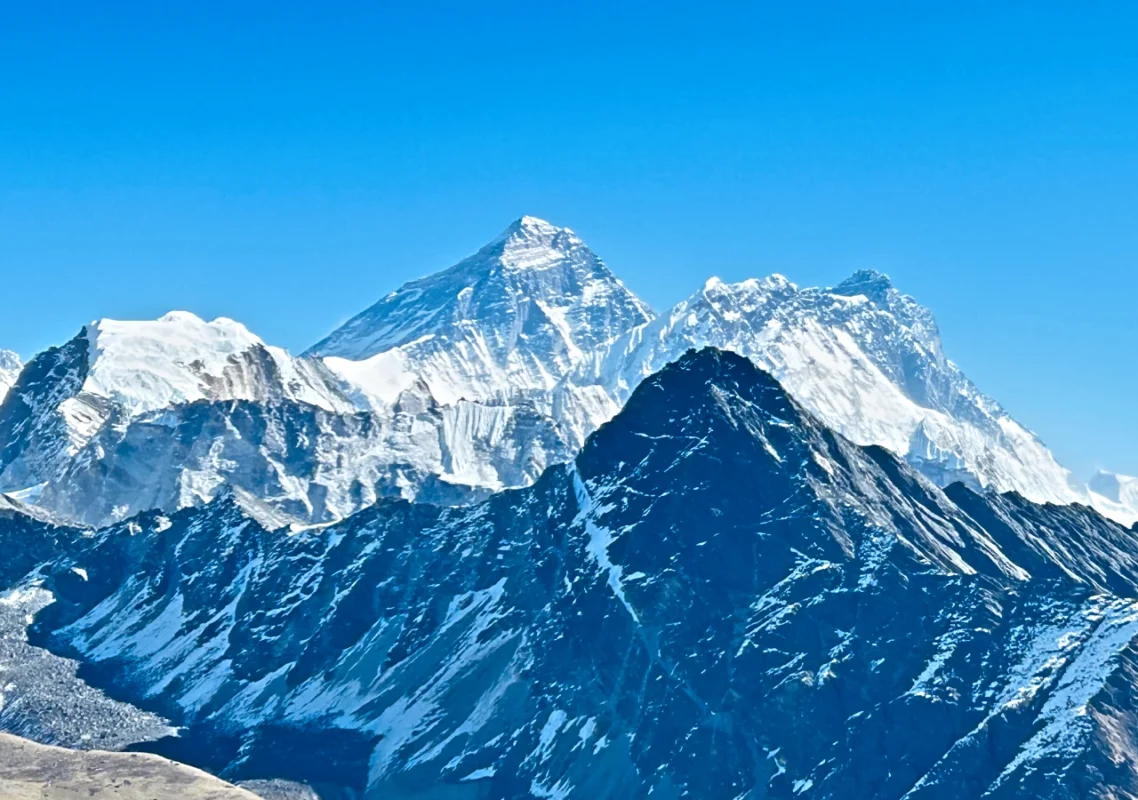
Overview of Everest Three Passes Trek – 17 Days
Everest Three Passes Trek is an adventurous journey that crosses three legendary passes in the Everest region. This is the most extreme adventure that challenges your endurance level and offers a life-changing experience. With this Everest Passes trek, you get a perfect mixture of adventure, cultural richness, and natural beauty.
The journey is done within the pristine Sagarmatha National Park of Nepal. It is a UNESCO World Heritage site located in the northeastern part of Nepal, in the Khumbu region. You get to discover breathtaking panoramic mountain views, picturesque river valleys, and glacial moraines.
It begins with a thrilling flight from Lukla, ascends to Sherpa villages, and crosses Renjo La Pass. After that, continuing to explore Gokyo Valley, it passes Cho La Pass and moves to the epic Base Camp of Everest, EBC. Then, passing Kongma La Pass, enters Imja Valley and returns through the Everest Base Camp main trail.
Our designed itinerary is perfect for an adventure experience and covers almost all the most iconic places. We offer expert guides and ensure your safety with care. Join this exclusive journey of the Everest Three Passes Trek and custom plan your trip with us, Explore Vision Nepal!
Everest Three Passes Trek Difficulty – Who Is This Trek For?
The Everest Three High Passes Trek is a challenging alpine adventure. It takes quite a toll on a trekker and is not recommended for inexperienced ones. The trek is up to the most physically fit hikers who are willing to endure a long, high-altitude walk over rough terrain.
The circuit brings together three major high Himalayan passes of Kongma La (5,535 m), Cho La (5,420 m), and Renjo La (5,360 m). The daily hikes are of 7–9 hours, steeply ascending and descending across rocky moraines, glacier fields and icy patches.
Trekkers must be well acclimatized and have a strong mindset to be able to cope with the altitude stress, unpredictable mountain weather and limited comfort at high altitudes. Although no technical climbing skills are needed, prior high-altitude trekking experience (4,500 m and above) is strongly recommended, together with good cardiovascular endurance, leg power, and balance.
This trek is only for the most adventurous and daring hikers who are looking for a complete Everest region experience that blends physical challenge, wilderness and superb mountain views. Novices, casual walkers or those with limited time or fitness preparation should choose less demanding Everest treks.
What Makes the Everest Three Pass Trek Special?
Everest Three High Pass Trek is unique because it gives the most comprehensive, demanding and immersive trekking experience in the Everest region. It combines the utmost high-altitude adventure with the unmatched scenic and cultural diversity of this iconic Himalayan destination in a single journey.
Unlike standard Everest Base Camp routes, it crosses three very high and thrilling mountain passes, Kongma La, Cho La, and Renjo La, all above 5,300 meters. These 3 passes link remote valleys, hidden lakes, glaciers, and far less traveled paths that only those who dare to take the trek can ever see and feel.
Besides, a panorama of iconic 8,000-meter high peaks of Everest, Lhotse, Makalu, and Cho Oyu is a continuous reward, along with the changing visuals of the Khumbu, Ngozumpa, and Cho Oyu glaciers. The trek also integrates classic highlights like Everest Base Camp, Kala Patthar, Gokyo Lakes, and Gokyo Ri.
Moreover, deep cultural interaction is achieved through visits to the traditional Sherpa villages off the busy main route. The trek’s physical intensity, isolation, and variety of routes make it a full scale once in a lifetime Himalayan expedition.
Cultural Experiences on the Everest Three Pass Trek
The Everest Three Passes Trek not only provides a grand physical adventure but also a very profound cultural experience of the rich Sherpa and Tibetan influenced Himalayan communities.
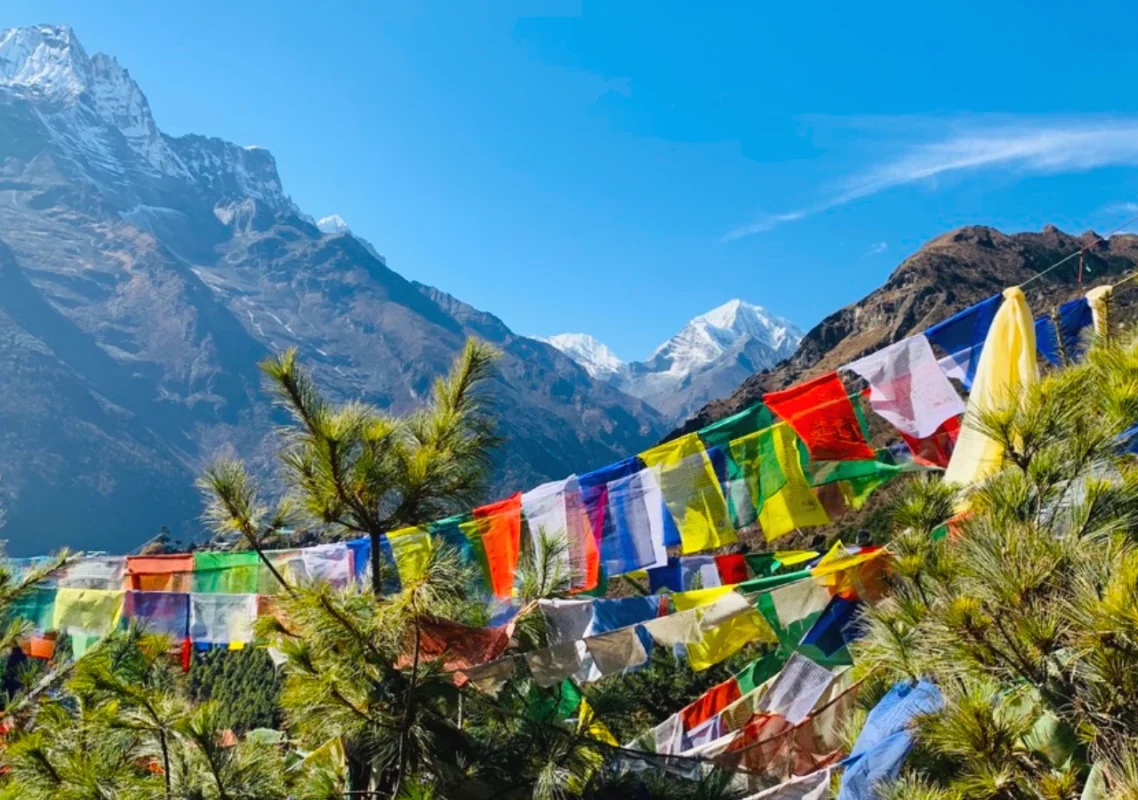
Along the way, you will encounter villages like Namche Bazaar, Dingboche, Pangboche and Gokyo with traditional stone and wood houses, mani walls and prayer flags. The area is dotted by old monasteries, stupas, and chortens where the locals perform their religious rites while the visitors get to witness the Buddhist rituals, festivals and local celebrations.
The Sherpa people’s warm hospitality, their storytelling traditions and daily practices like yak herding and farming reveal the lifestyle adapted to the extreme high-altitude conditions.
Unlike the busier routes, the Three Passes Trek offers extended stays to hidden hamlets, letting you have very close cultural contacts. You will learn the spiritual practices and have a greater understanding of the endurance and traditions of the mountain people.
Accommodation and Food During the Trek
During the Everest Three High Pass Trek, the main accommodation options are Teahouses and Lodges. They offer very simple but nice and comfortable places to stay. The accommodation facilities are generally determined by the height and location. At popular low altitude places, you can usually find private rooms with attached bathrooms. While at the higher altitudes, there are shared rooms with simple bedding and squat toilets. You can also get to enjoy a hot shower, internet and charging facilities at an added cost.
The common areas in teahouses have stoves or wood burning fireplaces for heating purposes. As heated rooms are rare, you must have a good-quality sleeping bag and warm clothing to stay warm and comfortable. Despite some hardships, the teahouse system allows you to take a break, revitalize and mingle with other people. The main dishes at the teahouses are Nepali and Tibetan mixes like dal bhat (rice and lentil soup), noodle soup, thukpa, vegetable curries and eggs. Besides, quick bites such as energy bars, nuts and chocolate are usually available. Furthermore, you can get tea, coffee and hot lemon drinks to soothe yourself in the cold high altitude environment.
Although vegetarian choices are readily available, it is good to inform the teahouses beforehand in order to accommodate strict diets. Usually, hot water is available for drinking but it is often charged. Bottling your water in a refillable bottle and using water purification tablets is the best way to hydrate throughout the trek safely and conveniently. This is especially important in remote areas where the water sources might not be clean or limited.
Right Time to Take the Everest Three High Pass Trek
The Everest Three High Pass Trek is a fantastic experience when done in the Spring (March to May) and Autumn (September to November) seasons, mainly due to their mild and stable weather.
Springtime fills the valleys with the beautiful colors of the rhododendron and alpine flowers. Likewise, the temperatures are moderate and the days are sunny and clear which makes it possible to see the Himalayas in their best visibility.
The autumn season with its clean air, stable weather, clear skies, dry trails and sharp mountain views, makes it the most favorable time for photography as well as safe crossing of high passes.
The wet months of June to August should be avoided as it rains heavily and the heat is unbearable. The trails are usually muddy and landslides are a concern. Similarly, winter from December to February is very cold with heavy snow, making the high passes hard and risky to cross.
Breathtaking Views from the Three High Passes
Renjo La Pass: It is the first pass that you cross during your Everest Three Pass Trek. The pass offers panoramic views of the Gokyo Valley and the Khumbu region, including four of the 14 highest mountains in the world. The four 8000ers are Mount Everest, Cho Oyu, Lhotse, and Makalu.
Cho La Pass: The second Pass you cross is Cho La Pass. It is dramatically located between the main routes of Gokyo and Everest Base Camp. Crossing it is a bit challenging yet provides a raw and unfiltered version of the Himalayas, with glaciers and high peaks. You can view Mount Ama Dablam in the South, Cholatse in the west, and Lobuche East and Baruntse to your right.
Kongma La Pass: This is the last and highest among the 3 Passes of the Everest Three Pass Trek. It is the most remote and pristine pass in the Khumbu region that offers close views of the Magnificent Himalayas. You get to wander at the peaks of Mt. Makalu, Nuptse, Lhotse, Ama Dablam, Iceland Peak, Tabuche, Thamserku, and many others. You cannot see Mount Everest from that point, but the glaring views of Lhotse and Makalu make it a unique ending part of the Three Pass.
Why Choose Explore Vision Nepal for the Everest Three High Passes Trek?
Choosing Explore Vision Nepal as your trekking partner for the Everest Three Passes Trek signifies the choice of a thoroughly proficient and safety conscious trekking provider. After many years of coming up with various expedition arrangements in the Everest region Explore Vision Nepal has built a strong presence in effortlessly managing the logistics.
We guarantee reliable processing of permits, secured bookings at the teahouses, flights to Lukla on time and proven guiding and portering services, all of which are necessary for the strenuous Three Passes trek. Our expert team has a deeper understanding of the acclimatization requirements, climatic conditions and emergency set ups, which makes it safer and more enjoyable for trekkers from different backgrounds.
Apart from the skillful operation Explore Vision Nepal is also a provider of personalized support. We make the itineraries according to individual fitness levels, paces, and cultural interests, all while keeping a commitment to the ethical and sustainable tourism practices. Transparent pricing, clear communication and responsive assistance from pre-departure planning until post-trek services ensure a smooth, stress-free experience.


Outline Itinerary of Everest Three Passes Trek – 17 Days
Day 01: Arrive At Tribhuvan International Airport (TIA), Kathmandu (1350M/4430Ft)
Day 02: Fly from Kathmandu or Ramechhap to Lukla (2840M/9315Ft) and Trek to Phakding (2610M/8560Ft), Distance: 8 Km, Duration: 3-4 Hours
Day 03: Trek from Phakding to Namche Bazaar (3440M/11285Ft), Distance: 11 Km, Duration: 7 Hours
Day 04: Acclimatization Day at Namche Bazaar, Hike to Everest View Hotel (3880M/12725Ft), Distance: 6 Km, Duration: 4 Hours
Day 05: Trek from Namche Bazaar to Thame (3820M/12530Ft), Distance: 9 Km, Duration: 5 Hours
Day 06: Trek from Thame to Lungden (4380M/14365Ft), Distance: 9.5 Km, Duration: 6 Hours
Day 07: Trek from Lungden to Gokyo Lake (4790M/15710Ft) via Renjo La Pass (5360M/17580Ft), Distance: 11.5 Km, Duration: 7 Hours
Day 08: Hike to Gokyo Ri (5360M/17580Ft), Distance: 4 Km, Duration: 3 Hours and Trek to Thangnag/Dragnag (4700M/15415Ft), Distance: 4 Km, Duration: 3 Hours
Day 09: Trek from Thangnag to Dzongla (4830M/15845Ft) via Cho La Pass (5420M/17780Ft), Distance: 9 Km, Duration: 7 Hours
Day 10: Trek from Dzongla to Lobuche (4910M/16105Ft) and Rest, Distance: 6 Km, Duration: 3 Hours
Day 11: Trek from Lobuche to Everest Base Camp (5364M/17594Ft) to Gorakshep (5180M/16990Ft), Distance: 9 Km, Duration: 7 Hours
Day 12: Hike to Kala Patthar (5550M/18205Ft), Distance: 4 Km, Duration: 3 Hours and Trek from Gorakshep to Lobuche (4910M/16105Ft), Distance 4.5 Km, Duration: 3 Hours
Day 13: Trek from Lobuche to Chhukhung (4730M/55515Ft) via Kongma La Pass (5535M/18155Ft), Distance: 10.5 Km, Duration: 7 Hours
Day 14: Trek from Chhukhung to Namche Bazaar (3440M/11285Ft), Distance: 25 Km, Duration: 7-8 Hours
Day 15: Trek from Namche Bazaar to Lukla (2840M/9315Ft), Distance: 19 Km, Duration: 7 Hours
Day 16: Fly from Lukla to Kathmandu or Ramechhap
Day 17: Departure/Farewell Day
Trip Highlights
- Get a scenic and thrilling flight experience to the well-known Tenzing Hillary Airport for its one of the shortest runways.
- Explore the national park carved with the tallest Himalayan ranges, glacial valley, and Sherpa bravery stories, Sagarmatha National Park.
- Explore the rich side of the Everest region’s foothills. Begin your journey on the forested trail following the rivers that offer a beautiful jungle walk experience.
- Wander around the largest Sherpa settlement of the Khumbu region, Namche Bazar. Discover the hidden gem around the village, Everest View Hotel.
- Visit ancient monasteries like Thame Monastery and Tengboche Monastery, which are preserved with sacred traditions and bound by spiritual energies from centuries.
- Encounter solitude, snow-capped mountains like Everest, Ama Dablam, Makalu, Lhotse, and Cho Oyu that embrace your journey.
- Unforgettable sunrise view from the Gokyo Ri viewpoint with some of the tallest mountains in the world, including Mount Everest.
- Conquer three highest passes in the Everest region that are above an altitude of 5000m. Each High Pass has a surreal view to offer.
- Build a lasting connection with friendly villages and local people of the region.
- Glimpse of a difference in local mountain life and typical city life.
Everest Three Passes Trek – 17 Days Itinerary
01
Day 01: Arrive At Tribhuvan International Airport (TIA), Kathmandu (1350M/4430Ft)
Welcome to the country of Everest! As you land at the airport and get off, you can feel a sensation of thrill, excitement, and energy. Our representative waits for your arrival with a warm heart and a postcard in hand. Then, you are transferred to your hotel.
On the way to the hotel, the representative provides you with brief information about the trip. You are free to ask any questions and discuss the trip expectations with him/her. Unpack your luggage, freshen up, and take a rest!

Activity: Drive

Accommodation: Hotel
02
Day 02: Fly from Kathmandu or Ramechhap to Lukla (2840M/9315Ft) and Trek to Phakding (2610M/8560Ft), Distance: 8 Km, Duration: 3-4 Hours
The journey begins with a thrilling flight to Tenzing Hillary /Lukla Airport. The take-off place depends on the time of travel and air traffic conditions. Mostly during the peak months (March, April, May, September, October, and November), it operates from the Ramechhap Manthali airport. You take an early morning drive of 4-5 hours to the airport.
And if you choose to trek during the off seasons in January, February, June, July, August, December, there are more chances of air operations from Kathmandu. For this, you prepare for the trek in standard morning time.
Whether the journey starts from Kathmandu or Ramechhap, the flight experience gives you chills. The top views of the city, slowly melting into the layers of the Himalayas, are breathtaking. You get majestic panoramas of the Lantang, Rolwaling, and Everest ranges as you slowly enter the Khumbu land. After the flight, you start the trek with a slow descent, stepping into the foothills of Everest. It begins with a walk along terraced fields, dense forests, and passing local villages, Chheplung and Thado Koshi. Even the snow-capped peaks of Kongde-Ri and Kusum Kanguru appear through the hills, welcoming you in the Khumbu region.
Continuing, you reach Phakding after crossing a beautiful suspension bridge where prayer flags are lined with prayers. Above the roaring river and the cascading waterfall, it is a mark of reaching your destination.
Activity: Drive/Flight/Trekking

Meal: Breakfast, Lunch, Dinner
Accommodation: Guesthouse
03
Day 03: Trek from Phakding to Namche Bazaar (3440M/11285Ft), Distance: 11 Km, Duration: 7 Hours
Leaving Phakding, you begin the journey on the forested trail of Rhododendrons and Pine following Dudh Koshi River. Enjoying the cooling shades of the Forest, the first hours of terrain are gentle, continuing to the paths of Benkar and Jorsalle. Then the trails become demanding as you ascend to Namche Bazaar.
In between, you cross a special spot that is Larja Bridge over the Tenzing Hillary Bridge before you reach Namche. The final approach is challenging with its steep uphill, but offers a first glimpse of Mount Everest that is rewarding enough to keep you moving.
Activity: Trekking
Meal: Breakfast, Lunch, Dinner
Accommodation: Guesthouse
04
Day 04: Acclimatization Day at Namche Bazaar, Hike to Everest View Hotel (3880M/12725Ft), Distance: 6 Km, Duration: 4 Hours
It is time to discover the hidden gems near Namche Bazaar. The first destination you move to is the Everest View Hotel, passing by the National Headquarters. The trail goes gradually uphill and uneven path. It is popular for the history behind the Everest View Hotel and the panoramic mountain views of Everest, Lhotse, Ama Dablam, Thamserku, and Kongde Ri.
If you want to hike further, you can continue to Khumjung Village near the Khumbi Yul Lha Peak. There is an ancient Khumjung monastery that has become a tourist attraction for its preserved yeti scalp. You can take a visit if you are interested in exploring myths and history.
Leaving the village, you descend to Namche. If you have time in the evening, it is strongly recommended to visit the Sherpa Culture Museum and Photo Gallery. You can find traditional Sherpa equipment, old gear of legendary mountaineers, and a large photo collection of historic moments.
Activity: Hiking
Meal: Breakfast, Lunch, Dinner
Accommodation: Guesthouse
05
Day 05: Trek from Namche Bazaar to Thame (3820M/12530Ft), Distance: 9 Km, Duration: 5 Hours
Leaving Namche Bazaar, you follow the hillside trails guided by the Bhote Koshi River. It progresses through the beautiful forest of Pine, Fir, mosses, and juniper trees. This part of the trail is rich in spiritual markings of the Everest region. You pass by the Mani walls, ancient chortens, and monasteries. It approaches the alpine landscape gradually.
There are gradual uphill and downhill sections that are manageable. The journey gets quieter and serene as you take each step. If the weather is clear, the trek is rewarded with majestic mountain views of Kwangde Ri, Kusum Kangguru, and Thamserku. You get to witness picturesque Sherpa villages like Phurte and Thamo before reaching the spiritual hub of Thame.
As you near the Thame, you can enjoy an iconic view of Mount Teng Kangpoche rising behind it. The atmosphere around the village is surreal and mesmerizing. You can find a rich cultural heritage site in the area with simple teahouses and stone-built homes. You can pay a visit to one of the oldest monasteries in the Kumbu region, Thame Monastery, in a village that has a powerful essence.
Activity: Trekking
Meal: Breakfast, Lunch, Dinner
Accommodation: Guesthouse
06
Day 06: Trek from Thame to Lungden (4380M/14365Ft), Distance: 9.5 Km, Duration: 6 Hours
The journey dives deeper into the Himalayas! You walk on the trails that were once a salt trading route for the traders. You are exposed to the wide fields with rugged and rocky terrain. The trees start to vanish on the way, and the dwarf plants dominate the area. You can witness the glacial streams making their way through the hilltops.
On this day, you climb steadily uphill to the high-altitude zone that is dry, windy, and has cold air. Look out for the alpine flower of edelweiss on the route. You might witness a Himalayan snowcock and a bearded vulture over you. Mount Thamserku, Kusum Kanguru, and Kwangde are great companions for the day. You can get stunning views of the Rolwaling Himal, adding to the landscape.
You pass by the Sherpa villages of Taranga and Marulung before you reach Lungden (Lumde). It is a peaceful stop with no permanent residents around. The area offers the beauty of remoteness, rawness, and dynamic landscapes.
Activity: Trekking
Meal: Breakfast, Lunch, Dinner
Accommodation: Guesthouse
07
Day 07: Trek from Lungden to Gokyo Lake (4790M/15710Ft) via Renjo La Pass (5360M/17580Ft), Distance: 11.5 Km, Duration: 7 Hours
Today, you cross the first high mountain pass of the Everest Three Pass trek, Renjo La Pass (5,360m). You leave the Bhote Koshi river valley behind and continue the high-altitude alpine trail. The journey extends to the glacial landscapes, moraine trails, and snow-capped mountains.
As you approach the high pass, you can get a breathtaking view of the Gokyo Valley, followed by the Mountain views of Everest, Makalu, Tengi Ragi Tau, Rolwaling Range, and Gyachung Kang. It is one of the finest views in the Khumbu region. The ascent to Renjo La Pass is steep and physically demanding.
Descending is as demanding and thrilling as it is long and steep. However, after the descent, it introduces you to the glacial valley that awaits you with the deep blue lakes, snow-capped ridges, and the warmth of the highlanders.
Activity: Trekking
Meal: Breakfast, Lunch, Dinner
Accommodation: Guesthouse
08
Day 08: Hike to Gokyo Ri (5360M/17580Ft), Distance: 4 Km, Duration: 3 Hours and Trek to Thangnag/Dragnag (4700M/15415Ft), Distance: 4 Km, Duration: 3 Hours
Early in the morning today, you begin the hike to Gokyo Ri through the steep climb and zigzag trail. The cooling thin air begins to challenge your lungs, and the rising sun rays light up the Gokyo village and the snow-capped mountains.
With the silence, each step takes you closer to the viewpoint. As you reach the point, breathtaking 360-degree views of Mount Everest, Lhotse, Cho Oyu, and Makalu, along with the stunning Ngozumpa Glacier. Gokyo ri is specially famous for its stunning and close up mount Everest view. Celebrating the moment, you continue descending to the Gokyo Village. After warm breakfast, you will continue trek to Thangnag, also known as Dragnag. The trail crossed the rocky and unstable path of the Ngozumpa Glacier. It needs careful steps and focus. After couple of hours walk from Gokyo you reach village of Thangnag.
Activity: Trekking
Meal: Breakfast, Lunch, Dinner
Accommodation: Guesthouse
09
Day 09: Trek from Thangnag to Dzongla (4830M/15845Ft) via Cho La Pass (5420M/17780Ft), Distance: 9 Km, Duration: 7 Hours
This is another day of passing one of the High Mountain Passes of the Everest region, Cho La Pass (5,420m). It starts with the walk on the glacial land of the longest glacier of Nepal, Ngozumba Glacier. The journey passes by the stops of Dragnag, Cho La Phedi, and approaches the Pass.
You continue ascending the steep, icy, and slippery path while enjoying the views of Ama Dablam, Cholatse, and Lobuche East. Reaching the high point of Cho La Pass, there are Prayer flags that flutter in the air and celebrate your success. After enjoying the moment, you descend and end the day at the peaceful stop of Dzongla.
Activity: Trekking
Meal: Breakfast, Lunch, Dinner
Accommodation: Guesthouse
10
Day 10: Trek from Dzongla to Lobuche (4910M/16105Ft) and Rest, Distance: 6 Km, Duration: 3 Hours
The trail slowly starts to join the alpine pastures and rocky edges on the North face of Cholatse. There are no steep, long walks on this day like the previous Pass Day. On this day, you connect to the main Everest trekking trail, the EBC trail.
Before reaching Lobuche, you come across the short Thukla Memorial Pass, where you can find the Tombstones for the passed away Everest climbers. It is a sentimental and respectable place where you can take a short break to pay respect to the climbers and their courage.
Shortly before reaching your stop of the day, Lobuche, Mount Nuptse, Pumori, and Khumbutse become great eye catchers. It is a common stop for trekkers trekking to the Everest Base Camp.
Activity: Trekking
Meal: Breakfast, Lunch, Dinner
Accommodation: Guesthouse
11
Day 11: Trek from Lobuche to Everest Base Camp (5364M/17594Ft) to Gorakshep (5180M/16990Ft), Distance: 9 Km, Duration: 7 Hours
You finally move towards one of your ultimate destinations on the trek, the Everest Base Camp. Today, the trails are gentle uphill and downhill. However, high altitude makes breathing hard and requires slow ascent.
Until Gorakshep, it is uneven and rocky terrain, and moving forward, you walk on moraines alongside the Khumhu Glacier itself. You get some of the stunning mountain views of Mt. Everest, Lhotse, Nuptse, Pyramid-shaped Pumori, and Lingtren.
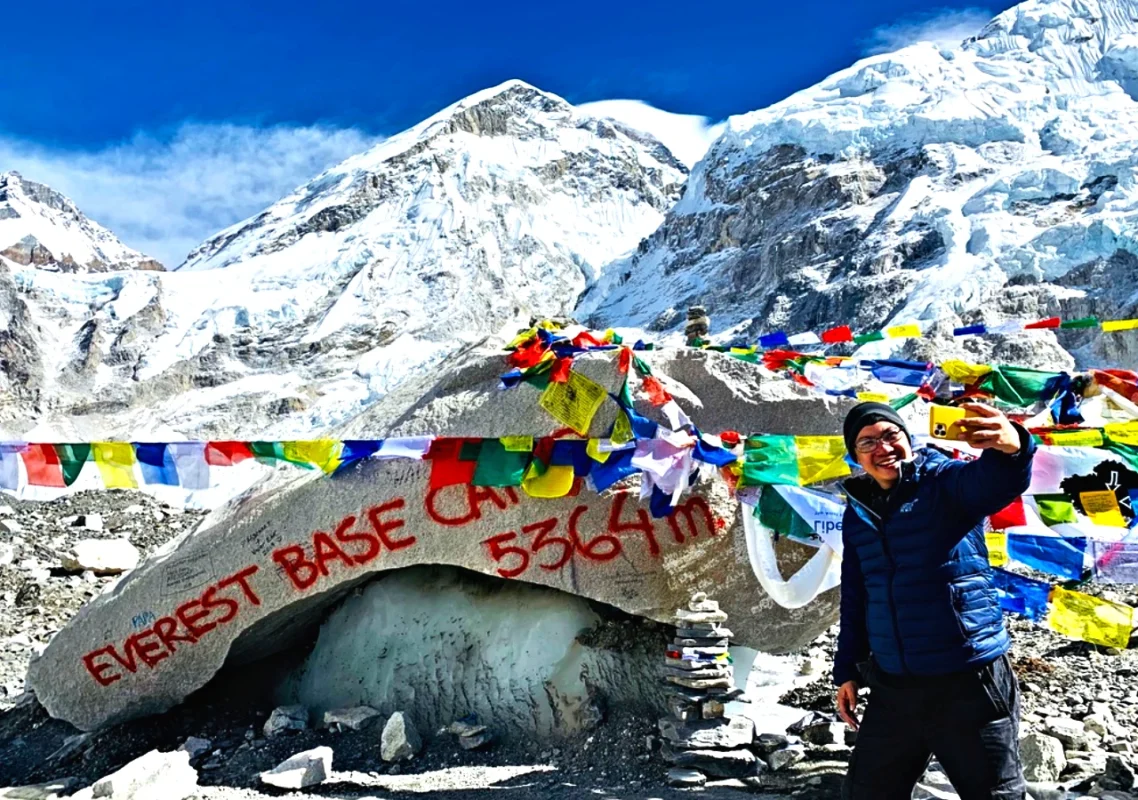
After you reach EBC, Mount Everest hides behind the massif of Lhotse and Nuptse. Although you cannot see it, standing closest to the tallest mountain is an indescribably amazing experience. Your journey reflects your mental and physical endurance level. Make this moment memorable with your support team and congratulate each other. With this, you return to your destination of the day, Gorakshep. The fun is not over yet! Take a rest, as you are going to hike to the best Everest viewpoint for the surreal sunrise view the following day!
Activity: Trekking
Meal: Breakfast, Lunch, Dinner
Accommodation: Guesthouse
12
Day 12: Hike to Kala Patthar (5550M/18205Ft), Distance: 4 Km, Duration: 3 Hours and Trek from Gorakshep to Lobuche (4910M/16105Ft), Distance 4.5 Km, Duration: 3 Hours
In morning, you start your steep hike on a rocky ridge of Kala Patthar. It feels like your breath is getting shorter as the air thins with each step, but you keep moving in this realm of glaciers. With a slow accent, the sun starts to light up the Himalayas with you.
You get to see the contrast of the cool golden spark on the Peaks of the world’s tallest mountains. Even the sharp crack at the top of Mount Everest starts to shine its bright color. After you reach the summit of Kala Patthar, you can see the prayer flags whipping in the wind. With silence and echoes of mountain glaciers, fluttering flags mark your success of a summit on the best Everest View, Kala Patthar.
Take a moment of gratitude and congratulate yourself, and enjoy the timeless panoramic views of Mt. Everest, Lhotse, Cho Oyu, Pumori, Lingtren, Khumbutse, and many others. Continuing the journey, you take a steep descent to Gorakshep and move to Lobuche. Reaching Lobuche, take a proper rest and prepare yourself for the final Pass, your next challenge.
Activity: Trekking
Meal: Breakfast, Lunch, Dinner
Accommodation: Guesthouse
13
Day 13: Trek from Lobuche to Chhukhung (4730M/55515Ft) via Kongma La Pass (5535M/18155Ft), Distance: 10.5 Km, Duration: 7 Hours
On this day, you cross the final High Mountain Pass of the Three Pass Trek, Kongma La Pass (5,535m). The route is raw and rugged with icy ridges and glacial moraines. Passing by the slopes of Khumbu Glacier, you move forward towards the Pass.
Climbing to the Kongma La Pass is steep, long, and challenging. From the Pass, you get raw panoramic views of Mount Lhotse, Makalu, Baruntse, and Ama Dablam. Today, the silence after you complete the challenge of the greatest Three Passes in the Everest region is a humbling and enriching experience.
After completing the Pass, you take a raw descent into the Imja Valley. The terrain starts to get plain and soft. You enter the valley flanked by the Nuptse Glacier, Lhotse Glacier, Imja Glaciers, and many others, welcoming you throughout. Just as you are mapping the glaciers, you reach Chhukhung village. It is a small, peaceful local village nestled at the foot of the Islang Peak (Imja Tse)
Activity: Trekking
Meal: Breakfast, Lunch, Dinner
Accommodation: Guesthouse
14
Day 14: Trek from Chhukhung to Namche Bazaar (3440M/11285Ft), Distance: 25 Km, Duration: 7-8 Hours
Today, the trail shifts from Alpine to the lush subalpine terrains on a long day to Namche Bazaar. It is rich in forests of Pine, Fir, and Rhododendron along the river trails of Imja Khola. The day starts with the gradual downhill to Deboche, passing by the Dingboche, Somare, and Pangboche villages.
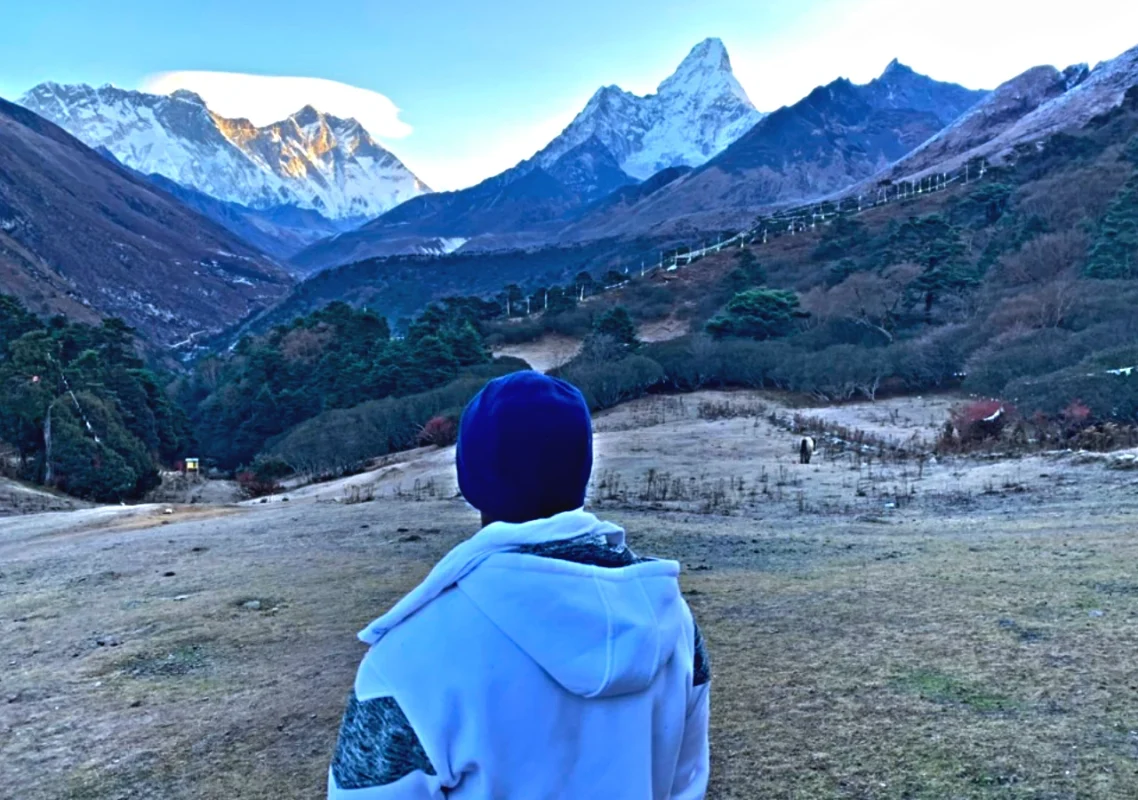
After crossing the river, you go steeply downhill and climb to one of the spiritual hubs of the region, Tengboche, where you can visit one of the oldest monasteries in the Khumbu region, Tengboche Monastery. Slowly approaching the foothills of Everest, you come across the lush forest along the green hills. You reunite with the stone stairs and Rhododendrons along the Dudh Koshi River Valley. Along the way, you can enjoy the glimpses of Mount Ama Dablam, Lhotse, Thamserku, and Kangtega.
Then, with a steep descent to Phunke Tenga, you cross a river, followed by an uphill to Kyangjuma Village and descent to Namche Bazaar. This part includes stone stairs that are both nostalgic and comforting, as it marks the nearing of the trek’s end.
Activity: Trekking
Meal: Breakfast, Lunch, Dinner
Accommodation: Guesthouse
15
Day 15: Trek from Namche Bazaar to Lukla (2840M/9315Ft), Distance: 19 Km, Duration: 7 Hours
It is the final day of descent that takes you back to Lukla. The trek begins with a steep descent and then continues on a mix of up and down paths with suspension bridges, crossing rivers, and waterfalls. Though you have already walked on this trail, do not miss enjoying the final glimpse of mountains and the beauty of Himalayan foothills.
Revisiting the local villages of Monjo, Benkar, and Phakding offers a final glance into their countryside life. The footsteps you leave behind share your travel journey and memories. Enjoy your final hours of the trek and take relief and gratitude when you reach Lukla.
Activity: Trekking
Meal: Breakfast, Lunch, Dinner
Accommodation: Guesthouse
16
Day 16: Fly from Lukla to Kathmandu or Ramechhap
A morning with a cool breeze of the mountains, a mixed feeling of bitterness and sweetness as you wait for your flight!
You leave Khumbu with a stillness as you are leaving mountains and warmth as you are returning to your cozy home. If the sky is clear, one last look at the Himalayan ranges. When you land, you come back to the rhythm of reflection that this is life. There are still places you need to explore and unseen in the world. Some at the comfort of hands and some at the mountains!
Activity: Flight/Drive
Meal: Breakfast, Lunch
Accommodation: Hotel
17
Day 17: Departure/Farewell Day
For the air transfer, your guide or a representative from our team picks you up at the hotel. Then, drop you off 3 hours before the scheduled flight. Catch the final glimpses of Kathmandu alleys, stupas, temples, and prayer wheels on the drive. At the airport, our representative provides a short farewell section with See you next time!
Activity: Drive
Meal: Breakfast

Note:
If you have a private group and prefer a personalized experience, we can organize a custom trip tailored to your requirements and group size, running it any day you choose.
Price Includes

Price Excludes

What's included?
- All ground transfers are done in a private vehicle to/from Tribhuvan International Airport
- Round-trip flight between Kathmandu or Ramechhap and Lukla
- Two nights’ accommodation with breakfast at the best 3-star category hotel in Kathmandu
- Full board meals (breakfast, lunch and dinner) with tea/coffee during the trek
- Best available twin sharing lodge to lodge accommodation during the trek
- All the necessary permits are included: Sagarmatha National Park Entry Permit and Khumbu Pasang Lhamu Rural Municipality Permit, TIMS (Trekkers’ Information Management System) card (please bring three passport photographs for the permit.
- One highly experienced, helpful, and friendly guide and a porter including their food, accommodation, salary, equipment and accidental insurance
- Seasonal fruits – after dinner during the trek
- Duffle bag, down jacket and sleeping bag during the trek
- Company t-shirt, trekking map and trip achievement certificate
- A comprehensive first-aid medical kit
- All government taxes and entry fees
What's not included?
- International airfare to and from Nepal
- Nepal Visa Fee (it is payable upon arrival at Tribhuvan airport, USD in cash is recommended)
- Travel insurance
- Accommodation, meals, and extra nights in Kathmandu outside the itinerary
- Personal expenses during the trek, like snacks, beverages, hot showers, charging electronics, and internet
- Tips for guide, porter, and driver (there is no specific amount)
Trip Information
Everest Three Passes Trek Cost
The Everest Three High Passes Trek cost varies based on the adventure duration, number of people in a group, level of service, season of travel, and transportation mode. However, the price of a typical trekking package that lasts from 18 to 22 days is around $1,800 to $3,000 per individual.
The package usually covers domestic flights (round trip Kathmandu–Lukla), required permits, a certified guide, porter support and teahouse accommodation and meals. The priced packages give you the option of a private departure, expert senior guides, better teahouses and higher amenities. While at the same time, group departures and shared services lower the cost for individuals.
Spring and autumn (peak trekking periods) normally see price surges because of the increased demand for flights and lodges. While the off-season months may be cheaper, weather conditions are difficult to deal with.
Other expenses that you should budget for are travel insurance (with coverage for high-altitude and helicopter evacuation), personal gear, hot showers, Wi-Fi, tips for guides and porters and emergency contingencies.
Everest Three Pass Trek- The Ultimate High Himalayan Challenge
The Everest Three High Passes Trek is one of the most demanding and satisfying mountain journeys which is highly appealing to adventure-focused trekkers. It is the route that tests trekker’s limits of physical endurance, mental resilience, and high-altitude adaptability.
You will visit the less trodden areas of the Everest region by surpassing three tough passes Kongma La, Cho La and Renjo La, making steep ascents over rugged terrain, glacial sections, and dealing with the unpredictable mountain weather.
Unlike standard Everest routes, the trek connects multiple remote valleys and the famous landmarks such as Everest Base Camp, Kala Patthar, Gokyo Lakes, and Gokyo Ri. Thus, it is a series of adventures rather than just a single-destination hike.
You will enjoy the most outstanding views of the world’s highest peaks: Mount Everest, Lhotse, Makalu, and Cho Oyu, along with the vast glaciers, shimmering alpine lakes, and remote settlements of the Sherpas.
Extreme altitude, varying terrain, wilderness solitude, and cultural mixing make the Everest Three Passes journey different from the conventional trek. It is the most worthwhile Himalayan challenge suited for well-prepared risk-takers wanting to experience the Everest region in the fullest and the most immersive way.
Required Permits for the Everest Three Passes Trek
To take on the Everest Three Passes Trek, it is necessary to get two essential permits. They are important to legally enter and trek in the Everest (Khumbu) region. Besides, these permits are significant for the conservation of the region’s delicate mountain ecosystem, maintaining the trekking infrastructure and aiding the local populace.
The Sagarmatha National Park Entry Permit allows entrance into the protected area of the national park which consists of Mount Everest and its adjacent peaks, glaciers, and plants and animals’ habitats.
Likewise, the Khumbu Pasang Lhamu Rural Municipality Entry Permit (a local permit) funds for the development of the area, the upkeep of the trails, waste disposal, and provision of services related to tourism in the Khumbu region.
Everest Three Passes Trek Permit Fees
The Everest Three Passes Trek requires the purchase of two compulsory permits whose prices are set by the Nepalese government.
The Sagarmatha National Park entry permit has a fee of NPR 3,000 (approx.USD 22) for foreigners and NPR 1,500 (about USD 11) for people from the SAARC region. Along with that, to obtain the Khumbu Pasang Lhamu Rural Municipality Entry Permit, a fee of NPR 3,000 (approx. USD 22) per person will be charged for all, regardless of nationality.
Both permits are compulsory, cannot be refunded, and must always be with the trekkers to pass through numerous checkpoints along the way.
Everest Three Passes Trek Map and Route Description
The Everest Three Passes Trek follows a circular, high-altitude route through the heart of the Khumbu region where quiet valleys, popular landmarks and the three major Himalayan passes are interconnected.
It usually begins with a flight to Lukla from Kathmandu and then the trail leads along the Dudh Koshi River through Phakding to Namche Bazaar, which is the main center for acclimatization in the Everest region. The route from Namche is slow but steady to Dingboche and Chhukung, where you face the first and the highest pass, Kongma La. It connects the Imja Valley, Khumbu Glacier and the Lobuche area.
Afterwards, the trek leads through Kala Patthar to the Base Camp of Mount Everest and takes you over Cho La Pass, the difficult ascent that links the Khumbu Valley with the Gokyo region via frozen and glaciated patches.
The path then goes towards the stunning Gokyo Lakes and then up to Gokyo Ri before the last pass, Renjo La. From here, the descent is to Thame and Namche Bazaar which makes the loop complete and then returns to Lukla.
The Three Passes Trek Map shows significant villages, altitude changes, acclimatization breaks, glaciers, and alternative routes, all of which help you to visualize the daily stages and organize a safe, slow-paced expedition through one of Nepal’s hardest trekking routes.
Key Landmarks and Scenery of the Everest Three Passes Trek
Lukla (2,860 m): The gateway to the Everest region known for Tenzing Hillary Airport and the trek’s starting point.
Namche Bazaar (3,440 m): Ideal acclimatization stop and the Khumbu region’s cultural and trading center.
Tengboche Monastery (3,867 m): The largest Buddhist monastery in the Everest area offering views of Everest, Ama Dablam and Lhotse.
Dingboche (4,410 m): A high altitude Sherpa settlement with stone walled fields. A common acclimatization point before climbing to higher altitudes.
Chhukung Valley: A serene mountain valley located below Lhotse and Island Peak, which serves as the route to Kongma La Pass.
Khumbu Glacier: A huge, rugged ice river that goes down from the Western Cwm area, feeding the Khumbu Icefall.
Khumbu Icefall: Nestled between Everest Base Camp and Camp I, this heart stopping ice mix is the most perilous section of the standard climbing route to Everest.
Everest Base Camp (5,364 m): A historic staging ground for Everest expeditions, situated right next to the Khumbu Icefall.
Kala Patthar (5,545 m): The best viewpoint for looking at Mount Everest and its adjoining peaks especially during sunrise or sunset.
Ngozumpa Glacier: The longest glacier in Nepal. It is visible from the whole Gokyo Valley.
Gokyo Lakes: A chain of turquoise glacial lakes in the secluded Gokyo Valley.
Gokyo Ri (5,357 m): A viewpoint with the most splendid vistas of Everest, Lhotse, Makalu, and Cho Oyu.
Thame Monastery: A historic place of worship for Buddhists, reflecting the Sherpa rituals and practices.
Kongma La Pass (5,535 m): This is the highest of the three passes and also the most difficult one.
Cho La Pass (5,420 m): This tough technical pass is the only way between the Khumbu and Gokyo regions.
Renjo La Pass (5,360 m): A high pass with the most stunning view of Mt. Everest and the Gokyo Lakes underneath.
Altitude Sickness and Acclimatization on the Everest Three Passes Trek
Altitude sickness is a primary risk during the Everest Three Passes Trek because of the constant exposure above 4,000 meters. You have to make repeated ascents beyond 5,300 meters while crossing the 3 passes.
The physiological stress caused by the deficiency in oxygen with the altitude increase can lead to Acute Mountain Sickness (AMS). The most common early signs are headache, nausea, dizziness, loss of appetite, fatigue, and disturbed sleep. If you do not comply with the necessary measures, it may lead to severe cases such as High Altitude Pulmonary Edema (HAPE) or High Altitude Cerebral Edema (HACE).
It is extremely important to acclimatize properly by ascending slowly, taking a rest day in Namche Bazaar and Dingboche and following the “climb high, sleep low” strategy. It is important to keep a steady pace and be very well hydrated.
Avoiding alcohol and smoking, eating nutritious and enough, and letting your guide know immediately if you feel any symptoms are essential steps to prevent altitude sickness. Besides, under medical supervision, Diamox (acetazolamide) may be another option.
Spiritual Sites along the way: Monasteries
Namche Monastery: This monastery is located on the western side of the Namche Bazaar. It offers breathtaking views of the bustling village and the mountain peaks of Thamserku and Kongde Ri. You get to take a short peek into the culture of Sherpa people of the Khumbu region. Even in the busy trading hub, the local people have preserved their centuries-old Buddhist tradition. It is the first major spiritual stop that you witness on this trek.
Thame Monastery: You can find this Gompa above the old village of Thame. It is around 150m away on the hillside. It is one of the major monasteries in the Khumbu region that celebrates the Mani festival. This place reflects the old traditional trading route and connection between Buddhism and the mountains.
Pangboche Monastery: After you return to the main trail of Everest Base Camp, you come across a village named Pangboche. There, you can find Pangboche monastery, which is known for being one of the oldest monasteries in the region. It is hidden beneath the shadows of the sacred Mount Ama Dablam.
Tengboche Monastery: The monastery, also known as Dawa Choling Gompa, is one of the largest gompa in the Khumbu region. It offers spectacular mountain views of Everest, Lhotse, Ama Dablam, and Thamserku. This monastery is the major host of a well-known festival of the Himalayas, Mani Rhimdu.
How to Stay Active during long Trekking Hours on Three Passes Trek
During the long hours of walking, it is hard to keep the same energy level and activeness. Everest Three Pass requires long hours of walking and even crossing the Three High Pass. So, here are some of the small things you can consider to keep you more active and energetic during your trekking hours:
- Walk while enjoying! Keeping your mind distracted with the beauty of nature so you do not focus on tiredness.
- Always start slow and steady. Reserve your energy for the important parts and let your body warm up.
- Take a rest briefly and listen to your body.
- Eat your meals properly and consume rich foods often. It can be bars, dried fruit, or your favorite snack!
- Stay hydrated and refill your bottle every time.
- Use breathing techniques like concentrating on your breathing and deep breaths.
- If your back starts to pain, adjust your backpack every few hours.
FAQs for Everest Three Passes Trek – 17 Days
 General
Usually, the hike begins in Lukla, which can be reached by a 35-40 minute flight from Kathmandu. The popular and thrilling Tenzing Hillary Airport (Lukla Airport) makes Lukla the main access point into the Everest region.
The route from Lukla is through the Dudh Koshi Valley, then to Namche Bazaar and through the villages of the Khumbu Region, eventually reaching the high passes and the major attractions.
Indeed, the Everest Base Camp Three Passes Trek is a continuous high-altitude expedition. It combines the classic EBC route and three difficult passes: Cho La, Kongma La and Renjo La. You get to see everything the Everest region has to offer without the hassle of separate trips.
There is no definite age limit but the trek is ideal for people between the ages of 16 and 65 who are physically fit. As this is the difficult and challenging trek, hikers should have skills in long-distance trekking, need to be able to walk for 6-8 hours daily at high altitudes and should go through the acclimatization process in order to lower the risk of altitude sickness. They should have strong cardiovascular endurance and good muscular strength in the legs and core.
The trek grants a fantastic view of the highest mountains of the world, among which are Mount Everest (8,848 m), Lhotse (8,516 m), Makalu (8,485 m), Cho Oyu (8,188 m), Ama Dablam (6,812 m), Nuptse (7,861 m) and Thamserku (6,623 m).
The viewpoints like Kala Patthar, Gokyo Ri, and the high passes are best for enjoying the 360° view of the Himalayas.
The trek’s highest point is 5,545 m (Kala Patthar). Among the other elevations are Kongma La Pass (5,535 m), Renjo La (5,360 m), Cho La (5,420 m) and Everest Base Camp (5,364 m).
The total distance of the Everest Three Passes Trek is around 160–170 km (round trip). The trekking periods are mostly 18–21 days with rest and acclimatization included.
 Preparation & Fitness
- Cardiovascular workouts like running, biking, swimming or stair climbing.
- Strength training such as squats, lunges, deadlifts, step ups and upper body workouts.
- Core workout like performing planks, Russian twists, leg raises and bicycle crunches.
- Hiking practice with a loaded backpack to imitate the conditions of trekking.
- A gradual conditioning improves stamina, removes fatigue and reduces the risk of injuries on the high mountain trekking adventure.
You need to have a strong mindset and be able to keep a positive and patient attitude. Also prepared to be cut off from the rest of the world and adjust to very few facilities in remote areas. Besides, visualization, mindfulness and realistic goal-setting techniques are among the most popular ways to prepare your mind for this tough adventure.
A visa is a must for every foreigner to enter Nepal. Upon arrival, a visa can be obtained at Tribhuvan International Airport in Kathmandu or alternatively, you could apply online for it beforehand to escape the long queues. And Indian citizen and passport holder do not need a visa to travel Nepal.
An official from the Explore Vision Nepal would take care of the luggage and hotel transfer after your arrival at the Tribhuwan International Airport. Likewise, we also provide a comprehensive pre-trek briefing, which includes:
- Trekking itinerary and logistics
- Protocols and emergency procedures for safety
- Cultural and environmental guidelines
- Essential Gear and Packing List
 Insurance & Visa
Absolutely! A travel insurance policy covering high altitude trekking (up to 6,500), medical emergencies, evacuation and cancellations is necessary. A copy of the policy has to be submitted to us prior to the commencement of the trek.
 Guides & Support Staff
Porters can be of great help in carrying heavy loads which will make long treks less hard. If you are feeling sick or have an injury, they will be there to help you. Along with that, porters are quite aware of the trails, nearby villages, and the most convenient resting places.
Most of the guides are very good at English and they can also speak some other languages. They have qualifications in mountain trekking, first aid and safety measures. Besides, they possess considerable local knowledge concerning the region’s trails, culture and weather conditions.
Tipping is standard practice, and the common suggestion is to give 10-15% of the total trekking cost, divided among guides, porters and support staff. Usually, tips are presented at the end of the trek, but they can also be given during the tour if the services are exceptional.
 Health & Safety
Each trekking party is led by a highly trained guide in high altitude first aid. In the event of a serious medical emergency (heavily injured or suffering from severe altitude sickness), trekkers will be evacuated from locations like Gorak Shep or Dzongla by helicopter.
 Packing & Gear
Put the things you need often in your daypack. The main duffle should hold heavier things and items that you will use less. Packing cubes or dry bags will keep your gear organized while protecting it from water and snow.
Kathmandu is where all the trekking gears are found. The areas of Thamel and Asan are full of shops selling and renting everything from high-altitude jackets to trekking boots, sleeping bags, poles, and other essentials.
Most hotels in Kathmandu offer space for your luggage. You can also take advantage of our storage where your extra stuff will be stored safely. With this, you could take only what you absolutely need for the trek and travel light and hassle free throughout.
A big bag with a capacity of 50–75 liters will be suitable to carry the main trekking clothes and gear, if you do not have porter to carry your stuff, otherwise, we provide a duffel bag for you main trekking stuff, which will carried by porter. Besides, you will need a smaller bag of 20–40 liters for everyday items like water, snacks, outerwear, and a first-aid kit.
 Booking & Payment
The trek could be booked by you directly through our website, by email, WhatsApp or in person at our office situated in Kathmandu. After you give us your personal information, preferred dates, and your passport number, we will send you the confirmation of your booking and the detailed Everest Three Passes Trek Itinerary.
We accept payments by bank transfer, by credit/debit card and cash in either USD or local currency (NPR). Usually, to confirm the booking, a deposit of a certain percentage of the total price is required and the balance can be paid either before the trek or at the time of arrival in Kathmandu.
If a cancellation takes place before 30 days of the trek starting date, a refund will be granted (administrative fees may apply).
If the cancellation occurs within 30 days, a reduced refund or a non-refundable deposit applies. The case of no-show or trek abandonment is usually treated as non-refundable without exception. However, we will grant some flexibility in cases of illness, flight cancellations, or government restrictions.
Yes, it is possible. You can do a last-minute booking for the Everest Three Passes Trek with us. As we have a dedicated local team on the ground in Nepal, we can quickly manage permits, professional and experienced guides, porters, accommodation, and logistics, even on short notice and arrange the wonderful trip for you.
 Optional Expenses
A rough amount of USD 300–500 per person is enough for personal expenses like Wi-Fi, hot showers, snacks, drinks and small souvenirs.
 Connectivity & Transaction
Mobile coverage is primarily in the big villages like Lukla, Namche Bazaar and Dingboche but it gets feeble or disappears entirely at the higher points. Internet (Wi-Fi) is available in most teahouses for a small charge, but the speed is often slow.
Getting cash from ATMs and banks is only possible in Lukla and Namche Bazaar, but during the high season, they might also run out of cash. It is wise to take out the required cash in Kathmandu before the trek.
Trip Reviews


