



24x7 Support
+977 9851349597
Unbeatable Holiday Offers - Save Up to 20% on Your Next Adventure!



Gokyo Lake Trek – 13 Days
Based on 50 reviews

Duration
13 Days
Trip Difficulty
Moderate
Max Altitude:
5,360m. / 17,585ft.
Activity
Hiking|Trekking
Group Size
1-30
Best Season
Spring and Autumn
Meals
Breakfast in Kathmandu | Breakfast, Lunch, Dinner during Trek
Accommodation
Hotel,Lodge,Guesthouse
Transportation
Private Vehicle | Flight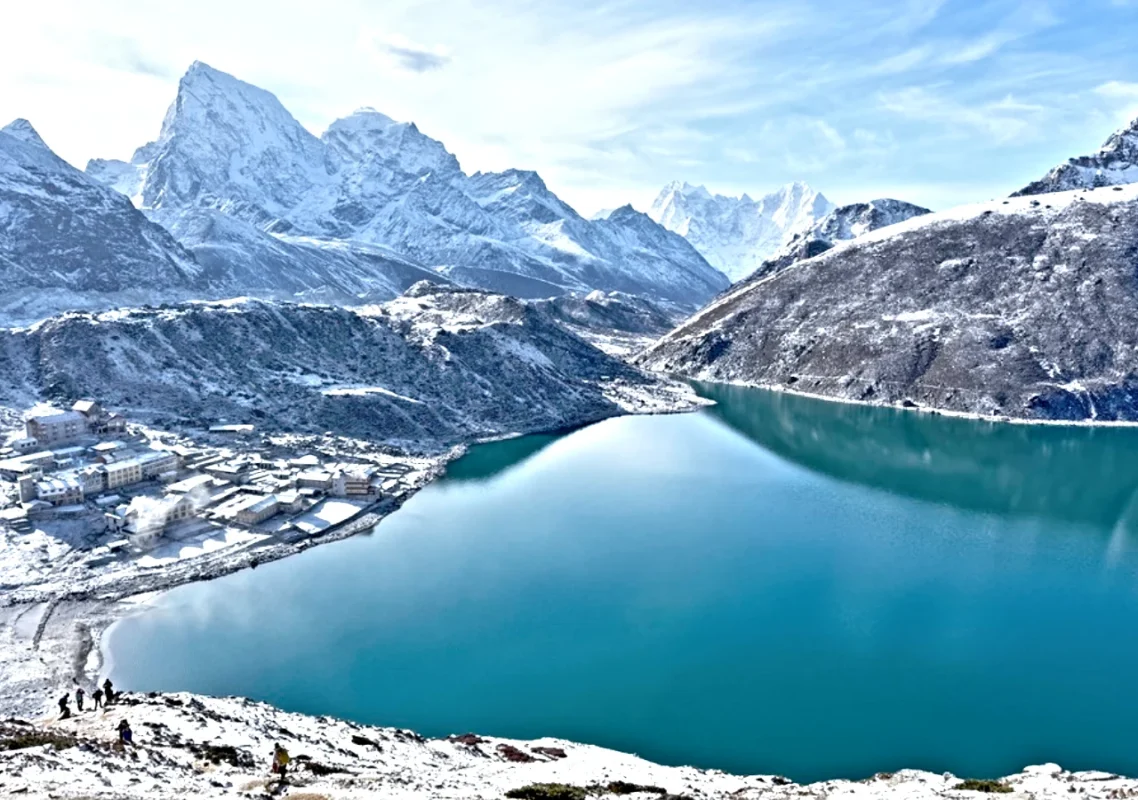
Overview of Gokyo Lake Trek – 13 Days
Gokyo Lake Trek is a wonderful journey to the stunning Gokyo Valley of the Everest region. It offers an opportunity to enjoy the calming beauty of glacier lakes and introduces you to the longest glacier of Nepal, Ngozumpa. You get to climb the popular Gokyo Ri above 5,300m and enjoy the panoramic views of the 8000 meters peak.
This adventure leads through forested trails, river valley, and discovers the three hidden sacred Lakes. You experience the local mountain life of Sherpa communities and taste their delicacies. Each day on this route reveals different versions of alpine beauty that every trekker craves.
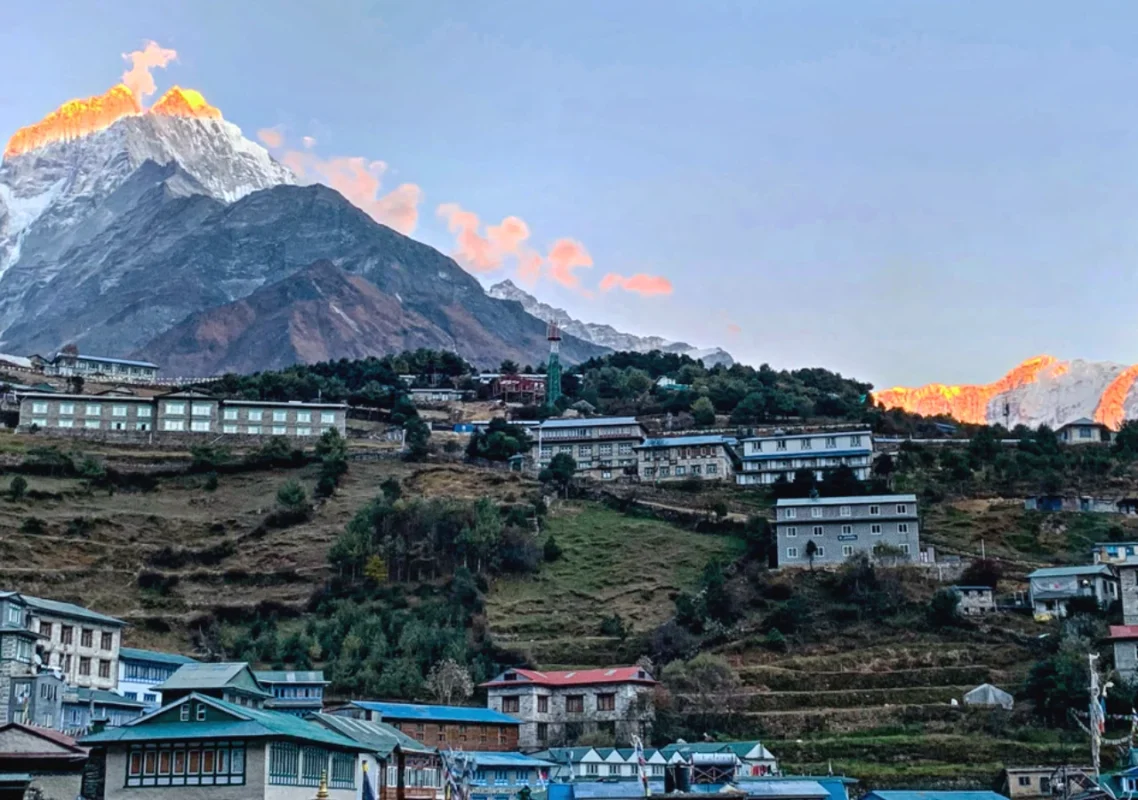
It starts in Lukla and enters the Sagarmatha National Park, a World Heritage Site. Then, travels through charming Sherpa villages and follows the Dudh Koshi River valley. Continuing, you stretch on alpine pastures, meadows, and explore the hidden beauty in the Khumbu region, the Gokyo valley.
Traveling to Gokyo Lake is a perfect alternative trek for trekkers who have already done the iconic Everest Base Camp Trek or want to plan it for plan future. It is less crowded and has a serene experience with moderate difficulty. We, Explore Vision Nepal, have expertise in organizing Everest Treks. You can contact us anytime for personalized plans and inquiries about the trip
Gokyo Lake Trek Difficulty – Who is This Trip for?
The Gokyo Lake Trek difficulty is moderate to challenging, involving daily hikes of 5–7 hours in high-altitude areas. You may come across steep ways, stony stretches and weather that is changeable. So it is very important to be fit and follow effective acclimatization schedules to enjoy the trek worry free.
Hiking at significant elevations, especially on Gokyo Ri, which is at a height of 5,357 m, the chance of getting altitude sickness is high. Generally, the thin alpine atmosphere with very low levels of oxygen makes it harder for your body to adjust. It comes with the signs such as headaches, nausea, dizziness, breathlessness and tiredness.
Here is a list of things you can do to reduce risks:
- Drink sufficient water
- Hike slowly and take frequent short breaks
- Stay away from alcohol and cigarettes
- Spend extra days for acclimatization in Namche Bazaar and Gokyo
- Take a Diamox Pill (on doctor’s prescription)
- Inform your guide right away if any symptoms occur
Nepal doesn’t set a definite age for trekking. Basically, people between the ages of 10 and 65 usually get to the end of the journey without problems. People above or below this age are advised to see a doctor prior to the trip just to make sure they are physically and mentally sound. Proper conditioning plays an important role in the enjoyment of the whole adventure.
What is the Unique Speciality of the Gokyo Lakes Trek Nepal?
The Gokyo Lakes Trek in Nepal is famous for its picturesque turquoise lakes. These alpine glacial lakes are considered sacred and are worshipped by both the Hindu and Buddhist religions. The Gokyo trail, which is not as popular or crowded as the main Everest Base Camp trek, offers the hikers a chance to appreciate the beauty of the area in a calm and intimate way.
The trail that takes you to the sparkling Gokyo Lakes is a visual treat at every step. These lakes at high altitude are surrounded by the magnificent Himalayas. The series of lakes set against the backdrop of Ngozumpa Glacier, the largest glacier in Nepal, forms extraordinary contrasts of ice, water, and the Himalayan summits.
The hike up Gokyo Ri is definitely the most spectacular sight of the whole trek. You will be able to enjoy the panoramic view of Everest, Makalu, Lhotse, Cho Oyu, and countless other glorious mountains. A combination of unparalleled spirituality, unchanged culture and stunning Himalayan scenery makes the Gokyo Lakes Trek a unique and most rewarding Himalayan adventure.
Gokyo Lake Trek Culture and Local Life
Trekking in the Everest region, you will find Sherpa communities who practice Tibetan Buddhism. You can expect an appealing and cultural environment throughout the trek. The Sherpa people’s customs, ceremonies, and daily activities will give you a better understanding of the deeply rooted traditions in the region.
The walk through the villages and the mountain paths will take you past the following important Buddhist features:
- Monasteries
- Prayer wheels
- Mani walls
- Chortens
- Stone-carved Buddhist prayers
Heritages like these are so much a part of the trail that they give you a glimpse into the spiritual life of the Himalayas.
The Sherpa community of the Everest region is generally known for being warm-hearted, friendly and super hospitable. Besides, the tales and the bond they share with the mountains make the cultural interaction between the trekkers and the Sherpas one of the most memorable experiences during the Gokyo Lake Trek.
Accommodation During the Journey
The teahouses located along the hiking path offer lodging services. You will come across basic but cozy living spaces where you can relax and recharge your energy after the tiring days of trekking. At the lower altitudes, possibly some private rooms would be there. But in villages at higher elevations, the rooms are mostly shared with other trekkers.
Some teahouses offer laundry service for a small amount of money. However, the majority of hikers choose to wash their light clothes by hand. The conditions for toilets and bathing vary from one area to another depending on the altitude. The lower areas may have Western style toilets and hot showers. The teahouses at higher altitude generally provide basic squat toilets and a bucket of hot water for bathing which is usually charged.
The common areas in teahouses generally feature a stove or fireplace for heating and warming up the guests but heating in individual rooms is very rare. Nights can be cold at higher altitudes, so it is strongly advised to carry warm clothing as well as a good-quality sleeping bag.
Other facilities that can be found in teahouses are:
- Wi-Fi: Most teahouses offer it for a small charge
- Hot showers: Usually available at extra cost, often using Solar-Heated water or Gas Geyser heating water
- Device charging: Generally available for a small fee
As you move up the mountain, the facilities get limited. Therefore, it is important to take along basic necessities such as hand sanitizer, toilet paper, wet wipes, and any personal hygiene items you may need.
In Kathmandu, hotels of all types, from budget to luxury, have private rooms. However, along the trekking route, while most teahouses provide private room services, in small villages or during the high trekking season, they may be limited. So, it is wise to book or check in advance.
Food and Dining Along the Way
Teahouses provide different local and some popular Western meals, such as:
- Dal Bhat (rice, curry lentil soup set meal)
- Noodle soup
- Vegetable curries
- Eggs and pancakes
- Toast and Chapati
- Thukpa
- Sandwiches
- Fried noodles
Tea, coffee, and hot lemon are usually provided. Vegetarian food is very common, and in some cases, teahouses can fulfill your dietary needs if notified ahead of time.
The majority of the teahouses offer both snacks and boiled water for drinking. Along the trail, bottled water is also available to purchase (generally at high prices). Nonetheless, it is suggested that you carry a water bottle, high energy bar and snacks such as energy bars, nuts, or chocolates.
Water refills are available for bottles and drink regularly to keep yourself hydrated. Likewise, small snacks are important during long hikes or while in isolated places.
Best Time to Trek Gokyo Lake
The Gokyo Lake Trek can be best experienced during the Spring (March to May) and Autumn (September to November) seasons. Spring brings clear skies, pleasant temperatures and the beautiful rhododendrons and various alpine flowers throughout the valleys. Likewise, autumn offers crisp air, stable weather conditions, and remarkable mountain visibility.
The Monsoon (June-August) is not a suitable time for trekking as it brings in heavy rains, slippery trails, and landslide risks. In addition, Winter (December-February) has the inhospitable condition of extreme cold, heavy snow, and limited access to high passes making trekking more difficult and unsafe.
- Spring: Crystalline skies, blooming rhododendrons, mild temperatures
- Autumn: Crisp air, stable weather, enhanced visibility
- Monsoon: Slippery trails, landslide hazards, poor visibility, leeches, travel delays
- Winter: Extreme cold, icy trails, strong winds, heavy snow blocking passes, limited lodge services
Why Explore Vision Nepal for the Everest Gokyo Lake Trek?
Explore Vision Nepal is the most reliable trekking agency with years of experience. We have made the Himalayan journeys of numerous trekkers and climbers to the Everest region possible for several years.
We provide fully supported and serviced treks so that the whole trip is not only safe but also enjoyable and unforgettable. Our team comprises very competent and expert guides who have a good grasp of the climate, culture and nature of the area. They will support you in each aspect and every step along the way.
All the logistics such as lodging, eating, obtaining permits and transportation, are arranged by us. You can give all your attention to the Himalayas and their immense beauty. Moreover, we are ready to design tailor made itineraries for you whether you want a slow-paced journey or a more demanding one to test your endurance. With personalized guidance at each stage, Explore Vision Nepal makes your Gokyo Lake Trek a rewarding and remarkable experience.


Outline Itinerary of Gokyo Lake Trek – 13 Days
Day 01: Arrive At Tribhuvan International Airport (TIA), Kathmandu (1350M/4430Ft)
Day 02: Fly from Kathmandu or Ramechhap to Lukla (2840M/9315Ft) and Trek to Phakding (2610M/8560Ft), Distance: 8 Km, Duration: 3-4 Hours
Day 03: Trek from Phakding to Namche Bazaar (3440M/11285Ft), Distance: 11 Km, Duration: 7 Hours
Day 04: Acclimatization Day at Namche Bazaar, Hike to Everest View Hotel (3880M/12725Ft), Distance: 6 Km, Duration: 4 Hours
Day 05: Trek from Namche Bazaar to Dole (4200M/13775Ft), Distance: 12 Km, Duration: 6 Hours
Day 06: Trek from Dole to Machhermo (4470M/14660Ft), Distance: 6 Km, Duration: 4 Hours
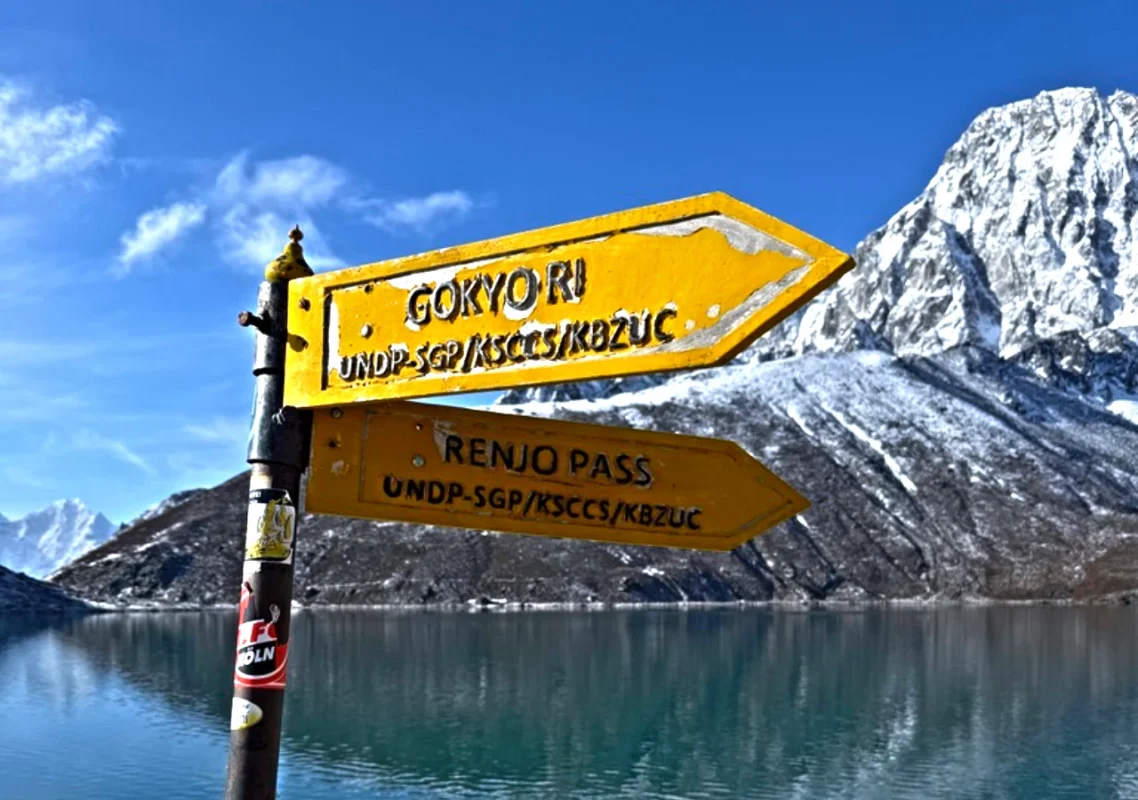
Day 07: Trek from Machhermo to Gokyo Lake (4790M/15710Ft), Distance: 6 Km, Duration: 5 Hours
Day 08: Hike to Gokyo Ri (5360M/17580Ft) and Back to Gokyo, Distance: 4 Km, Duration: 3-4 Hours
Day 09: Trek from Gokyo Lake to Dole (4200M/13775Ft), Distance: 12 Km, Duration: 5-6 Hours
Day 10: Trek from Dole to Namche Bazaar (3440M/11285Ft), Distance: 12 Km, Duration: 6 Hours
Day 11: Trek from Namche Bazaar to Lukla (2840M/9315Ft), Distance: 19 Km, Duration: 7 Hours
Day 12: Fly from Lukla to Kathmandu or Ramechhap
Day 13: Departure/Farewell Day
Trip Highlights
- Trek within Sagarmatha National Park, a protected area for Himalayan wildlife, Glacial Lakes, and an alpine ecosystem.
- Experience trekking through lush foothills, river valley, glacier valley, calming lakes, and alpine terrains.
- Stay at local Sherpa homes and taste their traditional delicacies. Yak cheese from the highlands of the Himalayas is the best!
- Lovely hike to the popular Everest View Hotel for the first stunning panoramic mountain views of the Sagarmatha ranges.
- Visit three sacred lakes of the Gokyo Valley: Longponga Tso, Taujung Tso, and Gokyo Tso
- Best 360-degree panoramic mountain views from Gokyo Ri. It includes Mount Everest, Lhotse, Makalu, and Cho Oyu.
- Wonder at the longest glacier present in Nepal: Ngozumpa Glacier, which is formed stunningly by the Gokyo Village.
- Stay at the edge of the silent and humbling blue lake of Gokyo that attracts global tourists each year.
- Iconic shots of the Himalayan snow-capped peaks and glaciers.
- With moderately challenging trails, complete one of the best treks in the Khumbu region of Nepal.
Gokyo Lake Trek – 13 Days Itinerary
01
Day 01: Arrive At Tribhuvan International Airport (TIA), Kathmandu (1350M/4430Ft)
Welcome to the country of the Himalayas! As you land at the airport and get off, you can feel a sensation of thrill, excitement, and energy. Our representative waits for your arrival with a warm heart and a postcard in hand. Then, you are transferred to your hotel.
On the way to the hotel, the representative provides you with brief information about the trip. You are free to ask any questions and discuss the trip expectations with him/her. Unpack your luggage, freshen up, and take a rest!

Activity: Drive

Accommodation: Hotel
02
Day 02: Fly from Kathmandu or Ramechhap to Lukla (2840M/9315Ft) and Trek to Phakding (2610M/8560Ft), Distance: 8 Km, Duration: 3-4 Hours
The journey begins with a thrilling flight to Tenzing Hillary /Lukla Airport. The take-off place depends on the time of travel and air traffic conditions. Mostly during the peak months (March, April, May, September, October, and November), it operates from the Ramechhap Manthali Airport. You take an early morning drive of 4-5 hours to the airport. And if you choose to trek during the off seasons in January, February, June, July, August, December, there are more chances of air operations from Kathmandu. For this, you prepare for the trek in standard morning time.
Whether the journey starts from Kathmandu or Ramechhap, the flight experience gives you chills. The top views of the city, slowly melting into the layers of the Himalayas, are breathtaking. You get majestic panoramas of the Langtang, Rolwaling, and Everest ranges as you slowly enter the Khumbu land.
After the flight, you start the trek with a slow descent, stepping into the foothills of Everest. It begins with a walk along terraced fields, dense forests, and passing local villages, Chheplung and Thado Koshi. Even the snow-capped peaks of Kongde-Ri and Kusum Kanguru appear through the hills, welcoming you in the Khumbu region. Continuing, you reach Phakding after crossing a beautiful suspension bridge where prayer flags are lined with prayers. Above the roaring river and the cascading waterfall, it is a mark of reaching your destination.
Activity: Drive,Flight and Trekking

Meal: Breakfast, Lunch, Dinner
Accommodation: Guesthouse
03
Day 03: Trek from Phakding to Namche Bazaar (3440M/11285Ft), Distance: 11 Km, Duration: 7 Hours
Alongside the thriving Dudh Koshi River, you start your journey on a path through Lush Pine Forest. It begins with a slow climb, a good warm-up with great views of waterfalls, and a great forest walk with bird songs. On the way, you pass by the small farming villages of Toktok and Benkar. From Toktok, you get striking views of Mount Thamserku that you should not miss. Then you continue towards the entry point of Sagarmatha National Park, Monjo.
Leaving the check post, there is a short downhill leading to Jorsalle. It is the last settlement before Namche Bazar and the last stop before the Popular Namche climb. With the steep rise, you come across a well-known point, Tenzing Hillary Bridge. Crossing the suspension bridge, you take a hard ascent. If the sky is clear, you can enjoy the first glimpse of Mount Everest just before you reach Namche, the largest Sherpa settlement of Khumbu.
Activity: Trekking
Meal: Breakfast, Lunch, Dinner
Accommodation: Guesthouse
04
Day 04: Acclimatization Day at Namche Bazaar, Hike to Everest View Hotel (3880M/12725Ft), Distance: 6 Km, Duration: 4 Hours
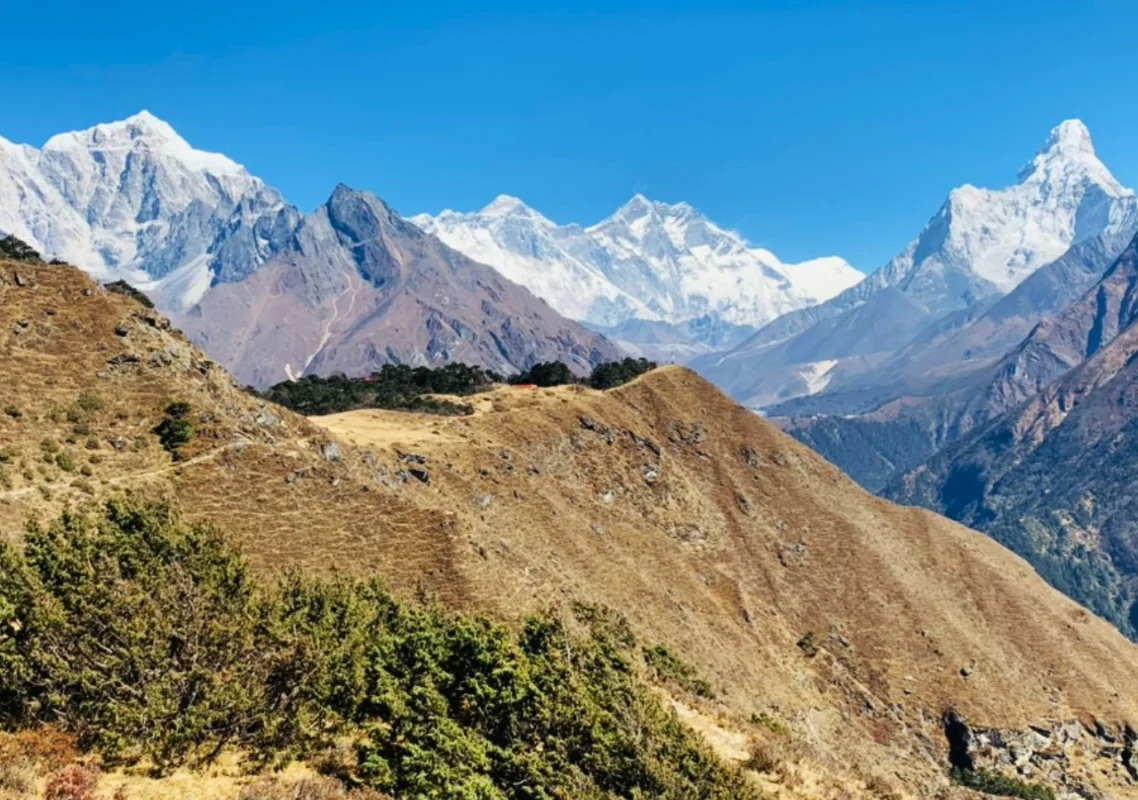
On this day, you explore the lively settlement of Namche and hike to the popular side destination, Everest View Hotel. You get to enjoy first panoramic mountain views of Everest, Lhotse, Thamserku, and Ama Dablam from the viewpoint. The trail towards the Hotel passes by the National Headquarters and Syangboche airport, ascending through the dense green forest.
If you want to continue the hike, you can reach Khumjung Village, which is situated dramatically before the Khumbi Yul Lha Peak. There is an ancient Khumjung monastery that offers a glimpse into the Khumbu’s beauty and its Tibetan Buddhist culture. After the hike is completed, you return to Namche.
Activity: Hiking
Meal: Breakfast, Lunch, Dinner
Accommodation: Guesthouse
05
Day 05: Trek from Namche Bazaar to Dole (4200M/13775Ft), Distance: 12 Km, Duration: 6 Hours
Leaving Namche Bazaar, the trail winds up through the Cliffside path of Dudh Koshi Valley. It navigates through pine forests, Pasture lands, and open meadows with spectacular view of Mt.Everest, Lhotse and Ama Dablam. As you reach Mong La, you can take a short break near Chorten and enjoy the stunning mountain views of Ama Dablam, Kangtega, and a glimpse of Thamserku. It is a scenic rest point with a spiritual ambiance wrapped around it.
After Mong La, the path takes steep descend to the teahouses of Portse Tenga, which is located on the riverside. While trekking, you might see the Himalayan Monal, the Himalayan Thar, and the musk deer. Continuing from the Portse Tenga (Thanga), it is a gradual uphill to Dole, where the landscape opens more for the dramatic mountain views. It is a peaceful settlement with remote and alpine beauty, stone teahouses, and large grazing fields.
Activity: Trekking
Meal: Breakfast, Lunch, Dinner
Accommodation: Guesthouse
06
Day 06: Trek from Dole to Machhermo (4470M/14660Ft), Distance: 6 Km, Duration: 4 Hours
On this day, you trek on a high alpine terrain with vegetation low on the ground. You leave behind the tree line and wander through the dry, windy, and open alpine meadows. Continuing on the western side of Dudh Koshi Valley, the day includes moderate ascent and descent at high altitude.
While trekking, you can see Mount Kangtega and Thamserku towering on the left. On the way, you pass by the peaceful rest stops of Lhabarma and Luza before Machhermo. Slowly, the landscape becomes Himalayan and glacial with thinning air. Nearing the village, you can see a glimpse of the Cho Oyu Mountain (the sixth-highest mountain in the world) if the weather is clear.
Activity: Trekking
Meal: Breakfast, Lunch, Dinner
Accommodation: Guesthouse
07
Day 07: Trek from Machhermo to Gokyo Lake (4790M/15710Ft), Distance: 6 Km, Duration: 5 Hours
It is a special day as the trail stumbles into three Lakes, Longponga Tso (First Lake), Taujung Tso (Second Lake), to Gokyo Tso (Third Lake). Today’s journey is done on the glacial land of Gokyo and Dudh Koshi. You follow the dramatic valley carved by the longest glacier of Nepal, Ngozumpa Glacier. This part of the route offers an exclusive experience of the Nepal Himalayan beauty.
Continuing through the windy and dry valley along with the moraine ridges, you can find dwarf plants, shrubs, and hardy mosses. There are fewer steep sections, with most of the steady climb. After you cross a rest stop of Phangga, the route starts opening to lakes, glaciers, and stunning mountains. Nearing the last stop at Gokyo Lake, you can glance at Mount Cholatse, Taboche, and Cho Oyu. Enjoy the turquoise glacial lake reflecting on the mountain beauty and your beautiful journey of Gokyo.
Activity: Trekking
Meal: Breakfast, Lunch, Dinner
Accommodation: Guesthouse
08
Day 08: Hike to Gokyo Ri (5360M/17580Ft) and Back to Gokyo, Distance: 4 Km, Duration: 3-4 Hours
This is an exploration day at Gokyo, start the day in early morning. A quiet morning and eager to see what type of views you are going to see! Before the sunrise hike begins on a steep ridge of the Gokyo Ri. The trails get uneven and rugged as you keep ascending. Slowly climbing up you can see the Gokyo village and Lake getting distant and the snow-capped peaks rising behind the Rocky Mountains. Your breathing gets heavy, and the trails gradually become visible.
Warm golden rays start to shine the peaks! Reaching at the top of the Gokyo Ri you realize you are surrounded by the moraines, glaciers, mountains: actual Himalayan beauty. The feeling of getting at the top above 5,300m, standing parallel to the great mountains is timeless. Take your moment, rest, and see how far you have come. After relaxation, the descent starts, tough on the knees. You return to Gokyo village, you can spend rest of the day exploring around Gokyo Lake.
Activity: Hiking
Meal: Breakfast, Lunch, Dinner
Accommodation: Guesthouse
09
Day 09: Trek from Gokyo Lake to Dole (4200M/13775Ft), Distance: 12 Km, Duration: 5-6 Hours
Today’s trek takes you from Gokyo Lake to Dole, a scenic descent lasting 5–6 hours. The trail winds down through the Gokyo Valley, offering stunning views of Cho Oyu and the surrounding Himalayas. On the way, you will pass through Machhermo, where we stayed an overnight on the way up, where we can stop for a tea or lunch break. Then, you follow rocky paths and alpine pastures to Dole. The route is moderately challenging but mostly downhill, with thinner air giving way to greener landscapes as you lose elevation.
Activity: Trekking
Meal: Breakfast, Lunch, Dinner
Accommodation: Guesthouse
10
Day 10: Trek from Dole to Namche Bazaar (3440M/11285Ft), Distance: 12 Km, Duration: 6 Hours
The trail leaves high pastures and starts to meet the thin edges of the forests. With a gentle descent, you pass by yak pastures and reach Portse Tenga. After the village, you come across forested trails of birch and juniper that are steep and uneven. There is a short but sheer climb to Mong La Danda, which can be tiring. Take a short break at the village to enjoy the fantastic spot and recall the journey before descending.
Again, enjoy the views of Ama Dablam, Kusum Kanguru, and Thamserku along the way. This descent takes you to Kyangjuma and then to Namche Bazaar, where you stay for the night.
Activity: Trekking
Meal: Breakfast, Lunch, Dinner
Accommodation: Guesthouse
11
Day 11: Trek from Namche Bazaar to Lukla (2840M/9315Ft), Distance: 19 Km, Duration: 7 Hours
The final day of trekking on the trails of Everest! It begins with a steep descent and crossing Hillary Bridge, you climb uphill before continuing to descend again. Enjoy your last sweats in the lush forest covered in mosses and scents of pines.
Casually take a look at the peeking mountains that are waving you a goodbye. Walk along the roaring Dudh Koshi River and take final glimpses from the local villages of Monjo, Phakding, Thado Koshigaon, and Chheplung before you reach Lukla.
Activity: Trekking
Meal: Breakfast, Lunch, Dinner
Accommodation: Guesthouse
12
Day 12: Fly from Lukla to Kathmandu or Ramechhap
The trek is coming to an end! With a heart full of memories and camera rolls packed with the mountains, Himalayan yaks, forest, rivers and smiling faces!
Take your final top view of the Everest ranges and the forest you travelled through. Have a warm reflection on your journey with your team. You return to the busy city of Kathmandu. From the silent echoes of mountains to the mumbles of people and vehicles. Yet it feels comfortable to have facilities in your hands!
Activity: Flight, Drive
Meal: Breakfast, Lunch
Accommodation: Hotel
13
Day 13: Departure/Farewell Day
For the air transfer, your guide or a representative from our team picks you up at the hotel. Then, drop you off 3 hours before the scheduled flight. Catch the final glimpses of Kathmandu alleys, stupas, temples, and prayer wheels on the drive. At the airport, our representative provides a short farewell section with See you next time!
Activity: Drive
Meal: Breakfast

Note:
If you have a private group and prefer a personalized experience, we can organize a custom trip tailored to your requirements and group size, running it any day you choose.
Price Includes

Price Excludes

What's included?
- All ground transfers are done in a private vehicle to/from Tribhuvan International Airport
- Round-trip flight between Kathmandu or Ramechhap and Lukla
- Two nights’ accommodation with breakfast at the best 3-star category hotel in Kathmandu
- Full board meals (breakfast, lunch and dinner) with tea/coffee during the trek
- Best available twin sharing lodge to lodge accommodation during the trek
- All the necessary permits are included: Sagarmatha National Park Entry Permit and Khumbu Pasang Lhamu Rural Municipality Permit, TIMS (Trekkers’ Information Management System) card.
- One highly experienced, helpful, and friendly guide and a porter including their food, accommodation, salary, equipment and accidental insurance
- Seasonal fruits – after dinner during the trek
- Duffle bag, down jacket and sleeping bag during the trek
- Company t-shirt, trekking map and trip achievement certificate
- A comprehensive first-aid medical kit
- All government taxes and entry fees
What's not included?
- International airfare to and from Nepal
- Nepal Visa Fee (it is payable upon arrival at Tribhuvan airport, USD in cash is recommended)
- Travel insurance (it must include high altitude trekking above 5,550m, emergency evacuation, and lost baggage)
- Accommodation, meals, and extra nights in Kathmandu outside the itinerary
- Personal expenses during the trek, like snacks, beverages, hot showers, charging electronics, and internet
- Tips for guide, porter, and driver (Tips is expected but not mandatory)
Trip Information
Gokyo Lake: The Hidden Gem in the Everest Region
The Gokyo Lake Trek offers a rare opportunity to immerse yourself in the untouched natural beauty of the Everest region providing a calm and peaceful escape from the busier trails.
The trip takes you to the extraordinary and Gokyo Valley, a hidden place that is famous for its turquoise lakes, glaciers, quiet Sherpa villages and amazing mountain views. The vibe of the place is untouched and tranquil which lets you experience the marvels of the Himalayas in their original and purest form.
As you follow the trail, you will walk through lush rhododendron and pine forests, cross roaring glacier-fed rivers, and pass through traditional yak pasturelands surrounded by high mountain landscapes. You will have deep insights into the Tibetan-influenced culture of the region depicted by monasteries, mani walls, long suspension bridges, and traditional Sherpa houses.
The highlight of the trek is when you reach Gokyo Ri (5,357 m) which is regarded as one of the top places to see the views of the Everest region. From there, you can gaze down and see the incredible 360° view of Mount Everest, Lhotse, Makalu, Cho Oyu, and the gigantic, vast Ngozumpa Glacier which is the longest glacier in Nepal.
To sum up, the Gokyo Lake Trek is an once-in-a-lifetime adventure and a great choice for trekkers who wish for immersion in nature and culture in a tranquil Himalayan setting.
Gokyo Lake Trek Cost
A basic 12 to 15 days trekking package of the Gokyo Lake generally prices between 1,200 to 2,000 dollars per person. The total cost can change depending on numerous factors such as the length of the trek, the comfort level of the accommodation, food quality, the season and the number of trekkers in your group. The mode of transport, acclimatization days, and private or group sharing options are other factors that can have a final cost impact.
The Gokyo Lake trekking package offered by Explore Vision Nepal covers all the basic services that a safe and pleasant journey to the Himalayas would require. Inclusions in the services are permits, a certified and skilled trekking guide, and full-board accommodation in the teahouse (3 meals per day). In addition, the package also covers round-trip domestic flights from Kathmandu to Lukla and porters (which are optional) for luggage carrying assistance.
Costs are higher at the most popular trekking times, spring (March to May) and autumn (September to November) because of the increased demand for flights and accommodation. Likewise, private departures, upgraded lodges and personalized itineraries can push the total price upwards as compared to group or standard packages.
If you budget properly and pick a package that fits your needs, you will not have to deal with surprise expenses and will have a seamless, secure, and worry free trekking adventure in the beautiful Everest region.
Gokyo Lake Trekking Permits
For the Gokyo Lake trek, you must acquire two significant permits:
- Sagarmatha National Park Entry Permit
- Khumbu Pasang Lhamu Rural Municipality Entry Permit
These permits are a key factor in guaranteeing the protection of the Everest area’s environment, cultural heritage, and trail infrastructure. The collected fees are allocated for direct maintenance of trekking routes, wildlife protection, waste management, the provision of community support, and the overall sustainability of tourism in this delicate Himalayan zone.
Trekkers who obtain the permits not only confirm their compliance with the local laws but also take part in the conservation of the Gokyo Valley’s untouched beauty for future generations.
Gokyo Lake Trek Permit Fees
Sagarmatha National Park Entry Permit: This permit allows you to enter the protected Sagarmatha National Park which comprises Mount Everest along with various rare wild animals and sensitive mountain plant life.
- For foreign tourists: NPR 3,000 (around USD 21)
- People from SAARC countries: NPR 1,500 (around USD 11)
Khumbu Pasang Lhamu Rural Municipality Entry Permit: With this permit, the local community gets financial support for their development activities, such as trail maintenance, waste management, and providing tourism services in the Khumbu region.
- All the trekkers: NPR 3,000 (approximately USD 21)
Gokyo Lake Trekking Route Map
Gokyo Lake Trek is among the most picturesque and quietest trekking routes in the Everest region which gives you the view of the majestic snow-covered peaks, crystal-clear lakes, and typical Sherpa villages.
Trekking usually begins at Lukla, continues through Phakding, Namche, Dole, Machhermo, and Gokyo village. The route opens up to a collection of turquoise glacial lakes, the world’s highest freshwater lakes. You can also ascend Gokyo Ri for the amazing views of Everest, Cho Oyu, Makalu, and Lhotse that are offered at the summit. The trek can be lengthened to include the crossing a Cho La pass, back to the main Everest Base Camp Trek.
The Gokyo Lake Trek map provided is a great assist as it marks the major villages, high passes and lakes providing a good visualization of the elevation changes, distances, and alternate routes. It helps you plan for acclimatization, overnight stays and the sequence of daily trekking stages.
The Thrilling Ascent and Gokyo Ri Sunrise
The peak of Gokyo Ri (5,357 m) is undoubtedly the most iconic point during the Gokyo Lake Trek. The climb is very steep and hard with you needing to have both physical strength and willpower to endure it. However, the rewards are really wonderful and memorable. Embracing the beauty of Gokyo Lake and the mountains from close is a great experience. But imagine the stunning views of the valley, lake, mountains, and Glaciers with sunrise!
Gokyo Ri is a view you don’t want to miss if you are doing the Gokyo Valley Trek. It is one of the major highlights and the highest point you reach. Ascending from the Gokyo Village, this point offers breathtaking sunrise views above some of the tallest mountains in the world.
Once at the summit, you will enjoy:
- An all-round 360° view of the four tallest mountains: Everest, Lhotse, Cho Oyu, and Makalu
- A magnificent sight of the three major glaciers (Ngozumpa Glacier, Lhotse Shar Glacier, Cho Oyu Glacier) in the area from above
- A beautiful bird’s-eye view of the emerald Gokyo Lakes down below
A lot of hikers see this observation point as even more wonderful than Kalapatthar for magnificent photos of the Everest and other giant mountains of the Himalayas.
Amazing Experience Sunrise: Witness the first sunrays glowing on the Everest Summit and spreading to the surrounding mountains. Mount Everest sits quietly and proudly to the east with Lhotse, Nuptse, and Makalu. Whereas, you can see Mount Cho Oyu sitting to the North, which is facing towards you.
You get a great Valley view with the Gokyo Lake and Ngozumpa glacier. The point offers great adventure and the best visual reward for the trekkers. The panoramas are stunning and provide a memorable momentum. And how great is it to be witnessing during sunrise?
Discover the Longest Glacier of Nepal – Ngozumpa
The other outstanding feature is the Ngozumpa Glacier, which is the longest glacier in Nepal. Moreover, the Gokyo Lakes present a stunning chain of turquoise waters that shimmer as brightly as the sun-bleached Himalayan peaks around them. Furthermore, the top of Gokyo Ri gives you a sweeping view of the whole Khumbu area.
So, one of the underestimated highlights of the Gokyo Valley is its pride in having the longest Glacier in Nepal. The icy glacier flows directly from the sixth-highest mountain in the world, Cho Oyu. With its estimated approximately 36 km, it cuts through the valley in the mutter of ice cracks and Himalayan echoes.
Commonly, Ngozumpa is overshadowed by the mountains and Gokyo Lake, but each trekker should embrace this stunning art of nature. It is not just the landmark left by the Himalayas; it is a part of the Gokyo Valley Trekking journey.
Majestic Scenery During the Gokyo Lakes Trek Nepal
The Gokyo Lake Trek is a visual feast treating you to the highly magnificent landscapes of the Everest region. The exhilaration of hiking the trail is accompanied by the constantly changing scenery.
As you walk through the lush subtropical forests, you’ll feel the freshness and coolness of the air filled with the sweet aroma of blooming flora along the trails. Eventually, the scene starts to change from grassy pastures to rocky crests and finally to high glacial valleys, pointing out the extreme transition of the Nepalese Himalaya’s nature.
Along the way, you are rewarded with awe inspiring views of some of the world’s highest and most iconic peaks:
- Mount Everest- this world’s tallest peak dominates the skyline with its snow-capped summits
- Cho Oyu- the sixth highest mountain possessing a perfect pyramid-like appearance
- Lhotse- Everest’s close companion with a strikingly high vertical rise
- Makalu- the fifth highest mountain of Nepal renowned for its fascinating shape and rugged beauty
- Cholatse and Thamserku- stunning mountains that add variety to the Himalayan panorama
Gokyo Lake Trek – Key Attractions
- Gokyo Lakes, a series of high-altitude turquoise lakes that mirror the surrounding snowy summits and present one of the most tranquil alpine landscapes in the Everest area.
- Enjoy a stunning sunrise view from Gokyo Ri. It is a steep climb at daybreak that displays the entire Everest range in golden light.
- Incredible vistas of four 8,000 m giants, Everest, Lhotse, Makalu, and Cho Oyu seen together from one single viewpoint of Gokyo Ri.
- Exciting walks through the high suspension bridges hung over the Dudh Koshi River, allowing you to admire the wild valley below.
- Namche Bazaar, the lively capital of the Sherpas with its traditional market, bakeries, shops, and colorful lives.
- Walk alongside the vast Ngozumpa Glacier, the longest in Nepal where the jagged ice forms and deep crevasses expose the fierce nature of Himalayan geology.
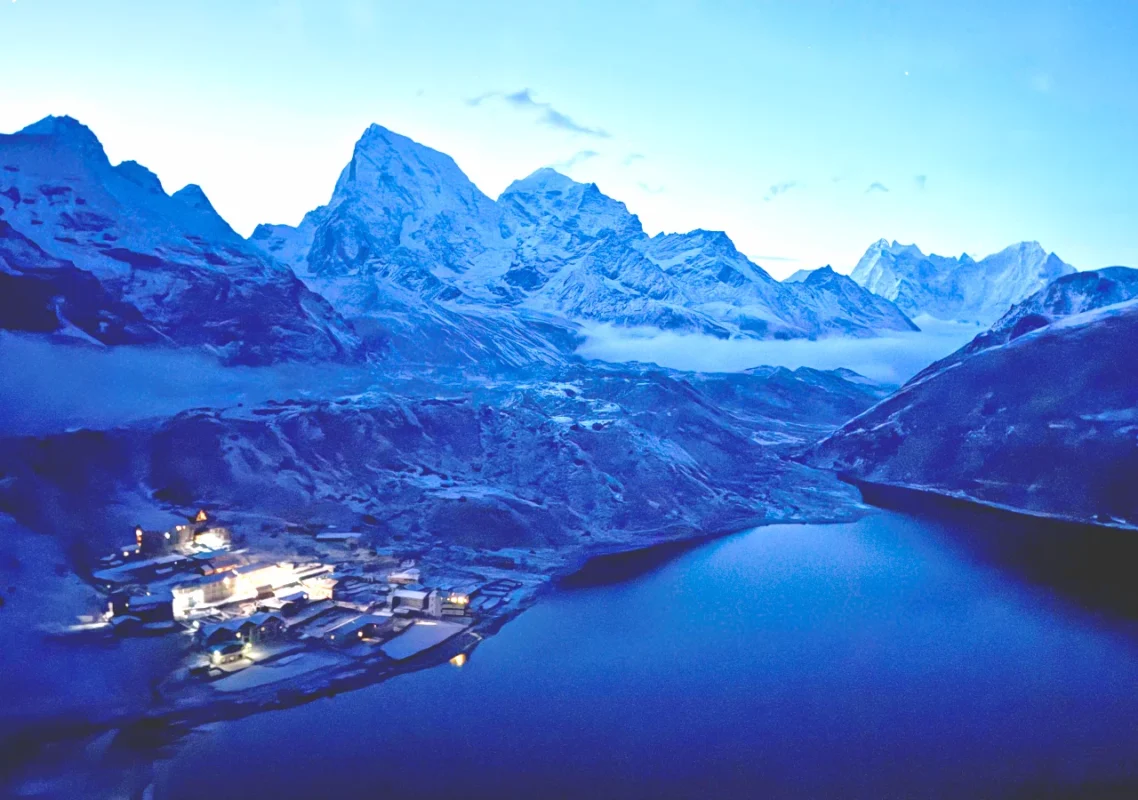
- Tranquil Gokyo Village, surrounded by the icy ridges, blue lakes, and lofty mountains. It is the perfect place for acclimatization and exploration.
- Observing the Sherpas’ lifestyle, visiting age-old monasteries, spinning prayer wheels, passing long mani walls and mingling with the friendly and hospitable mountain dwellers.
- Choosing the Gokyo Trek is ideal for trekkers who chase quiet trails and explore exclusive destinations. The trails of Gokyo are less crowded compared to other treks in the Everest region. This allows you to have a serene experience and visit less-traveled traditional villages like Dole, Machhermo, and Gokyo.
- In a shorter route and moderate-level adventure, you can get stunning views of 8000ers like Mount Everest, Lhotse, Cho Oyu, and Makalu. The trail with peace offers space for profound enjoyment and less hassle.
Fitness Requirements for the Trek
Good physical and mental fitness is enough for the Gokyo trek, as all the difficulties in the Himalayan treks are manageable with proper preparation. Some of the basic requirements to consider are:
- Should be able to walk 6-7 hours daily on average
- Handle uneven and rugged sections
- Maintain appetite at altitude
- Adapt to weather changes
- Mental determination
- Manage steep uphill and downhill
- Flexibility
- Carry a regular daypack
FAQs for Gokyo Lake Trek – 13 Days
 General
The combined route of the Everest Base Camp and Gokyo Lakes Trek will take 4–6 additional days and will be more physically strenuous because you’ll be at a higher elevation and moving through tougher terrain. You will be rewarded with incredible sights of the lakes, Gokyo Ri and the opportunity of walking both the classic EBC trail and the less-traveled Gokyo area.
Gokyo Ri, positioned at 5,357 m (17,575 ft), is the peak of the Gokyo Lake Trek. Trekkers at this point can see the whole Everest area with the major peaks such as Everest, Cho Oyu, and Makalu. In addition, the broad vision of Ngozumpa Glacier and the series of sparkling Gokyo Lakes from this viewpoint is surreal.
A round trip trek generally spans 90-100 km (depending on the route taken and side trips). It normally takes about 12-15 days to complete the trek, including the acclimatization.
Usually, the Gokyo Trek starts from Lukla where daily flights from Kathmandu are available to reach. After traveling to Lukla, hikers can pass by towns like Phakding, Namche Bazaar, Dole, Machhermo etc before entering the Gokyo Valley area. Other options include hiking through Salleri or Jiri, but these paths are longer.
Certainly, it is possible to do the Everest Base Camp Trek via Gokyo Lakes and the majority of trekkers opt for this route for its beautiful scenery. In most cases, you can go from Namche Bazaar or Dole to Gokyo village and the Gokyo lakes, then pass through the Cho La Pass to get back onto the main EBC trail at Lobuche.
 Preparation & Fitness
A minimum period of fitness preparation lasting from 6 to 8 weeks should be considered before starting the trekking trip. You can attain appropriate fitness level by performing the following activities:
- Daily long walks of about 10-15 km
- Strength training workouts comprising squats, lunges, step ups, deadlifts, upper body, push ups, pull ups, overhead press, etc
- Core exercises such as plank, bicycle crunches, leg raises, Russian twists, etc
- Cardiovascular workouts like running/jogging, cycling, swimming and stair climbing
- Practice hiking with a heavy backpack
It is better to have prior trekking experience but it is not an absolute requirement. The trail is of a moderate difficulty and no special climbing skills are required. Thus, the hikers who are in good health and are moderately fit can make it to the end without any issues.
Mental preparation is of utmost importance for the Gokyo Lake Trek. The long hiking days, unpredictable weather, and high altitude trekking difficulties will put your patience and mindset to the test. Therefore, staying strong and determined will enable you to go through the trail even when you are tired, feeling uncomfortable and experiencing unexpected situations.
 Insurance & Visa
Yes, all foreign citizens must have a valid visa to enter Nepal. You can choose either option which is very easy to follow: either a visa on arrival at the Tribhuvan International Airport in Kathmandu or completing the online application in advance to avoid standing in long queues.
The system of Nepal’s tourist visa is accommodating and tourists are given the liberty to choose between 15, 30, or 90 days depending on their itineraries. If you need to stay beyond these periods, the Department of Immigration in Kathmandu is available to extend your visa. This is a common practice among travelers who are undecided whether to take the next trek, visit more cultural sites, or just be in Nepal for longer.
The entire arrival process is organized from the moment you arrive. An airport representative will meet you, assist you with your luggage and take you to your hotel. After you get settled, a detailed briefing will be given to you on the trek, safety guidelines, and logistical information. This smooth support makes sure you do not get stressed or confused at the beginning of your adventure.
Certainly, travel insurance is the top priority for the Gokyo Lakes trek which involves high-altitude trekking. The insurance you choose has to cover the following aspects:
- High altitude medical expenses
- Emergency helicopter evacuation
- Trip cancellation and interruption
- Baggage delay or loss
Always select a plan that clearly states helicopter evacuation up to 6,000 meters, as this is the most important safety measure in case of emergencies at high altitudes.
 Guides & Support Staff
It is very much advisable to have a guide if you are not an experienced hiker. Besides navigation, the guides also give you acclimatization advice, tell you about safety, and interpret cultures, therefore making the trek less risky and more enjoyable.
The majority of the guides in the Everest area are English-speaking and often know other languages as well. In addition to being experienced in high-altitude trekking, they also undergo training in safety protocols and first aid, thus providing professional assistance throughout the trip.
Not at all! The majority of our trekking packages come with the option of hiring a porter who will carry your large duffel bag and other heavy equipment. You are left with only your daypack that contains the essentials for the hike of day. This not only makes the trek easier but also allows you to take in the scenery without being weighed down.
 Health & Safety
- The guides have first aid kits for small injuries and common trekking illnesses
- They communicate through the use of satellite phones or radios in spots where mobile coverage is absent
- The emergency response protocols enable guides to execute the rescue or evacuation very rapidly.
- The guesthouses and checkpoints provide information about the weather and the state of the trails in the region.
- In case of an emergency on the Gokyo Lake Trek, it is very important to react swiftly and to adhere to the proper procedures for your safety.
- Notify your guide as soon as possible, who will evaluate your state.
- In severe cases, evacuation can be arranged by going down to a lower altitude or by helicopter rescue (if insured).
In case of an emergency, the guide of the group will reach our support team through mobile or satellite communication channels. You will be provided with an emergency whistle or a Personal Locator Beacon (PLB) for quick distress signals. We also facilitate fast evacuation by ground or helicopter, as required, to ensure that help is provided in time.
 Packing & Gear
Thamel and Asan are the two prominent areas in Kathmandu for trekking gear. In these places there are plenty of shops where you can either buy or rent the required gear for the trek. Renting could be the cheaper option for items that you might not use very often like high-altitude jackets, sleeping bags or trekking poles.
Yes, surely! A number of hotels in Kathmandu will secure your luggage in their storage facilities. Additionally, you can also store it safely at our office. So, you will be able to travel light to Lukla with just the essentials for the trek while the heavy or non-essential items remain safely stored in the city.
- Main backpack: 50–60 liters which will accommodate your primary gear, clothes, and personal stuff.
- Daypack: 20–30 liters. This smaller pack is intended for daily needs, such as water, food, camera, clothing layers and a first-aid kit.
The daypack should be about 4-7 kg, so it’s easy for daily walks. Likewise, the duffel bag should be roughly 15–20 kg. This hefty bag is usually carried by a porter. However, a light daypack makes for a safe and pleasant trek.
The daypack should be used to store things that you need fast, such as jackets, water, snacks, and a first-aid kit. The main duffel bag should be used for keeping heavier and less frequently used items. Packing cubes or dry bags can be used to both keep your gear organized and protected from rain or snow.
 Booking & Payment
The booking process is pretty simple. First, you need to fill out a booking form where you give your personal information and indicate your travel preferences. The next step is making a 15% deposit which acts as a confirmation of your reservation and guarantees your place on the trek.
The rest of the money can be paid any time before your departure date, giving assurance that all the arrangements like permits, lodgings, and guides, can be done beforehand.
Payment can be made in many ways which are all very convenient. There are options for bank transfers, online payment gateways, by card upon your arrival or cash in local currency if that is what you like. Each of these methods allows you to pick the most suitable and comfortable means that works best for your location and comfort.
The cancellation policy is based on the period of notice you give, and thus different amounts of money could be refunded to you. Last-minute cancellations are typically non-refundable as all arrangements for bookings, permits, and logistics have already been made.
Definitely! Changing the dates or extending the trek is possible. Weather disturbances, health problems and personal reasons are all valid for rescheduling. Generally, adjustments are made depending on the situation to ensure flexibility and accommodate your needs as best as possible.
 Optional Expenses
USD 200 to 300 is the approximate cash that most trekkers carry to pay for their extra expenses during the trek. The money usually goes to the following:
- Access to Wi-Fi in the teahouses
- Charging electronic devices
- Hot showers
- Snacks and drinks
- Souvenirs or local crafts
- Gratuities for guides and porters
Definitely, you can. Minimize the use of Wi-Fi and hot showers, as both generally come with an additional charge. Whenever possible, share meals and snacks with the other trekkers. Purchase souvenirs in larger villages where the prices are more reasonable than in small teahouses.
Tipping is a typical practice that is looked upon positively even if it is not mandatory. According to the general rule, around 10-15% of the overall trekking expense is the suggested sum that can be distributed among your guide, porter, and other helping staff.
Tips are customarily given at the end of the trek but you can also tip along the way if you think that someone has provided extraordinary service.
 Connectivity & Transaction
The coverage for the mobile network is mostly accessible in Namche Bazaar and in the other significant villages. However, the higher you go, the lesser and weaker the signals are. It is very wise to keep your family or guide informed of any important events during the coverage areas.
Banks and ATMs are located only in Lukla and Namche Bazaar, though they might not always be operational. It is not a good idea to depend entirely on them as they might run out of cash, which is especially true during the peak trekking season.
Trip Reviews


