



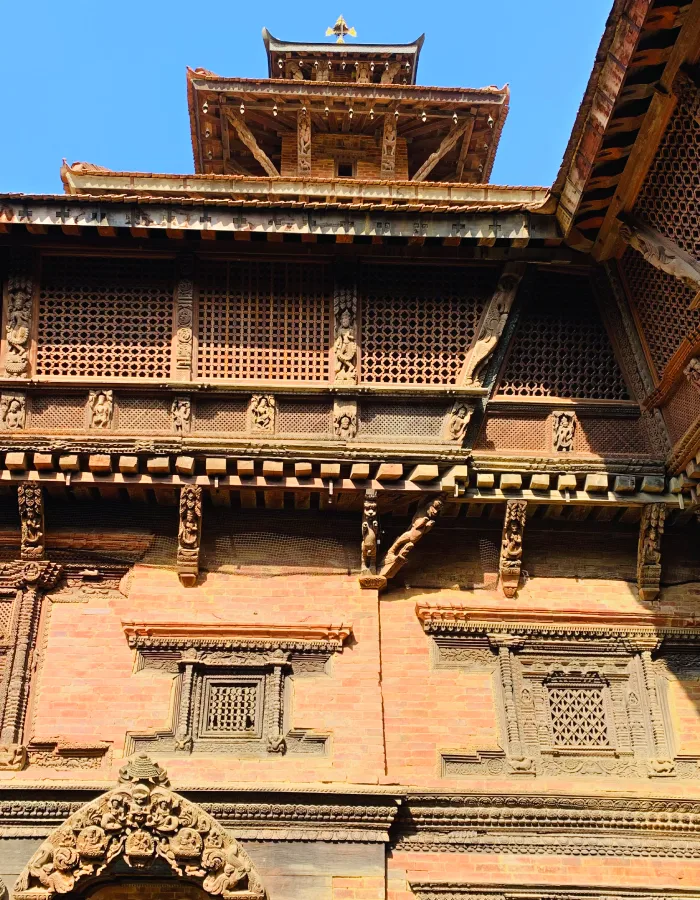
- Patan Durbar Square is popular for its beautiful structures made in Newari style which include beautifully carved windows, temples, palaces, and courtyards.
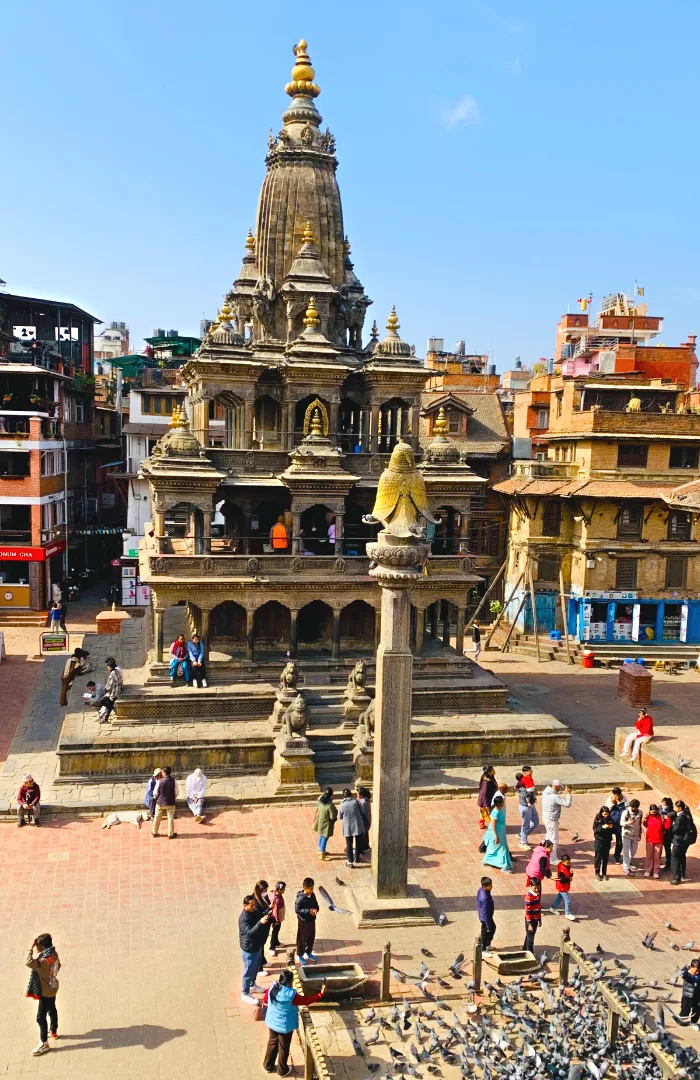
- The beautiful Krishna Mandir, which was built in the 17th century is situated here.
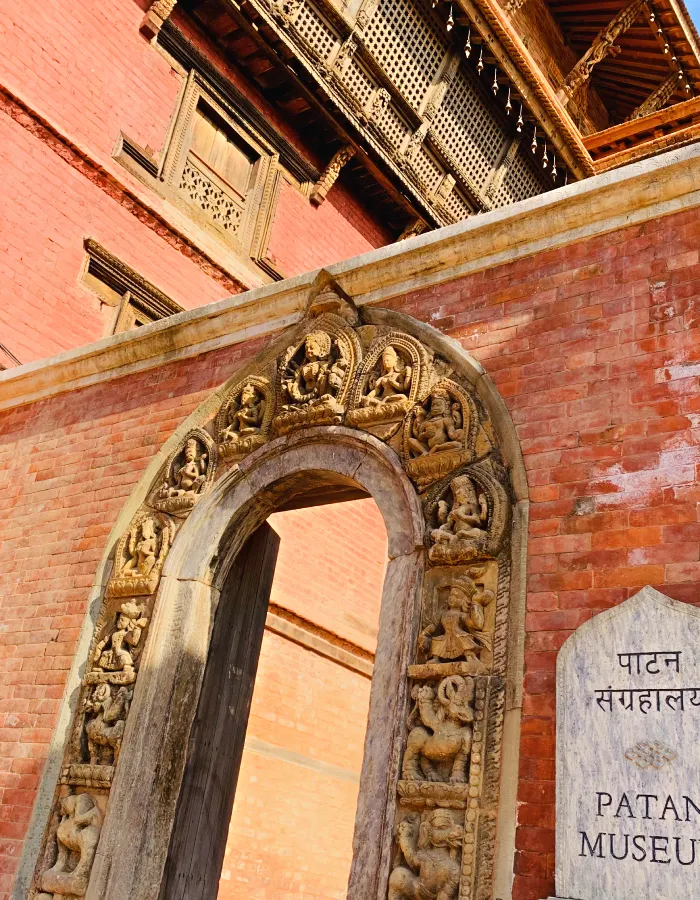
- This site is home to Patan Museum, which holds valuable Hindu and Buddhist artifacts showing Nepal’s rich royal and religious history.
- It is an active cultural site where ancient festivals and rituals are celebrated.
- The square reflects strong religious harmony, with both Hindu and Buddhist shrines located side by side.
Patan Durbar Square is one of the most culturally significant sites in Nepal. It is located in Lalitpur District, which is about 30 minutes’ drive away from central Kathmandu. The site is renowned for its rich historical roots as well as its deep connection to Nepal’s culture, traditions and artistic heritage.
Everything on the site symbolizes centuries of tradition, in which the arts, religion, and lifestyle have grown together in a meaningful way. The square is filled with ancient structures that showcase the amazing skills of the craftsmen of that time.
The beautifully designed temples, courtyards, marvelous wooden carvings, and historic monuments are the major highlights of the Patan Durbar Square. The square is a vibrant site where various religious ceremonies and cultural festivals are commonly held. So, visitors will have a chance to observe preserved traditions.
This beautiful World Heritage Site is popular among tourists who wish to discover the history of the city, appreciate its splendid architecture and immerse themselves in its vibrant cultural surroundings.
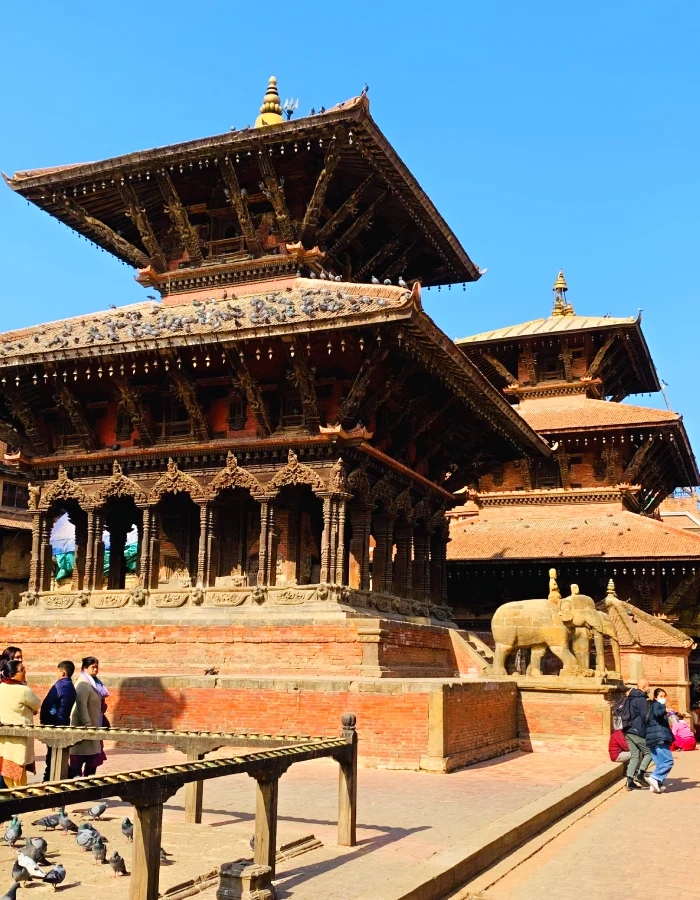
Patan Durbar Square Nepal History
The history of Patan can be traced back to Kirat era around the 3rd century BC. It was later expanded in the 6th century. It then flourished during the Lichhavi and Malla periods.
The Durbar square served as a residence for kings and rulers. According to historians, the area was a settlement and trade point even before the Malla rulers came to power. The royal square is believed to have been established by the Malla kings of Lalitpur.
Patan Durbar Square reached its peak development in the Malla era. During this era, the square was considered the best example of architecture and craftsmanship in Kathmandu Valley. In 1600s, King Siddhi Narsingh Malla and his son Srinivasa Sukriti built various structures like temples, courtyards and palace buildings.
Over the centuries, the square became a major place for trading, worshipping and craftsmanship. Due to its cultural importance, the Patan Durbar Square was declared as one of the UNESCO World Heritage Sites in 1979.
Cultural Guide to Patan Durbar Square
Why is Patan Considered the City of Fine Arts?
Patan is often described as the city of arts in Nepal because of exceptional craftsmanship. The city is known for metal sculptures, wood and stone carvings, paintings and detailed religious artworks.
The city’s artisans are well known for their religious artwork. With their exceptional skills, they have protected Nepal’s cultural and artistic traditions making Patan a center of craftsmanship and creativity.
Until now, most skilled artisans in Patan continue to live and practice their craft following traditions passed down through generations.
Walking around narrow winding lanes surrounding Patan Durbar Square, you can find numerous workshops where craftsmen make statues, carvings and other sacred objects by hand. By visiting these workshops, you will get to learn about the artistic traditions of this city that have remained largely unchanged for centuries.
The Newar Heritage
The Newars are original inhabitants of Kathmandu Valley. This ancient city’s spirit is deeply rooted in its Newar heritage. Near the square area, you can also see traditional Newari residential houses. Here, you will notice their distinctive architecture in houses and temples. Likewise, you can try the delicious Newari cuisine prepared by following age old recipes that are preserved through generations.
Newar culture is beautifully reflected in Patan through several aspects of its daily life. These include homes made out of bricks, finely carved wooden windows and communal courtyards. At this site, you can also observe the religious events, ceremonies and vibrant annual festivals celebrated by the Newar community and ensure an enriching experience.
Festivals and Living Traditions
Patan Durbar Square is a historical site and also a cultural center that is truly vibrant. In this square area, people come together for religious functions. They also come here for social interactions all year round. It becomes even busier and more colorful during festival times when the square becomes full of life.
The chariot festivals like Rato Machhindranath Jatra, Bhimsen Jatra and Shree Narsingh Jatra are celebrated here with great enthusiasm. Krishna Janmashtami is also celebrated by devotees visiting the temple and singing devotional songs.
Such festivals help to develop a bond between the people. Getting a chance to observe and celebrate these festivals with locals can be a truly fascinating experience for the visitors.
Travel Guide to Patan Durbar Square
Patan Durbar Square Location
Patan Durbar Square is situated in Lalitpur which is 6 km away from Thamel, Kathmandu, Nepal. The site is easy to reach. It is one of the most significant cultural and historical sites of the Kathmandu Valley which attracts numerous visitors including both local and international tourists, throughout the year.
How to Reach Patan from Kathmandu
You can reach Patan Durbar Square in several ways. If you would like to go comfortably, then taxis might be a good option. Alternatively, local buses that go to Patan or Lagankhel can be an affordable means of transportation. You may also use ride sharing services choosing either a bike or a taxi.
Another option to visit this historic place is an organized tour that includes a transfer service to the sightseeing place and back to the hotel. This way of traveling might be convenient as it will help you to see everything interesting while having an experienced guide along with you.
At Explore Vision Nepal, we offer an organized tour to the Patan Durbar Square, including ensuring a joyful experience with seamless transfers, expert guidance and well planned day tour.
Entry Fee
The Patan Durbar Square ticket price can vary based on your nationality. Generally, tourists prefer to visit the square as well as the Patan Museum. So, to enter this site, foreign nationals should pay NRs 1,000 (US$ 7).
The ticket price for visitors from China, BIMSTEC and SAARC countries is NRs. 500. The entry fee is used for maintenance and preservation of the cultural heritage.
Best Time of Day to Visit Patan Durbar Square
You can choose to visit Patan Durbar Square in the morning. During this time, the square area is tranquil. It is less crowded. So, you will get to explore the square area in a peaceful atmosphere. The soft morning light lets you appreciate details of the carvings. At this time, you can enjoy observing the historic structures without distractions.
Visiting in the afternoon is also highly recommended. As the sun sets, the square looks warm and golden. So, you can take perfect Patan Durbar Square photos at this time. Morning and afternoon are ideal times to explore the square area and capture stunning shots of this historic site.

Kathmandu Patan and Bhaktapur Tour- 2 Days
The Kathmandu, Patan and Bhaktapur Tour is a historically rich tour that offers deep knowledge about Nepal’s identity. It takes you to the spiritually significant monuments in Kathmandu. Also, you visit three Durbar...
 2 Days
 Easy
Easy
US$ 155
Patan Durbar Square Timings: Opening and Closing Hours
Patan Durbar Square area is open to public 24/7 allowing visitors to explore the historic surroundings at any time. However, the ticket counter for museum visits remains operational between 7:00 AM and 6:00 PM. The galleries of the Patan Museum are open from 8:00 AM to 6:30 PM, while courtyards like Keshav Narayan Chowk, Mul Chowk, and Sundari Chowk remain open between 7:00 AM and 6:30 PM.
During winter, the Patan Museum gallery opens between 8:00 AM and 5:30 PM, while the courtyards will be open between 7:00 AM and 5:30 PM. Additionally, Sundari Chowk Galleries do not open on Wednesdays and close earlier on Tuesdays (at 2:30 PM) for regular maintenance.
Main Attractions of Patan Durbar Square Nepal
Patan Museum
One of the main attractions of the Patan Durbar Square is the Patan Museum. The central courtyard of the museum is known as Keshav Narayan Chowk. This was formerly a royal palace of the Malla kings. However, it was officially converted into a museum.
Now it is a museum where you can get insight into Nepal’s cultural heritage and the evolution of its artistic traditions. Among the artifacts displayed at this museum are collections of ancient sculptures, metal scriptures and artworks that highlight the cultural heritage of the city. Here, you can see rare treasures made during the Malla era, including the Malla Throne.
The most notable collection includes exquisite cast bronzes and gilt copper repoussé work, which are considered the best examples of Nepali metal craftsmanship. All the items in the museum have detailed captions so that visitors can understand their significance which makes their experience both educational and deeply engaging.
Patan Sundari Chowk
Several courtyards in Patan Durbar Square are popular for their wood carvings and handicrafts. This particular courtyard is known for its wood carvings and traditional handicrafts. It is also known as “Tusha Hiti” in the Newari language. There is a magnificent stone water spout present at the center of the courtyard and it is surrounded by statues of different gods and deities.
Above this water spout, there is a small replica of Krishna Mandir, Patan which is believed to have been used as a model for the original temple’s construction.
Mul Chowk
The Mul Chowk is the main courtyard of the Patan Durbar. It was first established in 1666 by Srinivasa Malla and further rebuilt in 1730 and 1850. It served as an important hub for royal ritual and public activity. The Mul Chowk is a huge open area, almost twice as big as most courtyards found in Kathmandu and slightly larger than those in Bhaktapur.
This courtyard features tiling dating back to the 17th century which blends beautifully with older buildings of the Malla period. The Mul Chowk was renovated again in 2011 to restore its former glory.
Patan Krishna Mandir
Patan Krishna Mandir is known for its beautiful carvings on stone and stunning architecture. It was built in the 17th century by King Siddhi Narasimha Malla. The temple has the Shikhara style of architecture.
The wall of the temple which is made of stone, is carved beautifully with detailed carvings inspired by the great Hindu epics like Mahabharat, and Ramayana. Many devotees visit this temple on the occasion of Krishna Janmashtami to honor the birth of Lord Krishna.
The Golden Temple
Golden Temple is one of the most sacred monasteries for Buddhists in Patan that is devoted to Shakyamuni Buddha. The temple was built in the 12th century on the initiative of King Bhaskar Varma.
This Buddhist monastery is admired because of its amazing gilded exterior, detailed carvings, and metal sculptures, which make it one of the most remarkable religious sites in Patan.
To this day, the monastery remains a place of worship. The most important part of this temple is the shrine that is dedicated to Shakyamuni Buddha and there are prayer wheels, sacred images, and historical carvings in the courtyard. Here, visitors can see religious ceremonies and devotional prayers which helps them gain deeper understanding of the spiritual practices.
Top Things to Do in Patan Durbar Square
Stroll Around Durbar Square
Strolling around Patan Durbar Square is the best way to experience the beauty and magnificence of this historical place. Patan Durbar Square temples, palaces and carvings reflect the rich cultural heritage.
In addition, the Patan Durbar Square also provides an opportunity for tourists to observe the lifestyle, customs and rituals of the area. You may take a leisurely stroll around this area. By exploring at your own comfortable pace, you can appreciate unique blend of history, art and daily life that makes the overall experience truly special.
Photograph the Architecture
Patan Durbar Square is an ideal place for photography. The wood carvings, stone sculptures, architecture and the temples provide many photography opportunities.
Each corner of Patan Durbar Square reveals beautiful craftsmanship and design. Morning or evening time proves to be the best time of the day to take photographs, as natural lighting works well on the monuments. While exploring this place, make sure to snap beautiful pictures showcasing beauty of architecture and the rich cultural heritage of this historic city.
Observe the Local Life
Patan Durbar Square is a hub for religious and social gatherings. People gather here for prayers. They meet with friends. Likewise, they also celebrate festivals together.
Here, tourists may observe people following their daily routines on a regular basis, witness their traditions and culture and also get to participate in celebrations during festive times.
Try Local Newari Dishes
The tour to Patan is not be complete without trying the Newari cuisine. The streets and restaurants near the square area serve a wide variety of local dishes which have been prepared from traditional recipes passed on for generations.
Some popular dishes include Chatamari, Yomari, Bara and Choila all with distinct tastes and flavors. Trying out these authentic dishes gives you insight into the Newari culture and lets you understand Patan’s rich culinary traditions.
Nepal Patan Durbar Square: Why Include it in your Itinerary?
When tourists visit Patan, they expect that they will be seeing old temples and historic structures. However, by the end of their tour they gain a deeper insight into the culture and traditions of Nepal.
Patan Durbar Square is a site where both history and modern life exist side by side. The artistry and craftsmanship of the old artisans can still be seen in the temples, buildings and surroundings. So, exploring this area is truly fascinating.
Whether you are interested in history, photography, architecture, culture or just sightseeing in general, the Durbar Square exploration offers a memorable experience that stays with you for a long period of time.