


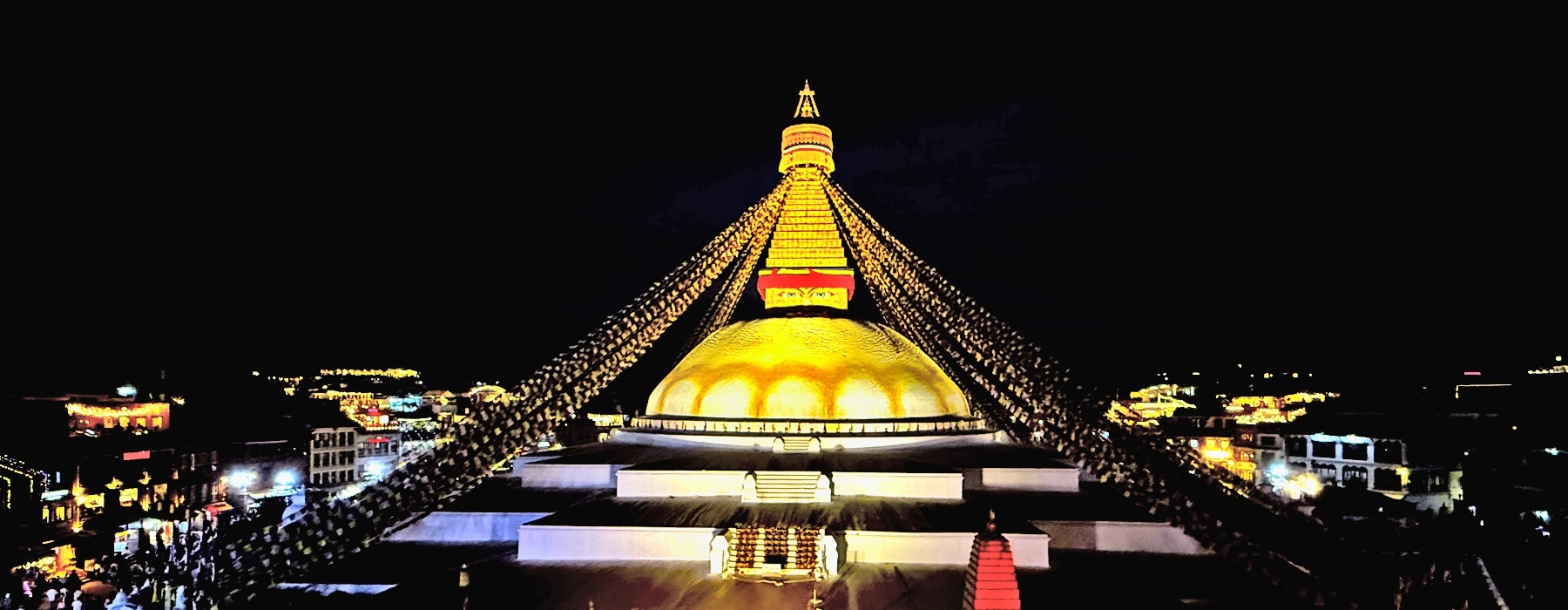

- Boudhanath Stupa in Kathmandu Nepal is a UNESCO World Heritage Site. It is one of the largest and most sacred Buddhist monuments in the world.
- With a history going back more than 1,500 years it’s been a major spot for Buddhist pilgrims, as well as a center for Tibetan culture, spiritual learning and religious practices.
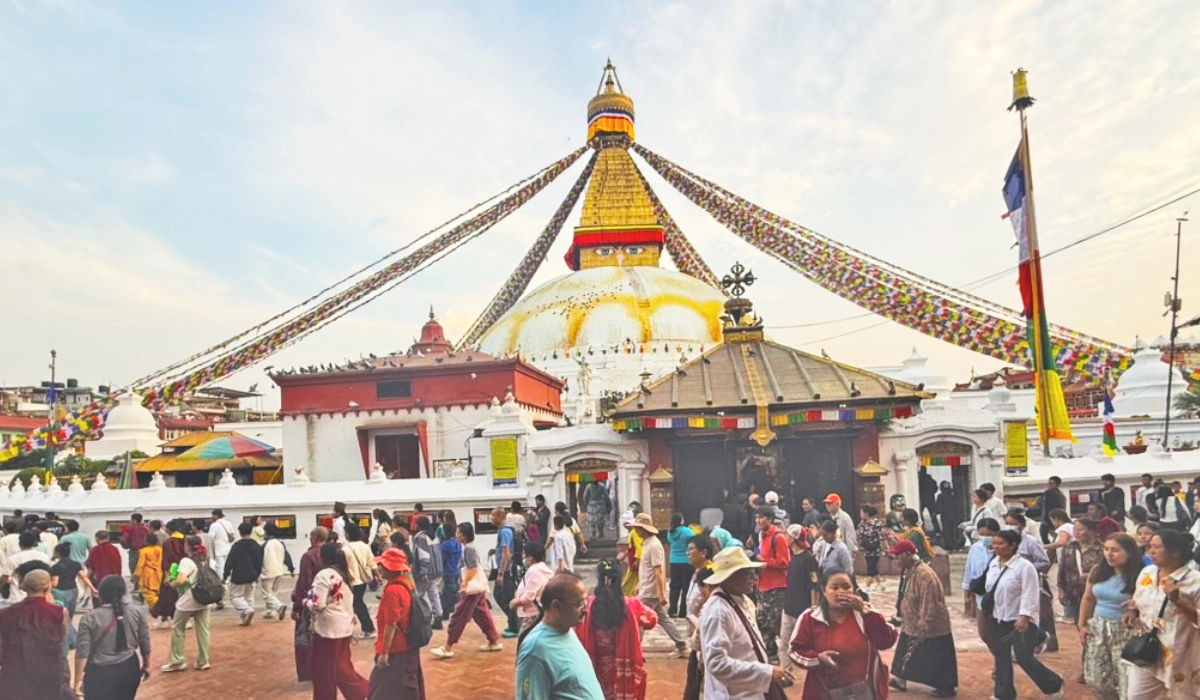
- Famous for its giant white dome, Buddha eyes, prayer flags and symbolic architecture, the stupa is really something to see.
- Boudhanath blends tradition, spirituality and peace. You can check out Buddhist traditions, take part in festivities, and attend meditation sessions too.
Boudhanath: The Spiritual Heart of Kathmandu
In the heart of Kathmandu, the Boudha Stupa stands tall. It’s seen centuries of devotion, trading, culture mixing and spiritual growth. More than just architecture it’s a living symbol of Buddhist faith and one of Nepal’s top cultural spots.
If you are after spiritual experiences, love ancient history or want to explore Nepal’s heritage, the story of Boudhanath offers a remarkable journey through time.
This stupa in Kathmandu is part of the UNESCO World Heritage list. The white dome structure, the Buddha eyes, colored flags, and peaceful aura have attracted thousands of pilgrims as well as tourists every year. It is considered to be one of the most photographed and spiritually significant sites in Asia.
What is the Boudha Stupa?
The Boudhanath stupa is considered as one of the largest Spherical Stupas on earth. It is very important to the Buddhists pilgrims, especially for those from Tibet. Over the years, the Boudhanath stupa has become a representation of spirituality, faith, wisdom and devotion.
This Boudha stupa is located in the northeastern side of Kathmandu, Nepal. It forms the spiritual epicenter of the Tibetan Buddhist group in Nepal. There are many traditional and cultural places surrounding this famous stupa like old monasteries, prayer halls, meditation centers, traditional handicraft shops and cultural institutions. All this makes for a unique environment where religion, culture and regular life flow together effortlessly.
Monks, pilgrims, and adventurers have been coming here for ages to pray, turn prayer wheels, and circumambulate the stupa. Boudhanath Stupa Kathmandu Nepal continues to attract visitors from around the world. It’s amazing to see the history, spirituality, architecture, art and culture all wrapped up together.
Boudhanath Stupa History
The Boudhanath Stupa is more than 1,500 years old. It is considered one of the oldest and most respected Buddhist sites in Nepal. Though experts still debate about its exact origins it is believed to have been built during the Licchavi period, probably in the 5th century CE. Many renovations and restorations over the years have helped preserve its significance as a major spot for Buddhist worship.
According to historical records and local legends, it supposedly started with a humble poultry keeper who requested the king’s permission to build a monument in honor of Buddha. This tale really sticks out and shows off some key Buddhist ideas like being devoted, generous, and resilient.
Due to its strategic location along the ancient trade routes connecting Tibet, Nepal and India, Boudhanath gradually became an important stop for merchants, monks and pilgrims traveling through the Himalayas. These folks would visit the stupa to pray, take a break, exchange culture and knowledge and bond over culture and religion.
Buddha Stupa history is tied to the growth of Mahayana and Vajrayana Buddhism in the Himalayas. As Tibetan Buddhism spread Boudhanath became a major spiritual hub that attracted religious scholars, practitioners and devotees from all over the Asia.
Boudha Stupa Established Date: When Was It Built?
Many visitors look for the establishment date of the Boudha Stupa but there’s no agreed upon year of construction. Historical clues point to it being built during the Licchavi era, around the 5th century CE.
Some traditions say it’s even older while archaeology shows the structure had lots of renovations and expansions over time. What remains undisputed is that Boudhanath Stupa Nepal has served as a center of Buddhist worship for well over a millennium.
The Fascinating Architecture of Boudhanath Stupa
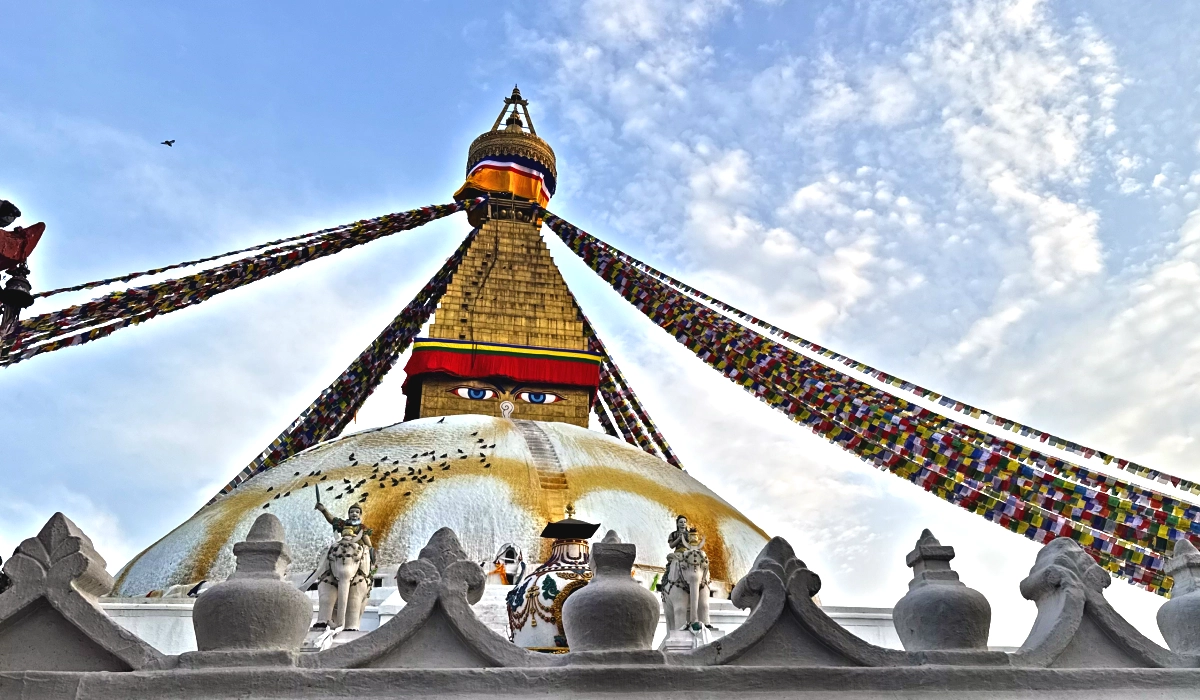
Nepal Stupa Boudhanath is admired globally because of its amazing architecture which blends beauty with deep spiritual meaning. Each part follows Buddhist cosmology showing various universe elements and paths to enlightenment. The stupa visually tells Buddhist beliefs.
Key Architectural Features
The White Dome
The massive white dome is the foundation of the stupa. It symbolizes the earth, stability and the start of spiritual practice. Its smooth curve shows harmony, purity and how all the life is connected. Plus, the bright white color represents peace and enlightenment.
Harmika
Above the dome sits the Harmika. It is a special square structure that leads to the enlightened realm. This sacred tower acts as a bridge between the world and the higher spiritual state.
The Buddha Eyes
Among the most recognizable parts of the Boudha Stupa are those iconic eyes painted on all the four sides. It is believed that these eyes see in every direction which reflects the Buddha’s amazing wisdom and awareness.
Between the eyes is a mark that looks like a nose but is really the Nepali numeral “1”. It represents unity and the single path to enlightenment.
The Spire
The gilded spire, rising above the Harmika, has thirteen ascending rings leading to the top of the stupa. In Buddhist tradition, these thirteen levels represent the stages of spiritual development that a Bodhisattva must pass through on the journey toward enlightenment. The narrowing shape at the top shows spiritual progress and transcendence.
Prayer Flags
At the stupa’s summit colorful prayer flags extend outward in every direction. These flags have sacred mantras and prayers printed on them. People think the flags spread blessings, peace and positivity through the wind. Their vibrant colors add to the beauty of the monument greatly.
Boudhanath Stupa Height: How Tall Is the Monument?
The Sacred Boudhanath Stupa height is approximately 36 meters (118 feet), from its base to the pinnacle known as the Gajur, making it one of the largest spherical stupas in the world. Its impressive size and spiritual significance have made it one of the most recognized landmarks in Kathmandu and a major Buddhist pilgrimage site in Nepal.
The place of Boudha and Boudhanath Stupa, located at an elevation of approximately 1,350 meters (4,430 feet) above sea level in the northeastern part of Kathmandu Valley, dominates the surrounding area with its massive white dome and gilded spire. The monument’s unique mandala-inspired design reflects important Buddhist teachings and symbolizes the universe. Its elevated structure and great size attract many pilgrims, monks, and tourists from all over the world to see it.
The beauty of Boudhanath Stupa’s is also possible to admire from rooftops, cafes and terraces located within monastery complexes. From these vantage points, visitors have the opportunity to enjoy a beautiful panoramic view of the stupa, its magnificent size, elaborate design and the colorful ambience of the entire religious site.
Boudha Stupa Direction and Sacred Orientation
Many tourists are interested in knowing about the direction and orientation of the Boudhanath Stupa. The monument faces four directions: north, south, east and west which hold significant spiritual importance and are not just based on architecture.
On all four sides of the stupa, “Buddha eyes” can be seen, gazing in all directions. They are the symbolic representations of omniscient wisdom and the all-seeing ability. The Buddha’s third eye represents spiritual knowledge and enlightenment. Beneath the eyes lies a symbol that looks like a question mark or the digit “1” in Nepali script. This represents oneness and the only way towards enlightenment.
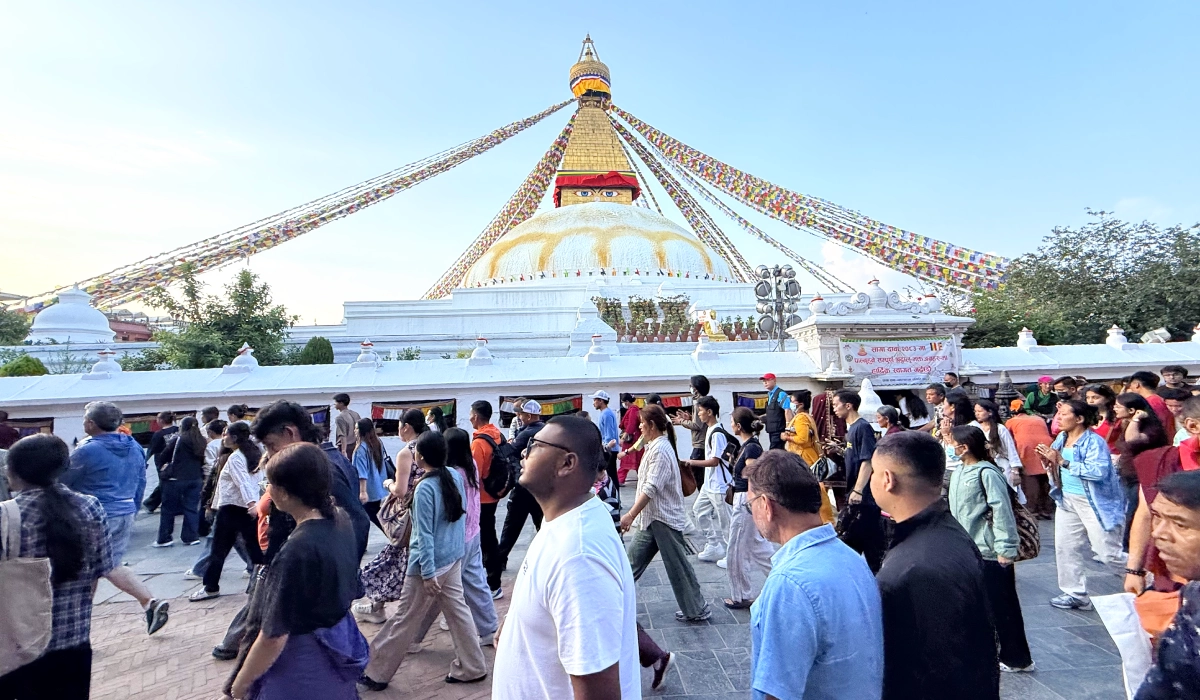
A wide circular pathway surrounds the Boudhanath Stupa and it is used by Buddhist believers to walk around it clockwise in order to perform kora, a ritual of circumambulation that is very common in Buddhism. It symbolizes alignment with positive energy and the spiritual path toward enlightenment.
All these intentional orientations reinforce core Buddhist teachings, as it shows the universal character of compassion, mindfulness and wisdom practiced by Buddhists. The monument serves as a perfect visual symbol of universal harmony and spiritual awareness.
Boudhanath Stupa Aerial View: A Sacred Mandala from Above
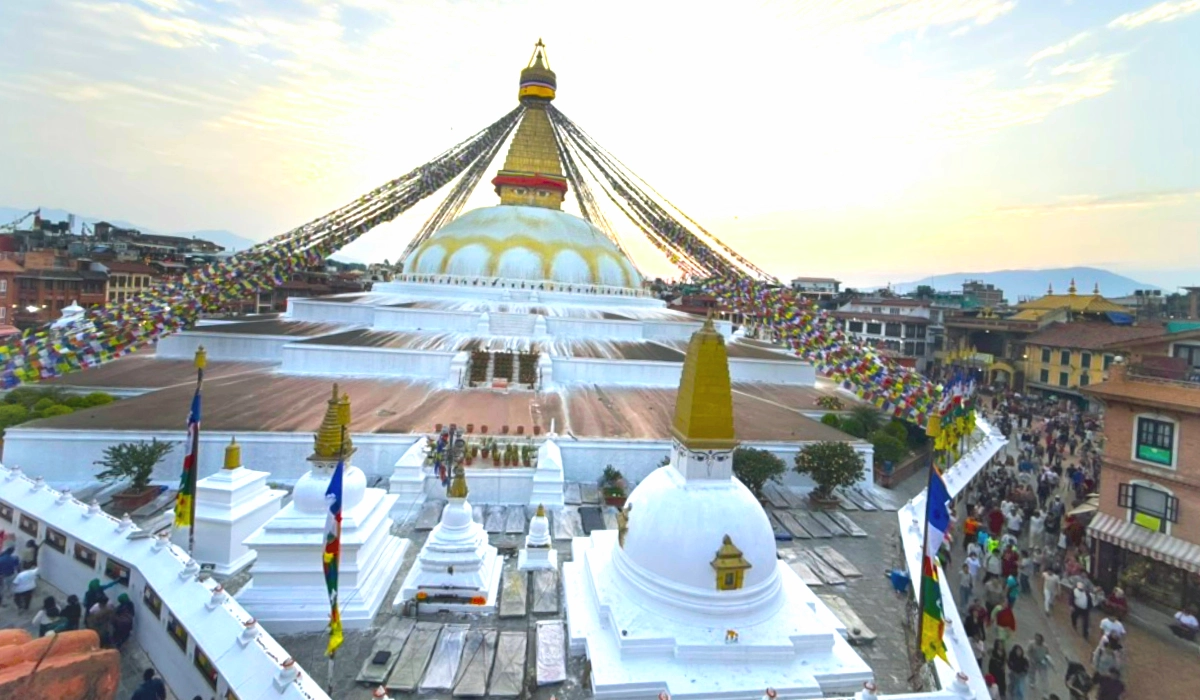
Probably one of the most spectacular views that you can get while visiting the stupa is when viewing it from an aerial or elevated position. From above, visitors would be able to see the stunning mandala layout of the stupa. The significance of this divine geometrical shape is very deep within Buddhist cosmology.
The perfect circular shape which has a huge white dome at the middle, represents the harmony and balance of the universe. The concentric walks that surround the stupa represent a symbolic spiritual journey for pilgrims who visit the temple. By following the concentric line, believers travel through different layers of the world, getting closer to achieving enlightenment through higher awareness and inner peace.
In any case, this beautiful symmetry shows the knowledge of sacred geometry possessed by Buddhists. Nowadays, visitors who want to enjoy the beauty of the geometric shapes of the temple are provided with elevated viewpoints located on the roofs of nearby cafés and monastery terraces.
Experiencing the Boudha Stupa Night View
When dusk falls you can gain a totally new perspective at the Boudhanath Stupa. The stupa comes alive with its quiet and contemplative atmosphere.
The light from the butter lamps radiates the surroundings of the stupa and enhance it’s peaceful aura. The monks perform their chants and prayers adding a serene spiritual rhythm to this sacred heritage. Besides, the spinning of prayer wheels makes a certain metallic sound, enriching the overall peaceful nighttime ambiance of the stupa.
It is during nighttime that the white dome of the stupa becomes visible from a distance. It shines with an even greater brilliance under the golden lights, which starkly stand out against the darkness of the city skies.
Stupa Boudhanath: Festivals and Religious Celebrations
The most important festival among all is Buddha Jayanti where devotees come here to offer their prayers, light butter lamps, and perform circumambulation around the stupa. It is the day when the birth, enlightenment, and death of Gautama Buddha are remembered.
Losar is another festival celebrated by Tibetan Buddhists marking the beginning of the Tibetan New Year. It is a celebration full of color, music, dance, and other religious activities. People celebrate the day with much enthusiasm and joy making it more colorful.
Other than these, various Lhosar celebrations are observed by different communities belonging to the Himalayas according to their own culture and traditions.
As part of these grand festivities, there will be a large gathering of devotees at the stupa, which creates an incredible picture of devotion, unity, and cultural expression, symbolizing the spiritual importance of the site.
Visitor Tips for Exploring Boudhanath Stupa
- Visit the stupa early in the morning to experience a calm spiritual atmosphere. The sunrise prayers, monks chant and lighting of the butter lamps make the experience amazing.
- Explore nearby monasteries. Many monasteries around the stupa welcome respectful visitors who want to learn about Buddhist culture and daily monastic life.
- Walk clockwise around the stupa following the traditional Buddhist practice of kora.
- Stay for sunset. The stupa looks beautiful in the evening providing a peaceful transition into the glowing night.
- Visit nearby cafes, handicraft shops and cultural stores in order to experience local life and support the local businesses.
Conclusion
The story of Boudhanath stupa reflects the strong spirituality as well as rich culture of Nepal. Its historical background, distinct architecture and significance as one of the prominent centers of Tibetan Buddhism simply cannot be overlooked.
As for tourists and pilgrims, the Boudhanath Stupa of Nepal is more than just another site to explore during Nepal, Kathmandu visit. In fact it is a symbol of faith and devotion and continuation of ancient culture.
FAQs
When is the most suitable time to visit Boudhanath Stupa Kathmandu?
The best time to visit Boudhanath Stupa will be spring (March to May) and autumn (September to November), when the weather in Kathmandu will be clear and mild making the trip comfortable and rewarding. Likewise, early morning, late afternoon and late evening are the ideal periods of a day to visit the stupa.
Is there any Entrance fee at Boudhanath Stupa?
Foreign tourists visiting the site are supposed to pay an entrance fee of NPR 400, which will contribute to the maintenance of the stupa complex and support development activities in the locality. Children below 10 years do not have to pay the entry fee.
What is the average duration for a visit to Boudhanath Stupa?
It usually takes one to three hours to visit the stupa. You can spend more time on the spot depending on their interests; for example, by participating in prayers or meditations at monasteries near the stupa.
Can I practice meditation or prayers in Boudhanath Stupa?
Yes, there are different types of monasteries around the stupa where you can meditate and perform a prayer ceremony as well. These will give you an idea about the spirituality and practice of Buddhism.
How do I reach Boudhanath Stupa from central Kathmandu?
Boudhanath Stupa is located at a distance of 6 to 8 kilometers northeast of central Kathmandu (Thamel). You can visit Boudhanath Stupa within 20 to 30 minutes through taxis, bus or private car service.