
24x7 Support
+977 9851349597
Unbeatable Holiday Offers - Save Up to 20% on Your Next Adventure!

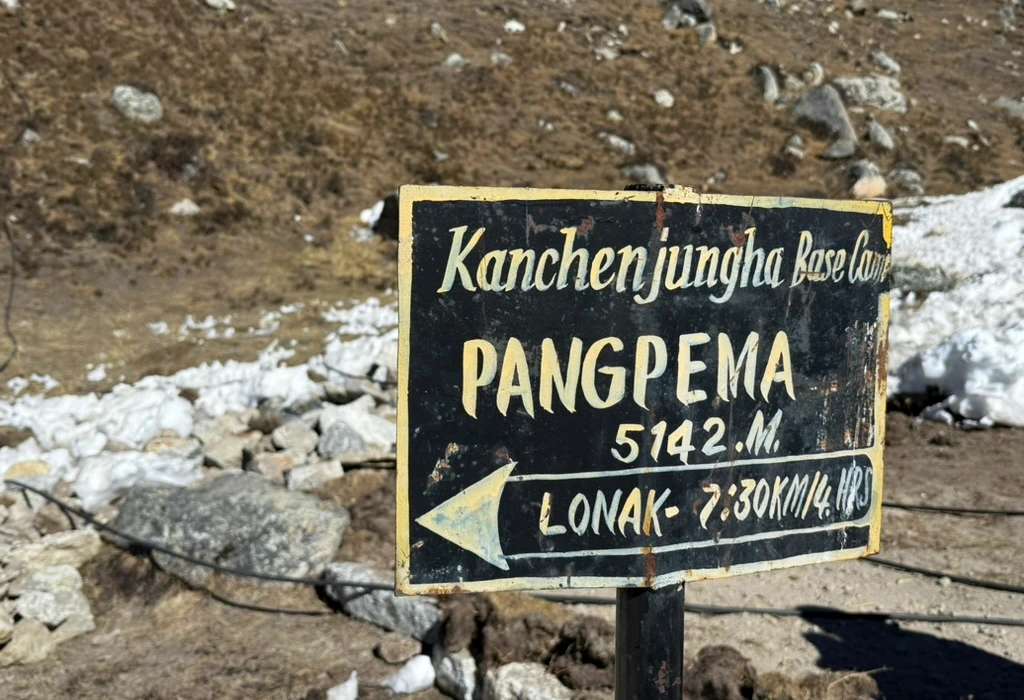
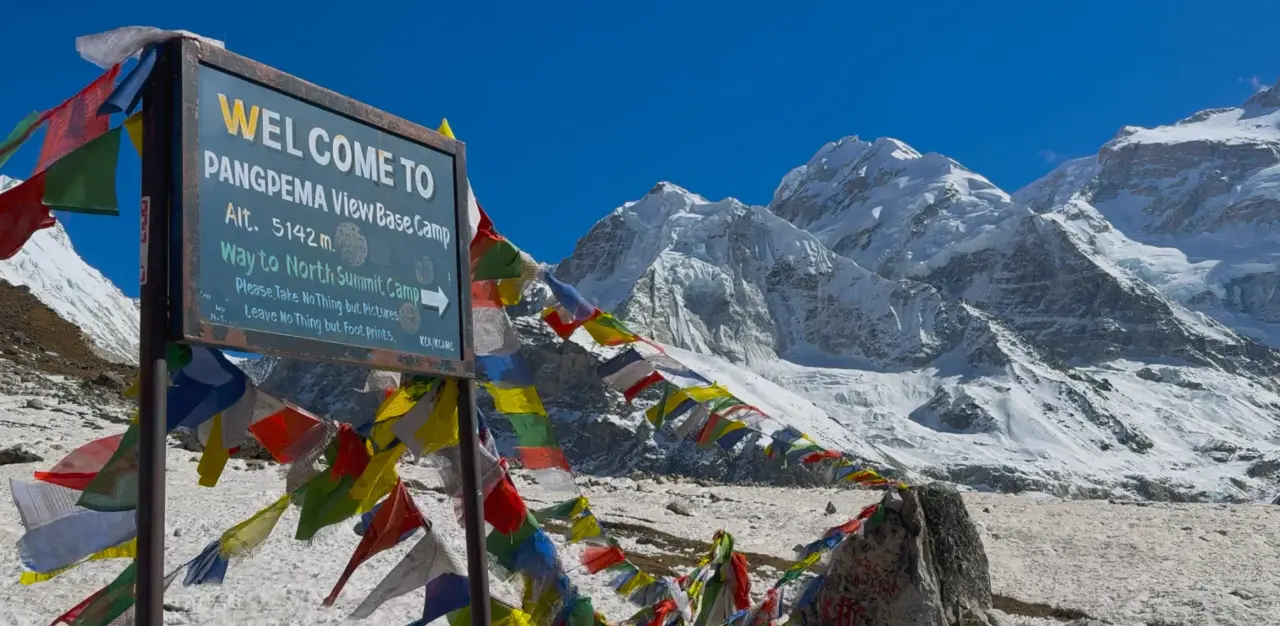
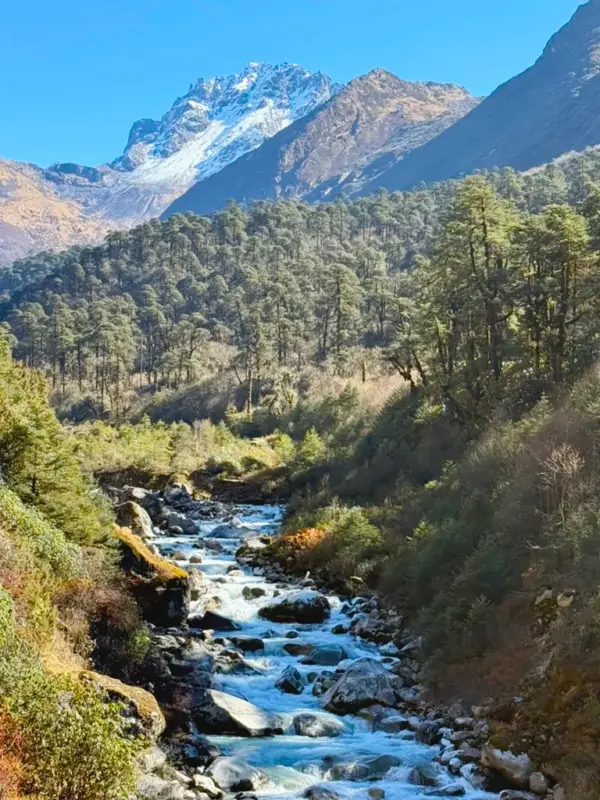
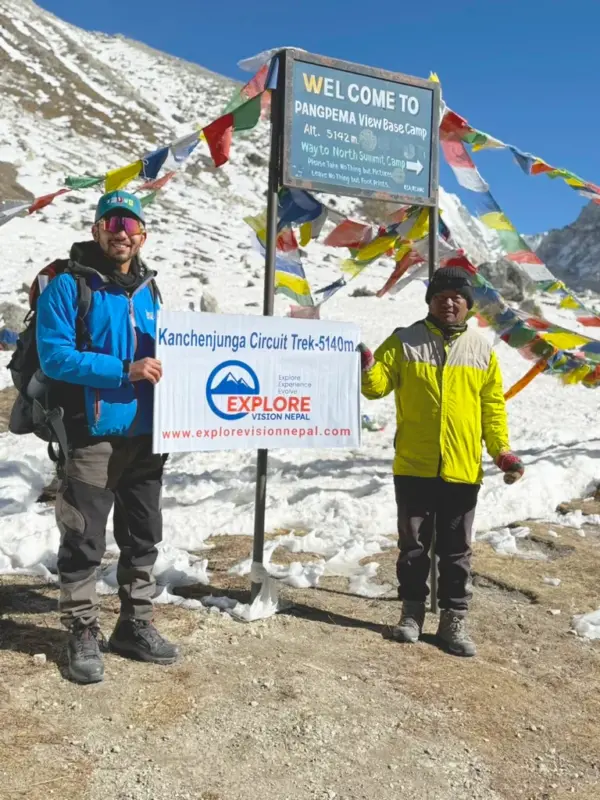
Stand beneath Mt. Kanchenjunga at Pang Pema, one of Nepal's least-crowded Himalayan trails!
Kanchenjunga North Base Camp Trek – 16 Days
Based on 60 reviews
Trek into one of the less explored Himalayan trails in Nepal that lead to the north face of Mount Kanchenjunga, the world’s third-highest mountain. Explore the picturesque valleys of Ghunsa and Lhonak, along with views of the stunning peak, Jannu Himal (Mount Kumbhakarna), and discover the wildlife of the Kanchenjunga Conservation Area on this 16-Day Kanchenjunga North Base Camp Trek journey!

Duration
16 Days
Trip Difficulty
Difficult
Max Altitude:
5,142m. / 16,870ft.
Activity
Trekking
Group Size
1-15
Best Season
Autumn | Spring
Meals
Breakfast, Lunch & Dinner
Accommodation
Hotel | Guesthouse
Transportation
Private Vehicle | FlightOverview of Kanchenjunga North Base Camp Trek – 16 Days
Kanchenjunga North Base Camp Trek is one of the most remote and rewarding trekking journeys in Nepal. It is an off-the-beaten-path, less-explored 16-day adventure in the untouched Himalayas of eastern Nepal. Set in the shadow of the world’s third-highest peak, Mount Kanchenjunga (8,586m), this trek is ideal for trekkers seeking a peaceful alternative to crowded and overly commercialized trekking regions in the Himalayas.
It is situated in far-eastern Nepal near the borders of Sikkim (India) and Tibet, within the Kanchenjunga Conservation Area Project (KCAP). On this Kanchenjunga North Base Camp trek, you cover a total walking distance of approximately 100-110 km out and back to Sekathum/Taplejung, excluding the flight distances.
On this Pangpema Base Camp trekking journey, trekkers explore through diverse landscapes, from warm, subtropical jungles and dense rhododendron forests to glacial valleys and rugged mountain terrain. Then, upon reaching Kanchenjunga North Base Camp (Pang Pema, 5,142 meters), you are rewarded with the best view of this trek, along with mountains Jannu (Kumbhakarna), Tent Peak, Chang Himal (Karamansi), Pyramid peak, including Mount Kanchenjunga Main and Kanchenjunga West.
The Kanchenjunga region you stay in throughout this journey has a rich cultural presence with local mountain communities like Rai, Limbu, and Sherpas. Passing through their picturesque villages offers diverse cultural encounters and a glimpse into their traditional lifestyle, unique customs, and warm hospitality. This provides an authentic blend of local cultures with the pristine trails of Kanchenjunga.
What makes the Kanchenjunga North Base Camp Trek Special?
It is one of the best alternatives to commercialized trekking routes in Nepal. Its raw and authentic trekking experience, with a mix of pristine trails, makes this adventure special. Some of the other factors that make this Kanchenjunga Trail impressive are:
Close-up views of the World’s Third Highest Peak: As the trail leads you to the base camp closest to the North face of Mount Kanchenjunga, the journey delivers a face-to-face look at the giant 8,586-meter peak. Along with the peaks surrounding Kanchenjunga, including Yalung Kang, Mt. Jannu (Kumbakarna), and Kabru.
Rich Wildlife and Biodiversity: This trek follows a route within the Kanchenjunga Conservation Area Project by WWF’s Sacred Himalayan Landscape Initiative, providing home to rare wildlife like red panda, blue sheep, musk deer, and snow leopard.
Authentic Cultural Encounters: The trail is less explored and less influenced, keeping the cultural authenticity of the Kanchenjunga region alive. You trek through traditional villages of indigenous groups like Rai, Limbu, and Sherpas, closely interacting with them in real time.
Less Crowded: One unique point of this trek is that it is less crowded and far from the mass trekkers. The teahouses and trails are quiet, letting you enjoy true solitude and isolation from modern noise. It comes with pristine nature and untouched Himalayan beauty.
Why Explore Vision Nepal for this North Kanchenjunga Journey?
Local Expertise and Experienced Guides: Locally owned, our team brings regional knowledge of the remote Kanchenjunga region. Experienced, government-certified guides accompany each trek and know the Kanchenjunga North Base Camp Trail, its terrain, and local cultures.
Flexible and Customizable Plan Options: You can modify your itinerary to your preferred needs. The rest days, acclimatization stops, side trips, and preferred transportation options can be included in this Kanchenjunga North Base Camp Trek itinerary.
Young and Customer-Oriented Team: Our team is energetic and focuses on personal care and support from your arrival in Nepal, domestic flights, trekking days, to your departure. Ensuring you have a smooth experience throughout this remote Kanchenjunga experience.
Logistical Services: The Kanchenjunga North Base Camp Trek requires a Restricted Area Permit (issuable only by trekking agencies) and a Kanchenjunga Conservation Area Permit (KCAP). We handle all permit arrangements and ground transportation so you can focus on your journey only.
Complimentary gear and benefits: Down jacket and sleeping bag (for trekking days on request), company-branded T-shirt, duffle bag, trekking map of the Kanchenjunga region trail, and trip completion certificate.


Outline Itinerary of Kanchenjunga North Base Camp Trek – 16 Days
Day 01: Arrive at Tribhuvan International Airport (TIA), Kathmandu (1,400M/4,593Ft)
Day 02: Trip Preparation Day in Kathmandu (1,400M/4,593Ft)
Day 03: Fly from Kathmandu to Bhadrapur (about 50 minutes) and Jeep Drive to Taplejung (1,820M/5,972Ft), Duration: 7 Hours
Day 04: Jeep Drive from Taplejung to Sekathum (1,650M/5,415Ft) Distance: 40-45 Km, Duration: 5 Hours
Day 05: Trek from Sekathum to Amjilosa (2,520M/8,268Ft) Distance: 9-10 Km, Duration: 6 Hours
Day 06: Trek from Amjilosa to Gyabla (2,730M/8,956Ft) Distance: 8-9 Km, Duration: 5 Hours
Day 07: Trek from Gyabla to Ghunsa (3,475M/11,400 Ft) Distance: 11 km, Distance: 6 Hours
Day 08: Acclimatization and Exploration Day at Ghunsa (3,475M/11,400 Ft)
Day 09: Trek from Ghunsa to Khambachen (4,050m/13,285Ft), Distance: 10-11 Km: Duration: 6-7 Hours
Day 10: Trek Khambachen to Lhonak (4,792M/15,720Ft) Distance: 10 Km, Duration: 6 Hours
Day 11: Trek from Lhonak to Pang Pema (Kanchenjunga North Base Camp, 5,142M/ 16,865Ft) and return to Lhonak. Distance: 15-16 Km round-trip, Duration: 8 Hours
Day 12: Trek Lhonak to Ghunsa (3,475M/11,400 Ft), Distance: 18-20 Km, Duration: 7-8 Hours
Day 13: Trek from Ghunsa to Amjilosa (2,520M/8,268Ft), Distance: 17-18 Km, Duration: 7 Hours
Day 14: Trek from Amjilosa to Sekathum, then Drive to Taplejung (1,820M/5,972Ft), Trek Distance: 9 Km, Duration: 4 Hours Trek and 4 Hours Drive
Day 15: Drive from Taplejung to Bhadrapur, then fly to Kathmandu, Drive Distance: 240 Km, Duration: Drive: 7 Hours and Flight: 50 Minutes
Day 16: Final Departure from Kathmandu
Trip Highlights
- Reach Pang Pema, the Kanchenjunga North Base Camp, directly beneath the massive northern face of the world’s third-highest mountain, Mount Kanchenjunga. It is the highest point you reach on the Kanchenjunga North trail.
- Enjoy stunning panoramas of the Himalayan peak, including Mt. Jannu (Kumbhakarna), Rathong, Kabru, Mt. Kanchenjunga, Yalung Kang (Kanchenjunga West), Chang Himal (Wedge Peak), Kirat Chuli (Tent Peak), Langpo peak, Pathibhara peak and distant views of Makalu and Everest from specific viewpoints.
- Trek alongside and across massive Kanchenjunga Glacier debris.
- Visit authentic mountain villages like Ghunsa and Tibetan-influenced communities such as Gyabla.
- Experience the local cultures of Rai and Limbu communities, while observing their traditional wooden architecture and ancient Buddhist Gompas.
- Experience one of the pristine Himalayan trails present in Nepal, where you can enjoy complete solitude.
- Trek inside the protected Kanchenjunga Conservation Area, which is home to rare wildlife.
- Enjoy the drive through the green tea areas of Ilam and Kanyam in Eastern Nepal.
- Take a visit to the historic wooden monastery of Ghunsa, Tashichoding Monastery, just above the village.
- Trek alongside the beautiful glacial meltwater rivers of the Tamor and Ghunsa.
Itinerary Overview of Kanchenjunga North Base Camp Trek – 16 Days
The 16-day Kanchenjunga North Base Camp journey starts upon your arrival in Kathmandu with a preparation day before taking a domestic flight to Bhadrapur and driving up to Taplejung and to Sekathum on a rugged road. From here, trekking on foot begins. You trek along the river valleys, crossing suspension bridges, ascending through dense forest, reaching Amjilosa and up to Gyabla.
Continuing along the Ghunsa Khola, the trail leads to Ghunsa village, where you stop for acclimatization and continue to the next village, Kambachen. Then the trail goes across 4000m, entering rugged high-altitude terrain to Lhonak. From there, you trek to Pang Pema (Kanchenjunga North Base Camp) right beneath the North face of Mount Kanchenjunga before returning back to Lhonak.
The return route follows the same route, passing by and Ghunsa, descending through Gyabla and Amjilosa to Sekathum. Finally, driving out of the Kanchenjunga region through Taplejung down to Bhadrapur for a short flight back to Kathmandu, concluding your 16-day Kanchenjunga North Base Camp journey with a departure flight.
Kanchenjunga North Base Camp Trek – 16 Days Itinerary
01
Day 01: Arrive at Tribhuvan International Airport (TIA), Kathmandu (1,400M/4,593Ft)
Welcome to Nepal, the country of the Himalayas! As you land at the airport and step off the plane, you can feel a sensation of thrill, excitement, and energy. Our representative will wait for your arrival with a warm welcome and an Explore Vision Nepal signboard in hand. Then, you will be transferred to your hotel.
It is normally about a 30-minute drive to the hotel. Once you reach the hotel, check in, unpack your luggage, freshen up, and take a rest!

Activity: Drive

Max. Altitude: 1,400m/4,593ft. (Kathmandu )

Accommodation: Hotel
02
Day 02: Trip Preparation Day in Kathmandu (1,400M/4,593Ft)
Use this buffer day to prepare for your Kanchenjunga North Base Camp (KNBC) journey. We will have a trip meeting together. Provides you with brief information about the trip. You are free to ask any questions and discuss the trip expectations. You also meet your trekking guide, who accompanies you throughout the trek.
Check your trekking gear, and if needed, you can get help with last-minute gear shopping. During free time, feel free to explore around the area. For those interested in exploring the city during daytime, flexible visits can be made to historic places such as Bouddhanath Stupa, Swayambhunath, and Kathmandu Durbar Square. We can arrange a guided Kathmandu city tour as per your request.
Activity: Trip Preparation
Max. Altitude: 1,400m/4,593ft. (Kathmandu )

Meal: Breakfast
Accommodation: Hotel
03
Day 03: Fly from Kathmandu to Bhadrapur (about 50 minutes) and Jeep Drive to Taplejung (1,820M/5,972Ft), Duration: 7 Hours
Today, you will move towards Kanchenjunga region for the Kanchenjunga north base camp trek, you take a short domestic flight from Tribhuvan International Airport to Chandragadhi Airport in Bhadrapur in eastern Nepal. After landing, you take a long jeep ride to Taplejung, passing by Birtamod, Ilam, and Phidim. Overnight stay at Taplejung, a small town in the eastern Nepal.
Activity: Flight | Drive
Max. Altitude: 1,820m/5,971ft. (Taplejung )
Meal: Breakfast, Lunch, Dinner
Accommodation: Guesthouse
04
Day 04: Jeep Drive from Taplejung to Sekathum (1,650M/5,415Ft) Distance: 40-45 Km, Duration: 5 Hours
After breakfast, leaving the bustling village of Taplejung, the drive takes you into the Tamor River valley. It passes through terraced farms, small villages like Mitlung, Chiruwa, and Thiwa Khola, along with hillside landscapes. Continuing, the road becomes narrow and rugged, reaching Taplechok, the entrance to the Kanchenjunga Conservation Area (KCA).
Then the road crosses the Tamor River via a suspension bridge and follows Ghunsa Khola, leading to Sekathum. It is a small riverside settlement near the Tamor and Ghunsa rivers with a distant peek of Mt Jannu (Kumbhakarna).
Activity: Drive
Max. Altitude: 1,650m/5,413ft. (Sekathum)
Meal: Breakfast, Lunch, Dinner
Accommodation: Guesthouse
05
Day 05: Trek from Sekathum to Amjilosa (2,520M/8,268Ft) Distance: 9-10 Km, Duration: 6 Hours
From Sekathum, you start with a gentle climb heading northeast, cross a suspension bridge, and follow the Ghunsa Khola Valley. The trail has stone steps and rocky terrain with a continuous steep uphill through lush, subtropical forests and frequent waterfalls. On the way, you get wide views of the river valley and enjoy distant peak views on clear days.
The trail passes through small villages of Zaubari and Lamatar surrounded by terraced local farms. After gaining around 850 to 940 meters this day, you take a final climb, reaching Amjilosa, a peaceful Sherpa village.
Activity: Trekking
Max. Altitude: 2,520m/8,268ft. (Amjilosa)
Meal: Breakfast, Lunch, Dinner
Accommodation: Guesthouse
06
Day 06: Trek from Amjilosa to Gyabla (2,730M/8,956Ft) Distance: 8-9 Km, Duration: 5 Hours
The day begins with a downhill to the river path, following north through dense subtropical forests with bamboo groves, oak, and rhododendron trees. Then you reach Thyangyani village, a small seasonal settlement. Along the way, you get to enjoy the stunning Twin Waterfall tumbling down from the cliffs.
Continuing, you come across a suspension bridge to Solima, a rest stop. From here, the terrain shifts to steep uphill terrain, and you ascend along a stone-paved zig-zag path, climbing into the dense bamboo and rocky sections.
On the way, you get stunning views of Birdhunga Danda and Kumbhakarna mountain ranges in the distance. As you reach the hilltop, the landscape clears into wide meadows leading into Gyabla (also known as Kyapra).
Activity: Trekking
Max. Altitude: 2,730m/8,957ft. (Gyabla)
Meal: Breakfast, Lunch, Dinner
Accommodation: Guesthouse
07
Day 07: Trek from Gyabla to Ghunsa (3,475M/11,400 Ft) Distance: 11 km, Distance: 6 Hours
Leaving Gyabla, the trail continues downward into lush rhododendron, fir, and pine forests. You follow the trail along the river and gently climb through the valley into the wide alpine pastures. You then arrive at Phale (Phole) Village, a historical Tibetan refugee village. It is popular for its wooden houses, hand-woven carpets, and an ancient traditional Buddhist monastery (Gompa) located in the center of Phale village.
From Phale, the route continues to the open river valley, crossing a wooden bridge over the glacier-melted rivers. Then, following the pine-forested trails, you approach the end of the valley, from where you get direct views of Mt. Kumbhakarna (Jannu), Sobithongi Peak, Ghunsadhar, Nyukla Lachung and other unnamed 5000m+ peaks. It directly leads to Ghunsa village, the largest settlement and cultural hub of the Kanchenjunga region.
Activity: Trekking
Max. Altitude: 3,475m/11,401ft. (Ghunsa)
Meal: Breakfast, Lunch, Dinner
Accommodation: Guesthouse
08
Day 08: Acclimatization and Exploration Day at Ghunsa (3,475M/11,400 Ft)
This is your rest and acclimatization day before continuing your journey over 4000 meters. On this day, you take a short 3 to 4 hour side hike to the Yamatari Khola and ridge viewpoint. This 300 to 400-meter climb gives amazing views of the Ghunsa Khola Valley, along with Sobithongi Peak and Mt. Jannu (Kumbhakarna). The trail to it is uphill through dense pine, larch, and fir forests.
After that, you descend to Ghunsa, and for the rest of the day you can explore the village. You can visit Tashi Choding Monastery (Ghunsa Gompa), a Tibetan Buddhist monastery located across the hillside, walk along the traditional houses, and visit local potato farms.
Activity: Hiking
Max. Altitude: 3,475m/11,401ft. (Ghunsa)
Meal: Breakfast, Lunch, Dinner
Accommodation: Guesthouse
09
Day 09: Trek from Ghunsa to Khambachen (4,050m/13,285Ft), Distance: 10-11 Km: Duration: 6-7 Hours
Today, you will trek from Ghunsa to Khambachen, also known as Khangpachen, a beautiful high altitude village in the Kanchenjunga region. The trek begins with dense pine, fir, and rhododendron forests. As you climb higher, the forests change to alpine brush and scrub. You move past wooden bridges over streams and steadily climb over a rocky and stone-paved route opening into wide fields where yaks graze during the warmer months.
As you continue into the high valley, it becomes dramatically more rugged. You pass through Rampuk Kharka, narrowing down to the river valley. Along the way, you come across full and dominating views of Mount Jannu, including Ghabur peak, Pholesobi Thongje, White Wave along the trail and from the village of Khambachen.
Activity: Trekking
Max. Altitude: 4,050m/13,287ft. (Khambachen )
Meal: Breakfast, Lunch, Dinner
Accommodation: Guesthouse
10
Day 10: Trek Khambachen to Lhonak (4,792M/15,720Ft) Distance: 10 Km, Duration: 6 Hours
This is beautiful and scenic day today, trekking from Khambachen to Lhonak village. Starting from Khambachen, the trail ascends into rugged alpine terrain as you have already crossed 4600m altitude. The path runs along the north of the river, moving close to the glacier deposits and large rocks. You slowly climb through Ramtang Kharka, also known as Ramdang, a large yak pasture where you can encounter yaks grazing.
Shortly after that, you trek along Ramtang with views of Ramtang Glacier (Ramdang Glacier), Ramtang peak, Gimmigela peak, Mt Jannu (Kumbhakarna), Wedge Peak, Kirat Chuli (Tent Peak), and Nepal Peak. You cross over small streams and walk across the rocky slopes. Then the trail slows down to a plain path as you cross a final ridge into Lhonak village. This is your last stop before continuing to the Kanchenjunga North Base Camp.
Activity: Trekking
Max. Altitude: 4,792m/15,722ft. (Lhonak)
Meal: Breakfast, Lunch, Dinner
Accommodation: Guesthouse
11
Day 11: Trek from Lhonak to Pang Pema (Kanchenjunga North Base Camp, 5,142M/ 16,865Ft) and return to Lhonak. Distance: 15-16 Km round-trip, Duration: 8 Hours
Today is the most important day on this Kanchenjunga North Base Camp Trek as you reach Kanchenjunga North Base Camp (Pang Pema) 5,142 meters. It is a long and comparatively difficult day on this trek. Leaving early from the Lhonak village, the trail follows a glacial route along the northern side of the Kanchenjunga glacier. It starts across high-altitude terrain, passing through rugged and landslide trails. As you move further, breathing becomes harder around 5000 meters.
The final stretch is a gentle, wind-swept ridge that takes you directly to the Kanchenjunga North Base Camp, Pang Pema. At Pang Pema (5,142m), you get majestic views of Mt. Kanchenjunga, Yalung Kang (Kanchenjunga West), Chang Himal (Wedge Peak), Kirat Chuli (Tent Peak), Langpo peak, Pathibhara peak and Drohmo Ri. You will actually surrounded by the snowcapped Himalayan Mountains at the North Base Camp of Mount Kanchenjunga, marked by prayer flags and memorials. After spending time enjoying the breathtaking views and celebrating this moment, you return to Lhonak via the same route.
Activity: Trekking
Max. Altitude: 4,792m/15,722ft. (Lhonak )
Meal: Breakfast, Lunch, Dinner
Accommodation: Guesthouse
12
Day 12: Trek Lhonak to Ghunsa (3,475M/11,400 Ft), Distance: 18-20 Km, Duration: 7-8 Hours
It is another long day on this trek. Leaving the high-altitude village of Lhonak, the trail returns west along the Kanchenjunga, Ramtang Glacier, and passes through Ramtang Kharka. The steady loss in elevation makes breathing noticeably easier. Continuing down along the Ghunsa Khola (River), you re-enter Khambachen.
From Kambachen, the trail descends along a rocky path, transforming landscapes from barren mountain terrain into lush pine, larch, fir, and rhododendron trees. The path crosses several bridges over the Ghunsa Khola, and the final walk leads straight back to the large Sherpa village of Ghunsa.
Activity: Trekking
Max. Altitude: 3,475m/11,401ft. (Ghunsa)
Meal: Breakfast, Lunch, Dinner
Accommodation: Guesthouse
13
Day 13: Trek from Ghunsa to Amjilosa (2,520M/8,268Ft), Distance: 17-18 Km, Duration: 7 Hours
You will trek from Ghunsa to Amjilosa today, this is also another long day, need to trek approximately 18 kilometers. Starting from Ghunsa, you begin a downhill journey along the river. The temperature grows warm as you lose altitude along forested trails of pine, fir, and oak, opening into Phale (Phole). Continuing, the trail goes through moss-draped rhododendron and bamboo forests down to Gyabla (Kyapra).
Descending to Amjilosa, the valley narrows into a river valley alongside steep, downhill stone steps. The trail then passes by Thyangyani, crossing via a suspension bridge. Then you pass by Ghunsa Twin Waterfall and ascend to cliffside paths that reach the village of Amjilosa, where you stay overnight.
Activity: Trekking
Max. Altitude: 2,520m/8,268ft. (Amjilosa)
Meal: Breakfast, Lunch, Dinner
Accommodation: Guesthouse
14
Day 14: Trek from Amjilosa to Sekathum, then Drive to Taplejung (1,820M/5,972Ft), Trek Distance: 9 Km, Duration: 4 Hours Trek and 4 Hours Drive
Today’s journey has two parts. First, you trek from Amjilosa down to Sekathum, then drive from Sekathum to Taplejung for the night.
The trail follows the Ghunsa River, passing through small villages like Ghiyabari, Zaubari, and Lamatar. You will walk past terraced farms and through forest sections with stone steps, mostly heading downhill, with a few small uphill section, couples of waterfalls along the way. Before reaching Sekathum, the trail crosses the river on a suspension bridge, or sometimes a simple wooden bridge, before descending into the village itself.
Sekathum is the point where the trail meets the road, so you can take a short break or have lunch here before starting the drive to Taplejung.
The drive follows the Tamor River valley, passing through villages such as Lelep, Phembu, Chirwa, and Mitlung, with views of terraced hillsides and farmland along the way. The road narrows and gets a bit rough in places as you go. Once you reach Taplejung, you will check in to your guesthouse and rest for the evening.
Activity: Trekking | Drive
Max. Altitude: 1,820m/5,971ft. (Taplejung)
Meal: Breakfast, Lunch, Dinner
Accommodation: Guesthouse
15
Day 15: Drive from Taplejung to Bhadrapur, then fly to Kathmandu, Drive Distance: 240 Km, Duration: Drive: 7 Hours and Flight: 50 Minutes
This is your final day of the Kanchenjunga North Base Camp Trek, and it’s a long travel day, so you will start early. After breakfast, you will drive from Taplejung to Bhadrapur, in Nepal’s eastern lowlands. Parts of this road are narrow and bumpy, so it takes time to cover the distance.
Once you reach Bhadrapur, you will head straight to the airport for a short 50-minute flight to Kathmandu. On arrival, our team will transfer you to your hotel, where you can relax after the trek and enjoy the evening in Kathmandu, with a good dinner to celebrate completing the journey.
Activity: Drive | Flight
Max. Altitude: 1,400m/4,593ft. (Kathmandu)
Meal: Breakfast, Lunch
Accommodation: Hotel
16
Day 16: Final Departure from Kathmandu
For the air transfer, your guide or a representative from our team picks you up at the hotel. Then, drop you off 3 hours before the scheduled flight. Catch the final glimpses of Kathmandu alleys, stupas, temples, and prayer wheels on the drive.
At the airport, our representative provides a short farewell section with a see you next time!
Activity: Drive
Max. Altitude: 1,400m/4,593ft. (Kathmandu)
Meal: Breakfast

Note:
If you have a private group and prefer a personalized experience, we can organize a custom trip tailored to your requirements and group size, running it any day you choose.
Price Includes


Price Excludes

What's included?
- Airport Transfers: Private vehicle transfers between Tribhuvan International Airport and your hotel in Kathmandu for both arrival and departure.
- Kathmandu–Bhadrapur Flights: Round-trip domestic airfare between Kathmandu and Bhadrapur as included in the itinerary.
- Kathmandu Accommodation: 3 nights at a comfortable 3-star category hotel in Kathmandu with breakfast.
- Trekking Meals: Full-board meals throughout the trek, including breakfast, lunch, and dinner with tea or coffee.
- Trekking Accommodation: Best available local teahouse and lodge accommodation throughout the trekking route on a twin-sharing basis.
- Kanchenjunga Trekking Permits: Kanchenjunga Conservation Area Permit (KCAP), Restricted Area Permit (RAP), and TIMS registration where applicable.
- Licensed Trekking Guide: An experienced, government-licensed, English-speaking trekking guide to accompany and assist you throughout the trek.
- Porter Service: Porter support for carrying your main trekking duffel bag, arranged one porter in-between two people
- Trekking Staff Expenses: Guide and porter wages, meals, accommodation, transportation, required equipment, and accidental insurance are included.
- Jeep Transportation: Ground transportation by jeep for the Bhadrapur–Taplejung, Taplejung–Sekathum, and Sekathum–Bhadrapur sections as specified in the itinerary.
- Trekking Equipment: Company-provided duffle bag, down jacket, and sleeping bag for use during the trek.
- Seasonal Fresh Fruit: Fresh seasonal fruit served after dinner during the trekking journey, subject to availability.
- Trekking Map: A Kanchenjunga trekking map for route reference during the journey.
- Company T-Shirt: Complimentary Explore Vision Nepal T-shirt.
- Trek Achievement Certificate: Official trekking completion certificate after successfully completing the trek.
- First Aid Support: A comprehensive first-aid medical kit carried by the trekking guide throughout the journey.
- Pre-Trek Briefing: Trek preparation and a detailed trip briefing before departure.
- Permit and Documentation Assistance: Support with arranging the required trekking permits and trekking-related paperwork.
- Government Taxes and Entry Fees: Applicable government taxes, conservation area fees, entry charges, and company service fees included in the package.
What's not included?
- International Airfare: International flights to and from Nepal and applicable airline charges.
- Nepal Entry Visa: Nepal visa fee payable upon arrival at Tribhuvan International Airport. USD cash is recommended for the visa payment.
- Travel Insurance: Comprehensive travel insurance covering high-altitude trekking up to around 5,142 meters, medical treatment, emergency evacuation, and other relevant trekking risks.
- Additional Kathmandu Expenses: Accommodation, meals, drinks, and other services required in Kathmandu beyond the 3 included nights or outside the confirmed itinerary.
- Personal Trekking Equipment: Personal clothing, trekking boots, backpack, trekking poles, gloves, sunglasses, and other gear not specifically listed under the inclusions.
- Personal Expenses during the Trek: Bottled water, soft drinks, alcoholic beverages, snacks, chocolates, and other personal purchases.
- Additional Lodge Services: Hot showers, Wi-Fi/internet, mobile charging, laundry, telephone calls, and other optional services that require separate payment.
- Unforeseen Expenses: Additional costs resulting from illness, injury, early return, bad weather, flight delays or cancellations, road conditions, or other unforeseen circumstances beyond our control.
- Tips and Gratuities: Tips for the trekking guide, porters, drivers, and other supporting staff. Tipping is not mandatory, but it is customary and appreciated for the service.
Trip Information
Accommodation on the Kanchenjunga North Base Camp Trail
As the Kanchenjunga region is much more remote than Everest or Annapurna, the Kanchenjunga North Base Camp route offers a basic lodge and teahouse system. Standard teahouses are available on the trekking trails, while Lhonak is extremely seasonal and basic. Taplejung and Ghunsa have better guesthouse accommodation than other places.
Stop-by-stop accommodation according to itinerary
Taplejung: This village is a lowland gateway of the Kanchenjunga trail at an elevation of approximately 1,820 meters. It offers a wider range of hotels and guesthouses. You can find attached bathrooms, electricity, and Wi-Fi. You can also withdraw cash or exchange currency before entering the remote sections of the Kanchenjunga region.
Sekathum: Located at an elevation of 1,640 meters, it has a small number of guesthouses with basic rooms available. The rooms are twin-shared, and toilets are usually outside the guesthouses. Electricity may be limited or unavailable. Hot showers are generally available with bucket-style.
Amjilosa: It is a small village reached after a demanding climb from Sekatum at an altitude of 2,520 meters. Lodges here are family-operated teahouses with simple twin rooms. Provided with mattresses, blankets, and pillows. In the village, you can find limited solar electricity, and Wi-Fi is unreliable.
Gyabla: a small village on the Kanchenjunga trail, with limited lodge capacity. The teahouses here provide basic twin rooms with shared toilets. You can find limited electricity, usually from solar. It is situated at an elevation of 2,730 meters and is colder than Amjilosa.
Ghunsa: At an elevation of 3,500 meters, it is the major acclimatization stop for trekkers on the North Base Camp route. It has more lodges and is commonly used for acclimatizing to increasing elevation. In the village, you can find several family-run guesthouses and teahouses. They provide twin, triple, and occasional single rooms. Most lodges have shared toilets; some have toilets attached.
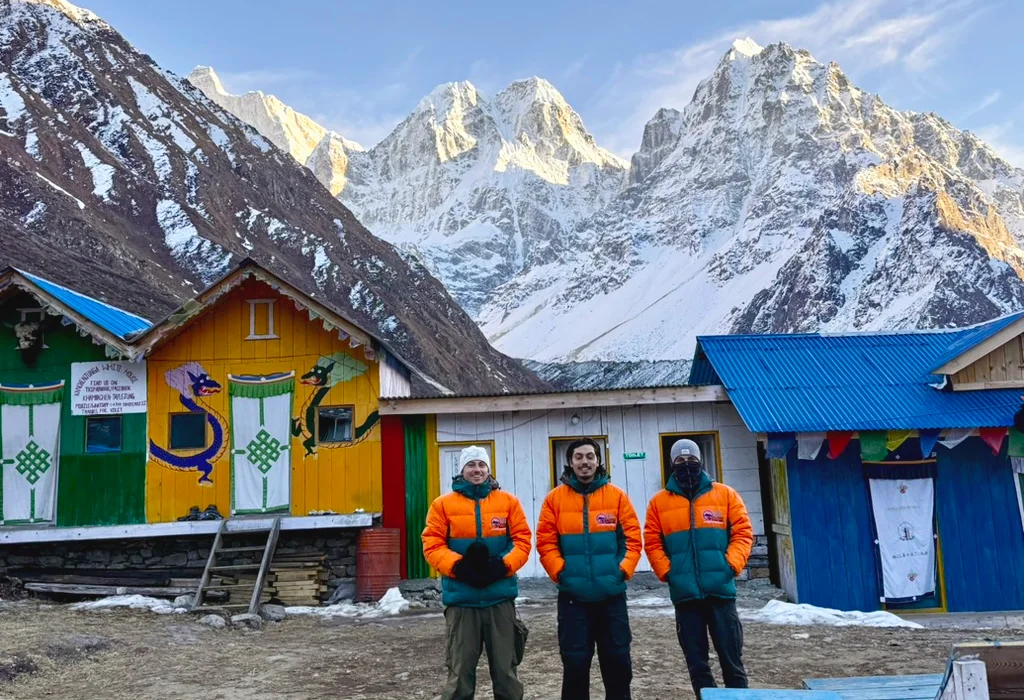
Kambachen: This small high-altitude village on the trail is at an elevation of 4,050 meters, with only a few basic teahouses. Rooms in these teahouses are twin-shared with mattresses, pillows, and blankets. The toilet facilities are shared and sometimes outside the lodge. The electricity is very limited and solar-powered.
Lhonak: This is the most remote and basic stop in the Kanchenjunga North Base Camp Trek at an elevation of 4,792 meters. It is closest to Pang Pema (North Base Camp) and used primarily for trekkers and expedition groups. Teahouses are seasonal, with very basic rooms and dormitories in the village. Toilets in these teahouses are often outside.
Best Time to trek North Base Camp of Kanchenjunga
The best overall time for the Kanchenjunga North Base Camp Trek is October to November. This months offers stable weather, clear mountain views, and dry trails. Another best time is March to May, when the trails are filled with rhododendron and wildflower blooms. Generally, March to May and September to November are ideal for trekking in the Nepal, Kanchenjunga North Base Camp Trail.
Spring (: As the Kanchenjunga region is biologically rich in rhododendrons, fir, juniper, birch, and other Himalayan vegetation, trekking in spring offers enhanced natural beauty. Along with it, the mountain views of Mt. Kanchenjunga (Jannu), Makalu, Everest, and Kabru become clearly visible. With warming temperatures and longer days, trekking is more comfortable.
Autumn: It is a period when the summer monsoon has gone from eastern Nepal, usually bringing clear skies and mountain views of Kanchenjunga. The trails are drier and more stable. Trail conditions along the villages of Ghunsa, Khambachen, Lhonak, and Pangpema are better, great for photography and enjoying views.
Alternative treks to Kanchenjunga North Base Camp Trek
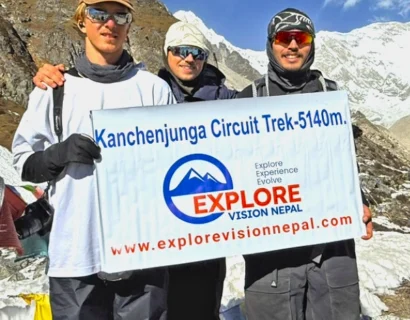
Kanchenjunga Circuit Trek 22-day: This alternative is for trekkers who want to complete the Kanchenjunga Circuit, which includes both North Base Camp and South Base Camp of Mount Kanchenjunga. It is an extended version of the Kanchenjunga North Base Camp trek and takes you around the peak, crossing high passes and remote terrain. It is ideal for you if you have more time and want to explore most of the Kanchenjunga mountain trail.
Kanchenjunga South Base Camp Trek: This is a shorter alternative to the Kanchenjunga North Base Camp Trek and leads you to the southern side of Mount Kanchenjunga. It offers closer views of the Yalung Glacier and the south face. This is a great option if you have slightly less time and want to trek the Kanchenjunga region while still experiencing cultural beauty and stunning Himalayan landscape.
Packing List for Kanchenjunga North Base Camp Trek
The Kanchenjunga North Base Camp Trek (Pangpema Base Camp Trek) takes you from the warmer lower valleys to the remote high-altitude landscape around Khambachen, Lhonak and Pangpema at about 5,140 m. Because the temperature and trail conditions change considerably during the trek, it is important to pack in layers and carry warm, weather-resistant clothing without bringing unnecessary items.
For this 16-day Kanchenjunga trek journey, including the Kathmandu stay, road journey and 13 days of trekking, the following packing list covers the items you are most likely to need.
Clothing
- 2 sets of thermal underwear for the colder sections
- 3–4 quick-drying trekking T-shirts
- 1–2 long-sleeved trekking shirts
- 2-3 pairs of comfortable trekking trousers
- 1 warm fleece or mid-layer jacket
- 1 good-quality down jacket for high-altitude morning/evenings and the Pangpema day (Explore Vision
- Nepal provides a warm down jacket for our Kanchenjunga trek group).
- 1 waterproof and windproof outer jacket
- 1 pair of warm trekking gloves, preferably with a lightweight liner glove
- 4–5 pairs of trekking socks, including at least 1–2 warmer pairs
- 1 warm wool or fleece beanie
- 1 sun hat or cap
- 1 buff or neck warmer
- 4–6 sets of underwear
Footwear
- Well-broken-in trekking boots with good ankle support and a strong grip
- Lightweight sandals or comfortable camp shoes for evenings
- Optional: gaiters, particularly useful if travelling during snow, rain or muddy conditions
Your trekking boots are one of the most important items on this trek. Make sure you have worn them on several walks before arriving in Nepal rather than using a new pair for the first time on the trail.
Backpack and Luggage
- 30-45 liter daypack for the items you carry during the day
- Duffel bag or trekking bag for the main luggage carried by the porter (Explore Vision Nepal provides duffel bag for each trekker)
- Waterproof backpack cover
- A few waterproof or dry bags to separate clothing, electronics and other important belongings
Small day-to-day laundry bag
Sleeping and High-Altitude Gear
- Warm sleeping bag suitable for high-altitude trekking (Explore Vision Nepal provides warm sleeping bag for each trekker)
- Sleeping bag liner, optional but useful for additional warmth and hygiene
Water and Hydration
- 1–2 reusable water bottles with a total capacity of around 2 liters
- Water purification tablets or a suitable water purification/filter system
- Optional insulated bottle or thermos for hot drinks on colder days
- Reusable hydration bladder, optional
Sun and Weather Protection
- Good-quality UV-protection sunglasses
- Sunscreen, preferably SPF 30–50+
- SPF lip balm
- Sun hat or cap
- Lightweight rain protection
- Small waterproof bag or dry bag for protecting important belongings
Personal Hygiene
- Toothbrush and toothpaste
- Biodegradable or travel-size soap
- Small quick-drying towel
- Toilet paper or pocket tissues
- Hand sanitizer
- Wet wipes
- Basic personal toiletries
- Small packet of laundry detergent, optional
First Aid and Personal Medication
- Your regular prescription medicines
- Basic personal first-aid supplies
- Blister treatment or blister plasters
- Pain-relief medicine that you normally use
- Basic medication for common travel problems, according to your doctor’s advice
- Any altitude-related medication only if prescribed or recommended by your doctor
- Personal medical or allergy information, if relevant
Your guide from Explore Vision Nepal will carry a group first-aid kit, but you should always carry your own regular medication and personal essentials in your daypack.
Trekking Accessories
- Adjustable trekking poles
- Small backpack rain cover
- Rain coat or poncho
- Lightweight gloves
- Buff or neck warmer
- Small knife or multitool, optional
- Trekking towel
- Small padlock for your luggage, optional
- A few spare zip-lock or waterproof bags for keeping small items dry
Electronics Items
- Mobile phone (up to you)
- Power bank, preferably 10,000–20,000 mAh
- Charging cables
- Camera and spare battery, optional
- Universal travel adapter, if required for your devices
- Headlamp
- Spare batteries or rechargeable batteries
Documents, Money and Important Items
- Passport
- Copies of your passport and travel documents
- Travel insurance details and emergency contact information
- Flight information
- Some Nepalese rupees in cash for personal expenses
- Credit/debit card for use where available
- Small waterproof document pouch
Optional Items
You may also find these useful, depending on your personal preference:
- Camera
- Binoculars
- Journal and pen
- Book or e-reader
- Small snacks or energy bars
- Earplugs
- Lightweight sleep mask
Trip Reviews


Keep Exploring