
24x7 Support
+977 9851349597
Unbeatable Holiday Offers - Save Up to 20% on Your Next Adventure!

Trek to Everest Base Camp, then soar over the Himalayas by Helicopter back to Lukla!
Everest Base Camp Trek with Helicopter Return to Lukla – 12 Days
Based on 60 reviews
A blend of the classic Everest Base Camp Trek and a breathtaking high-altitude Heli return to Lukla. On this 12-day Everest Base Camp Trek with Helicopter Return to Lukla, you get to experience the full trek to the Base Camp of the world’s highest mountain, Mount Everest, with a heli return to Lukla, skipping the exhausting 3-day descent from the same route.

Duration
12 Days
Trip Difficulty
Difficult
Max Altitude:
5,545m. / 18,192ft.
Activity
Trekking
Group Size
1-15
Best Season
Autumn | Spring
Meals
Breakfast, Lunch & Dinner
Accommodation
Hotel | Guesthouse
Transportation
Private Vehicle | FlightOverview of Everest Base Camp Trek with Helicopter Return to Lukla – 12 Days
Everest Base Camp Trek with Helicopter Return to Lukla is an adventure journey in the Khumbu region designed for trekkers who want to experience the classic EBC journey while saving valuable time. Spanning 12 days, this itinerary skips the traditional downhill path by replacing it with a scenic helicopter flight from Gorakshep to Lukla. It covers around 65 kilometers on the ascent, balancing Himalayan trekking with a touch of modern efficiency and comfort.
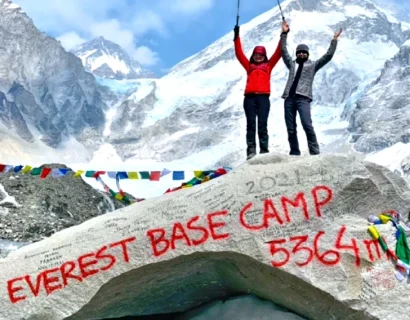
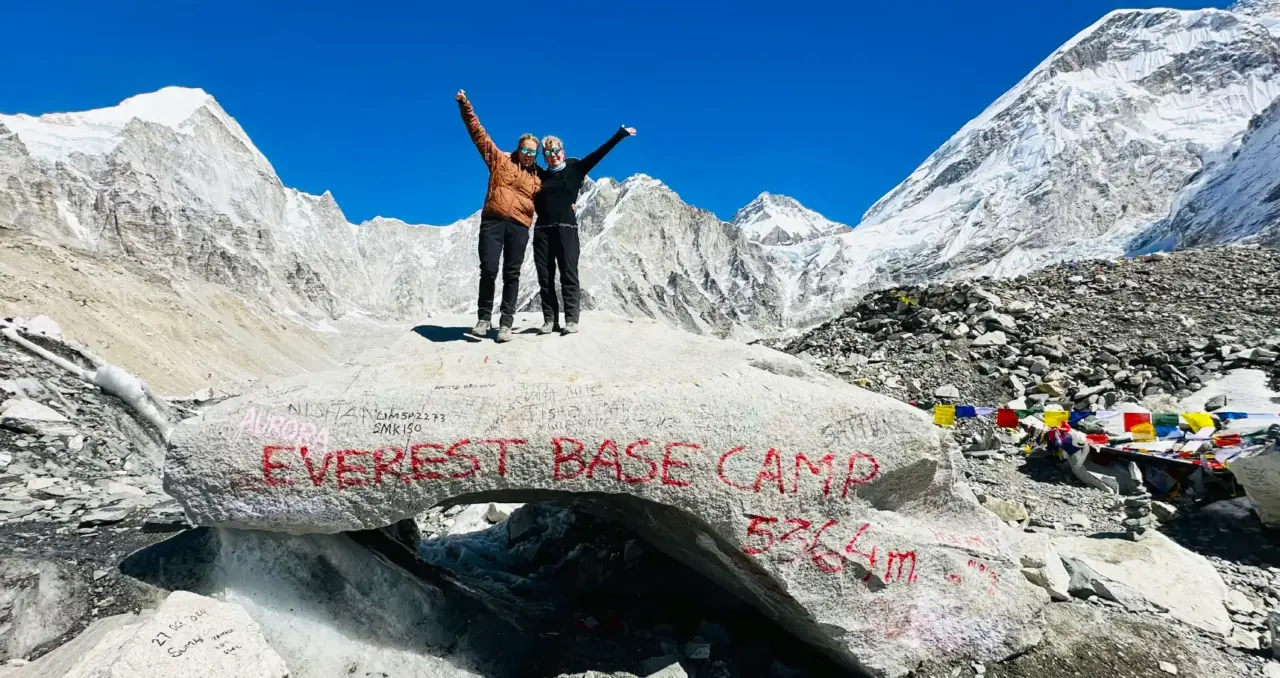
On this journey, trekkers reach a maximum altitude of 5,364 meters at Everest Base Camp and 5,545 meters at Kala Patthar viewpoint. You get to experience the Sherpa culture and Buddhist landmarks along the way, including Sherpa villages, museums, and ancient Tibetan monasteries.
You walk through the stunning subtropical lowlands, subalpine regions, and alpine landscapes, passing local Sherpa villages of the Everest region. While enjoying mountain views of Kusum Kanguru, Thamserku, Pumori, Khumbutse, Lhotse, and Nuptse, including the iconic Mount Everest (8848.86 m) on the trails.
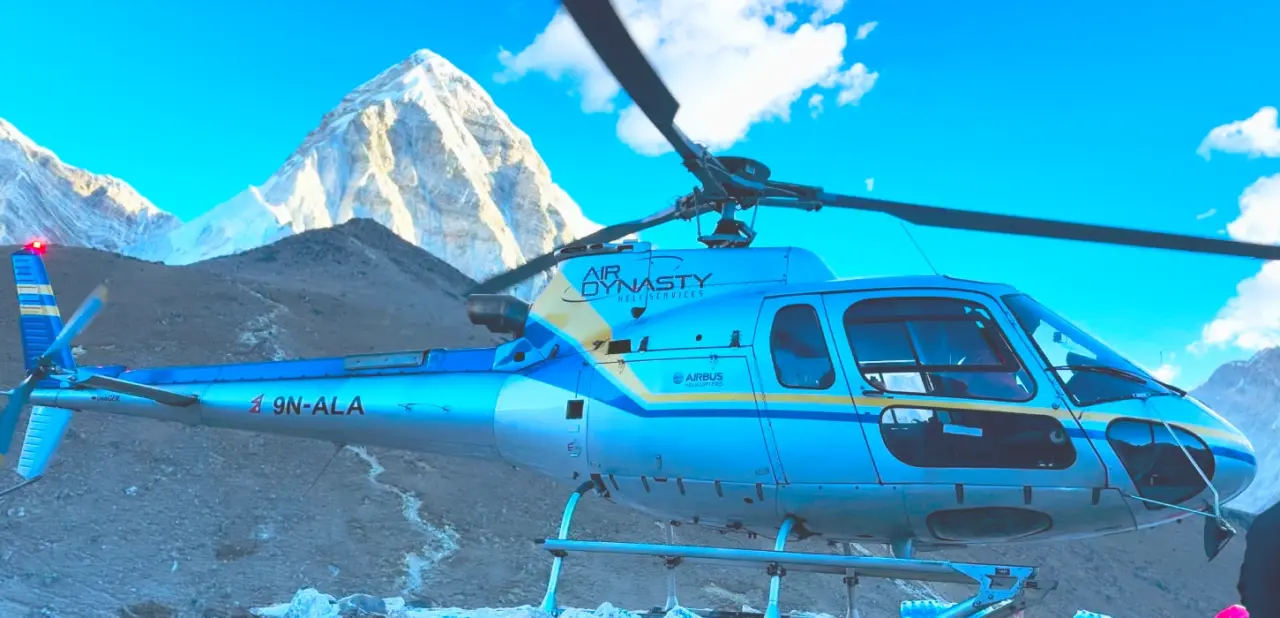
Apart from the return helicopter flight to Lukla, trekkers can experience everything a traditional EBC trek offers in this 12-day Everest with heli journey. More than that, a return flight is a great way to conclude your trip, while enjoying breathtaking aerial views of the mountains. It is a 15 to 20-minute flight in exchange for a 3-day exhausting downhill trek, significantly saving your valuable time.
What makes the blend of EBC trek with Heli return to Lukla Better?
Combining the classic trek and return to Lukla via helicopter balances out the multi-day high-altitude adventure with luxury and convenience. It cuts off 3 trekking days from the traditional Everest Base Camp itinerary, ending the journey with an iconic aerial experience above the high mountains and glaciers.
This expertly designed Everest Base Camp Trek with Helicopter Return to Lukla, by Explore Vision Nepal, is ideal for travelers with limited time who want the full Everest Base Camp and Kala Patthar experience. It’s also the perfect trip for those who don’t want to retrace the same trail after completing the trek to EBC and Kala Patthar. This itinerary offers a faster, more comfortable descent option for older trekkers, beginners, and anyone looking to minimize the physical demands of the EBC trek.
Everest Base Camp Trek with Helicopter Return to Lukla Difficulty
The Everest Base Camp Trek with Heli Return is rated moderate to difficult. Cutting out the return walk removes a big chunk of the physical strain, but the trek up to Everest Base Camp still follows the same classic trail, altitude, and terrain as the standard EBC trek. So while the helicopter ride back makes the overall trip noticeably easier, trekkers should still prepare for a genuine high-altitude Himalayan trek on the way in.
Most people find this trip very achievable and enjoyable as long as they respect a few basic rules of high-altitude trekking – go slow, stay hydrated, and give your body time to adjust. With a sensible pace and steady footing on the trail, the difficulty level of Ebc Heli return trek drops significantly and the journey becomes far more about the experience than the struggle.
Here are the main challenges you can expect on the Everest Base Camp Trek with Heli Return
High Altitude Trail and Altitude Sickness
The EBC heli return trek takes you to extreme elevations, including Everest Base Camp (5,364m) and Kala Patthar (5,545m), the highest point of the journey. From Dingboche onward, you will be trekking and sleeping above 4,000m for roughly four consecutive days, which is the stage where altitude sickness risk is highest. This is the most common difficulty trekkers report on the EBC trail. Walking at a slow, steady pace, drinking enough water, dressing in proper layers, and keeping a positive mindset all go a long way in helping your body acclimatize and avoiding altitude-related problems on the Everest Base Camp trek with Heli Return journey.
Uphill and Downhill Trekking Demands
Even with a heli return, you will still walk the classic route to Everest Base Camp, around 6 to 7 hours a day on trails that mix steep climbs, descents, and uneven rocky sections. The Namche Bazaar climb, the ascent to Tengboche, the Lobuche-to-EBC stretch, and the early morning Kala Patthar hike are generally considered the toughest parts of the trek. That said, trail conditions across the Khumbu region have improved a lot in recent years, thanks to ongoing maintenance work, and the well-marked, well-kept paths make the trek noticeably more manageable than it used to be.
Food and Accommodation on EBC Heli Return Trek
Compared to other trekking regions in Nepal, the Everest region offers relatively good food and lodging, though it’s worth setting realistic expectations. Lower down the trail, in places like Lukla and Namche Bazaar, you will find comfortable teahouses with proper rooms, attached bathrooms, and even a bit of modern comfort. Higher up, facilities become simpler, most guesthouses have shared bathrooms rather than attached ones, which can take some adjusting to for first-time trekkers.
Teahouses along the route typically serve a decent variety of Nepali and continental meals, and you can usually order from a proper menu. As you gain altitude, though, appetite naturally drops and meal options become simpler, this is a natural effect of high altitude on the body, often, not a reflection of the quality of service at the teahouses.
The good news is that teahouse standards across the Khumbu are steadily improving year after year, and most trekkers are pleasantly surprised by the level of comfort available even at high elevation.
Why book with Us (EVN) for the EBC Heli Return Trek journey
Local Operator with Khumbu expertise: Based directly in Kathmandu, Explore Vision Nepal has built on decades of firsthand, ground-level experience in every trekking region, including the Everest region.
Highly experienced and licensed trekking guides: Every journey is supported by government-licensed, English-speaking, local Sherpa guides trained in safety, first aid, and altitude sickness prevention.
Young, dedicated, customer-oriented team: From your inquiry, arrival, and trekking journey to departures at the airport, our team provides responsive, attentive support to ensure your mountain logistics and overall trip run smoothly.
Flexible booking and customizable itineraries: Every itinerary is tailored to standard needs. However, understanding that every trekker handles high altitudes differently and has different preferences, itineraries are easily customizable according to your needs. You can add extra days, side trips, or adjust flight schedules to it.
Complimentary Trekking Gear and Services: At Explore Vision Nepal, we provide our clients with a down jacket for cold weather, a warm sleeping bag, a company t-shirt, a trekking map of the Everest region, and a certificate of trip completion, ensuring a comprehensive trekking experience in Nepal


Outline Itinerary of Everest Base Camp Trek with Helicopter Return to Lukla – 12 Days
Day 01: Kathmandu Arrival (Tribhuvan International Airport – TIA) 1400M/4,592Ft
Day 02: Fly from Kathmandu or Ramechhap to Lukla (2,860M/9,380Ft) and Trek to Phakding (2,610M/8,560Ft), Distance: 8 Km, Duration: 3-4 Hours
Day 03: Trek from Phakding to Namche Bazaar (3,440M/11,285Ft, Distance: 11-12 Km, Duration: 7 Hours
Day 04: Acclimatization Day at Namche, Hike to Hotel Everest View (3,880M/12,725Ft) and Back to Namche Distance: 4 Km, Duration: 4 Hours
Day 05: Trek from Namche Bazaar to Tengboche (3,860M/12,660Ft), Distance: 10-11 Km, Duration: 7 Hours
Day 06: Trek from Tengboche to Dingboche (4,410M/14,465Ft). Distance: 11-12 Km, Duration: 6 Hours
Day 07: : Acclimatization Day at Dingboche, Hike to Nangkartshang Peak (4,700m–5,083m/16,672ft) and Back, Duration: 3-4 Hours
Day 08: Trek from Dingboche to Lobuche (4,910M/16,105Ft), Distance: 09 Km, Duration: 6-7 Hours.
Day 09: Trek from Lobuche to Gorakshep (5,164M/16,937Ft) and Everest Base Camp (5,364M/17,594Ft) Then Return to Gorakshep, Distance: 11-12 Km, duration: 7-8 Hours
Day 10: Early morning hike to Kala Patthar (5,545M/18,187Ft) and return to Gorakshep, Distance: 4 Km, Duration: 3 Hours, Then Helicopter flight back to Lukla, Duration: Gorakshep-Lukla: 15 Min.
Day 11: Fly from Lukla to Kathmandu or Ramechhap
Day 12: Farewell | Departure
Trip Highlights
- Start your journey with a thrilling flight from Kathmandu/Rammechap to Lukla, also known as Tenzing Hillary Airport.
- Trek through a UNESCO World Heritage Site, Sagarmatha National Park, home to a wide variety of Himalayan wildlife and the tallest mountain in the world.
- Spend an extra day in one of the largest Sherpa settlements in the Khumbu region, Namche Bazaar. It is a lively village, with local markets, cafes, museums, and a monastery to explore.
- Engage with native Sherpa culture inside high-altitude settlements like Namche Bazaar, Tengboche, and Pangboche, including historic monasteries like, Tengboche Monastery.
- Experience a side trip to the popular Everest View Hotel and witness the first panoramic mountain view of the journey with Mt Everest, Lhotse, Thamserku, Kongde, and Ama Dablam.
- Watch the first golden rays of the sun hit Everest, Nuptse, Changtse, and Ama Dablam from the highest viewpoint in this journey, Kala Patthar.
- Enjoy another side hike, from Dingboche to Nangkartshang peak for stunning panoramas of mountains including Makalu (8,485m), the fifth highest mountain in the world.
- Pass through the Thukla (Dugla) Pass, a place connected to the historic sentiments of mountaineers who lost their lives with the dream of summiting Everest. The area has a set of small stone chortens dedicated to them.
- Conquer Everest Base Camp, live your moment, and get to the closest base of Mount Everest. Explore the base camp, walk around, and witness the stunning Khumbu glacier at a distance.
- Return with a scenic flight from Gorakshep to Lukla with the high views of the trails you moved on and the mountains you saw at a distance.
Itinerary Overview of Everest Base Camp Trek with Helicopter Return to Lukla – 12 Days
The Everest Base Camp Trek with Helicopter Return journey begins from Kathmandu, with a short flight to Lukla. From there, you start your trek along the Dudh Koshi River valley to Phakding. Continuing, you travel through the dense subtropical forests of the Khumbu region, pass through suspension bridges, and reach Namche Bazaar. It is a bustling village in the region where you have an acclimatization day and take a side trip to Everest View Hotel before ascending higher.
Leaving Namche, the route descends to Phungi Tenga village from Kyangjuma and ascends through rhododendron forests to Tengboche. Then, you pass through Pangboche to the village of Dingboche. Here, you stay another day to acclimatize with a steep hike up to Nangkartshang Peak, the only viewpoint on this route from where you can see Mount Makalu. Ascending further, the trail is barren and enters the alpine zone, leading to Lobuche via Thukla Pass.
Climbing higher, you make the final push to Gorakshep and Everest Base Camp. Conquering EBC, you return to Gorakshep for a night. The next morning, you ascend to Kala Patthar and witness a breathtaking sunrise over Mount Everest, Nuptse, Ama Dablam and other Himalayan peaks. After the sunrise experience, you return to Gorakshep and take a flight back to Lukla. Marking the end of your 12-day Everest Base Camp Trek with Helicopter Return to Lukla, you take a flight back to Kathmandu on the following morning.
Everest Base Camp Trek with Helicopter Return to Lukla – 12 Days Itinerary
01
Day 01: Kathmandu Arrival (Tribhuvan International Airport – TIA) 1400M/4,592Ft
Welcome to Nepal, the country of the Himalayas! As you land at the airport and step off the plane, you will feel a sensation of thrill, excitement, and energy. Our representative from Explore Vision Nepal will be waiting for your arrival with a warm welcome and a company logo signboard in hand. From there, you will be transferred to your hotel.
Once you check in at the hotel, you can rest for a while. Later, we will have a trip meeting together, where we will provide you with detailed information about the trip. You are free to ask any questions and discuss the trip plan and expectations. At the same time, we will provide you with complimentary gear, including a duffel bag, down jacket, sleeping bag, t-shirt, trekking map, and more. Afterward, unpack your luggage, freshen up, make your final preparations for the trip, and take some rest!

Activity: Drive - 30 Min.

Max. Altitude: 1,400m/4,593ft. (Kathmandu )

Accommodation: Hotel
02
Day 02: Fly from Kathmandu or Ramechhap to Lukla (2,860M/9,380Ft) and Trek to Phakding (2,610M/8,560Ft), Distance: 8 Km, Duration: 3-4 Hours
Early in the morning, you transfer to Tribhuvan International Airport for a scenic 35-minute flight to Lukla. During peak season, flights operate from Manthali Airport in Ramechhap. So, you take a 4 to 5 hours drive from Kathmandu, a short 15 to 20 minute flight, and reach Lukla, Tenzing Hillary Airport.
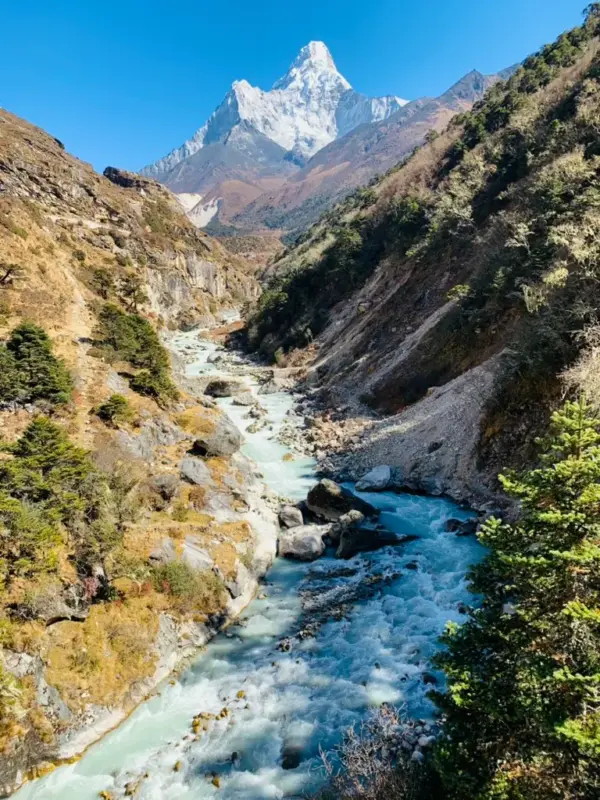
From Lukla, you pass under the Pasang Lhamu Sherpa Memorial gateway, the start of the Everest Base Camp Trail. It begins with wide stone steps descending through the Pine, fir, and Rhododendron Forests. It is mostly downhill with short uphill along the Dudh Koshi River. Continuing, you can see Mount Kusum Kanguru at a distance and pass by the first mani walls engraved with Buddhist mantras, reaching Chheplung village.
Then, it passes through other villages such as Thado Koshi and Ghat. The scenery is filled with dense forest, water streams, and terraced farms growing potatoes and buckwheat. Crossing your first suspension bridge, you arrive at Phakding, a picturesque riverside village.
Activity: Trekking
Max. Altitude: 2,610m/8,563ft. (Phakding )

Meal: Breakfast, Lunch, Dinner
Accommodation: Guesthouse
03
Day 03: Trek from Phakding to Namche Bazaar (3,440M/11,285Ft, Distance: 11-12 Km, Duration: 7 Hours
Following paths along the Dudh Koshi River, you take short ascents and descents through forests. On the way, you pass through small villages like Toktok and Benkar. Passing these villages, you get your first glimpse of Mount Thamserku. Then, on arriving in Monjo, you enter Sagarmatha National Park. Descending from the village, you reach Jorsalle and follow the rocky trails ahead.
Continuing, you cross Hillary Suspension Bridge, a high double bridge held roughly 135 meters directly above the river. After that, the path is a steep climb through heavy pine forest for 2 to 3 hours, gaining about 600 meters to Namche Bazaar.
Halfway up, you reach Top Danda (Everest Viewpoint), where you get your first peek at Mount Everest before a checkpoint. It marks the completion of the tiring climb to Namche Bazaar, also known as the Sherpa Capital of the Khumbu region.
Activity: Trekking
Max. Altitude: 3,440m/11,286ft. (Namche Bazaar)
Meal: Breakfast, Lunch, Dinner
Accommodation: Guesthouse
04
Day 04: Acclimatization Day at Namche, Hike to Hotel Everest View (3,880M/12,725Ft) and Back to Namche Distance: 4 Km, Duration: 4 Hours
The hike starts with stone steps from Namche Bazaar, then heads steeply up in a zigzag trail toward the ridge above the village. As you climb out, you reach Syangboche Airstrip, a dirt runway. Continuing, the trail is steady uphill for the first hour. While you are on the trail, you get stunning views of the village behind you and Mount Kongde Ri on the right, across the valley.
From Syangboche, the terrain opens and gets windy, with juniper bushes and dwarf rhododendrons. The trail is plain as it approaches the Everest Hotel View, a popular viewpoint for the first panoramic mountain with Mt. Everest, Lhotse, Ama Dablam, Thamserku, and Taboche. After relaxing at the point, you return to Namche Bazaar along the same route. In the remaining time, you can explore local bakeries, gear shops, cafés, or the local Sherpa museum and photo gallery.
Activity: Hiking
Max. Altitude: 3,440m/11,286ft. (Namche Bazaar )
Meal: Breakfast, Lunch, Dinner
Accommodation: Guesthouse
05
Day 05: Trek from Namche Bazaar to Tengboche (3,860M/12,660Ft), Distance: 10-11 Km, Duration: 7 Hours
Leaving Namche, the hike begins gently through the Cliffside, high above the river valley. On the way, you get stunning views of Ama Dablam, Everest, Lhotse, and Thamserku. You might spot local Himalayan wildlife such as Danfe (Nepal’s national bird) or Himalayan Tahr. Reaching Sanasa, the route begins a long descent through rhododendron and pine forests, reaching the riverbank village of Phunki Tenga.
Continuing, you cross the suspension bridge and take a steep, restless climb up through dense forest for about 2 to 3 hours, gaining altitude of around 600 meters to Tengboche village. Entering the Tengboche hilltop, the terrain opens to close-up views of Ama Dablam, Everest, Lhotse and Nuptse behind the ridge.
Passing through the stone mani walls, you reach the entrance to Tengboche monastery. It is the largest Tibetan Buddhist monastery in the Khumbu region, surrounded by the alpine meadows and snowcapped peaks. And all the guesthouse at Tengboche located near the Monastery, you will spend night in one of those with the Mount Everest and monastery view.
Activity: Trekking
Max. Altitude: 3,860m/12,664ft. (Tengboche )
Meal: Breakfast, Lunch, Dinner
Accommodation: Guesthouse
06
Day 06: Trek from Tengboche to Dingboche (4,410M/14,465Ft). Distance: 11-12 Km, Duration: 6 Hours
You start by descending from Tengboche through birch, conifer, and rhododendron trees. Then, reach a riverbank and cross a suspension bridge over the Imja Khola, gradually ascending along the stone path toward Pangboche. Entering upper Pangboche, the vegetation completely disappears and is replaced by dry open meadows. Along the way, Ama Dablam beautifully dominates the view.
Continuing, the views spread with Lhotse and Nuptse mountains. In the middle, you pass by Somare village, crossing at 400-meter elevation. The path turns into a dry trail with handmade stone walls built to protect barley and potato crops. After a 1.5 to 2 hour gradual flat and uphill walk, you reach a dry, rocky area with a massive Island Peak (Imja Tse) view right ahead of you, Lhotse to the north, Taboche and Cholatse over the valley on the left, entering the picturesque village of Dingboche, where you are staying two nights’.
Activity: Trekking
Max. Altitude: 4,410m/14,469ft. (Dingboche)
Meal: Breakfast, Lunch, Dinner
Accommodation: Guesthouse
07
Day 07: : Acclimatization Day at Dingboche, Hike to Nangkartshang Peak (4,700m–5,083m/16,672ft) and Back, Duration: 3-4 Hours
After breakfast at the guesthouse in Dingboche, the hike begins on a zigzagging, rocky trail with thin air, ascending above Dingboche village. The trail today is dry, dusty, and rough, with a steep ascent throughout.
Along the hike, you will see the Imja Valley spreading out toward stunning Mount Lhotse. Importantly, this is one of the few sections on the trek where you will get a chance to see Mount Makalu (8,485 m), the fifth-tallest mountain in the world. Along the way, you will pass several rest stops marked with prayer flags, each offering a stunning 360-degree panoramic view of Ama Dablam, Lhotse, Nuptse, Taboche, Cholatse, and Makalu.
We recommend hiking to about 4,700–4,800 meters today, rather than going all the way to the top at 5,083 meters. Gaining elevation too quickly can sometimes cause altitude sickness. So if you are feeling strong and energetic and want to continue to the top, you can coordinate with your guide. After spending some time at whichever point you reach, you will turn back down the same path to Dingboche, enjoying different-angle views of Kangtega and Thamserku along the way. In the afternoon, you can rest and explore the village.
Activity: Trekking
Max. Altitude: 4,410m/14,469ft. (Dingboche Village)
Meal: Breakfast, Lunch, Dinner
Accommodation: Guesthouses
08
Day 08: Trek from Dingboche to Lobuche (4,910M/16,105Ft), Distance: 09 Km, Duration: 6-7 Hours.
You leave Dingboche and continue along the EBC trail. The initial walk is a long gradual uphill and flat across open valley, Lobuche peak ahead of you and Taboche and Cholatse on the right. Crossing near Pheriche Pass, you reach the small settlement of Thukla (Dughla) and climb up to Thukla Pass (Dughla Pass), the climb from Thukla to Thukla top is the difficult part of walking today. You can see the entire valley and stunning Mt. Ama Dablam from the top.
At the top of Thukla Pass, there is a memorial ground for the mountaineers and Sherpas who lost their lives on Mount Everest, including legends such as Scott Fischer and Babu Chiri Sherpa. Continuing, views widened to Pyramid Peak of Pumori, along Nuptse and Lingtren, leading to the remote village of Lobuche, Nepal.
Activity: Trekking
Max. Altitude: 4,910m/16,109ft. (Lobuche )
Meal: Breakfast, Lunch, Dinner
Accommodation: Guesthouse
09
Day 09: Trek from Lobuche to Gorakshep (5,164M/16,937Ft) and Everest Base Camp (5,364M/17,594Ft) Then Return to Gorakshep, Distance: 11-12 Km, duration: 7-8 Hours
This is your major day on the Everest Base Camp Trek with Helicopter return to Lukla. You leave early from Lobuche on a rocky trail that passes through the edge of Khumbu Glacier. The terrain turns glacial with the mountain views of Pumori, Lingtren, Nuptse, and Khumbutse. Reaching the Changri Shar Glacier crossing, you get your first view of the Gorakshep settlement.
At the village (Gorakshep), you drop off your belongings and push toward the Base Camp of Everest. To the base, you trek alongside snow-capped peaks and frozen glaciers on the zigzagging ups and down trail. At Everest Base Camp, soak in the atmosphere, celebrate with your fellow trekkers and support team, and click photos to take back memories back home. After spending some time there, exploring mountains view around, Khumbu Icefall and Khumbu glacier, you return along the same route to Gorakshep (Gorak Shep) to stay overnight, which is the last night you are spending in the high altitude.
Activity: Trekking
Max. Altitude: 5,164m/16,942ft. (Gorakshep )
Meal: Breakfast, Lunch, Dinner
Accommodation: Guesthouse
10
Day 10: Early morning hike to Kala Patthar (5,545M/18,187Ft) and return to Gorakshep, Distance: 4 Km, Duration: 3 Hours, Then Helicopter flight back to Lukla, Duration: Gorakshep-Lukla: 15 Min.
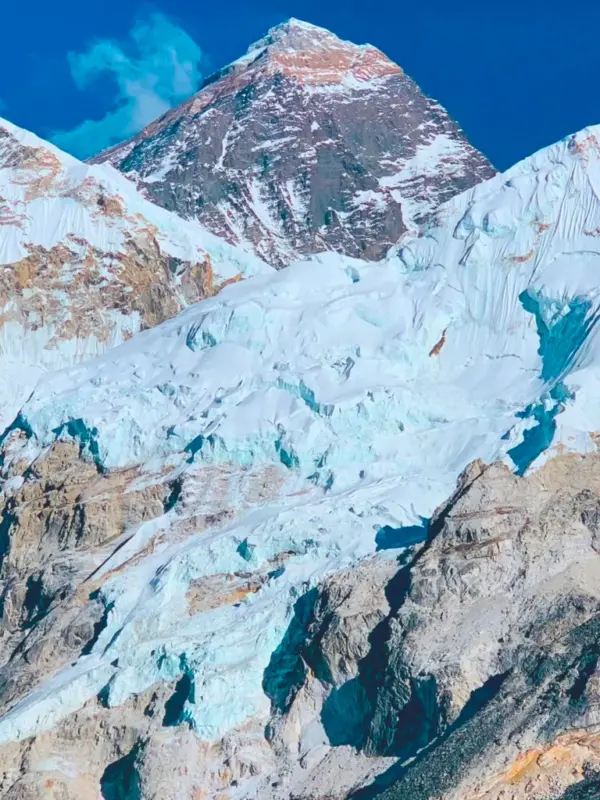
Early in the morning, you start hiking steeply, directly behind Gorakshep. The trail consists of non-stop zigzag sections, gaining around 380 meters in altitude. As dawn approaches, the dark sky slowly begins to lighten. Reaching the summit of Kala Patthar, you can watch the sunrise over Mount Everest as it rises slowly behind the ridges of Everest, Nuptse, and Lhotse. This offers the most beautiful up-close view of Mount Everest, the Western Cwm, and the South Col available to trekkers. Likewise, trekkers can witness the golden glow of Mount Pumori, Lingtren, Khumbutse, Changtse, Ama Dablam, Kangtega, Taboche, Cholatse, and Thamserku during sunrise from Kala Patthar, one of the best Himalayan viewpoints in Nepal.
After enjoying the Kalapatthar summit views, you return to Gorakshep, enjoy a warm breakfast, and pack your gear before getting ready for the helicopter flight to Lukla. You will walk to the nearby helipad above Gorakshep village and take off toward Lukla. During the flight, enjoy dramatic aerial views of the Khumbu Glacier, Everest Base Camp, the Khumbu Icefall, and the Ama Dablam ridge.
Within a few minutes, the helicopter descends into the valley, flying over the trails and villages, Lobuche, Tengboche, Namche Bazaar and Phakding, that took you over a week to climb. You will witness the landscape transition from alpine terrain to a river valley. Landing at Tenzing Hillary Airport, you will have skipped three days of downhill trekking entirely. Depending on your arrival time in Lukla, you can explore the town and celebrate the completion of your trip with the team.
Activity: Hiking | Flight
Max. Altitude: 2,860m/9,383ft. (Lukla )
Meal: Breakfast, Lunch, Dinner
Accommodation: Guesthouse
11
Day 11: Fly from Lukla to Kathmandu or Ramechhap
Today you take 30-minute flight back to Kathmandu. Or, if it is peak trekking season (Spring and Autumn), you take a Lukla flight to Manthali Airport in Ramechhap, as civil aviation authorities reroute to avoid heavy traffic jams in Kathmandu. This is a shorter 15 to 20-minute flight followed by a 4 to 5 hours ride to Kathmandu.
Activity: Flight | Drive
Max. Altitude: 1,400m/4,593ft. (Kathmandu)
Meal: Breakfast, Lunch, Dinner
Accommodation: Hotel
12
Day 12: Farewell | Departure
After accomplishing a memorable EBC Heli Return Trek, today we will drop you off at Tribhuvan International Airport for your international departure. Your guide or a representative from our team will pick you up at the hotel, then drop you off 3 hours before your scheduled flight. Catch the final glimpses of Kathmandu’s alleys, stupas, temples, and prayer wheels on the drive.
At the airport, our representative will give you a short farewell send-off with a ‘see you next time.
Activity: Drive
Max. Altitude: 1,400m/4,593ft. (Kathmandu )
Meal: Breakfast

Note:
If you have a private group and prefer a personalized experience, we can organize a custom trip tailored to your requirements and group size, running it any day you choose.
Price Includes


Price Excludes

What's included?
- Airport Transfers: Private vehicle transfers between Tribhuvan International Airport and your hotel in Kathmandu, covering both arrival and departure.
- Kathmandu Accommodation: 2 nights at a best 3-star category hotel in Kathmandu with daily breakfast.
- Full-Board Trekking Meals: Breakfast, lunch, and dinner throughout the trek, accompanied by tea or coffee.
- Lodge Accommodation: Best available teahouse/lodge accommodation on a twin-sharing basis throughout the Everest Base Camp trekking route.
- Comfortable Room Facilities: Attached bathrooms with showers at Lukla, Phakding, and Namche Bazaar, and an attached toilet at Dingboche.
- Kathmandu/Ramechhap–Lukla Flights: Round-trip domestic airfare between Kathmandu or Ramechhap and Lukla, depending on the prevailing flight operation.
- Helicopter Return from Gorakshep to Lukla: Shared helicopter flight from Gorakshep to Lukla after completing the Everest Base Camp and Kala Patthar.
- Everest Trekking Permits: Sagarmatha National Park Entry Permit and Khumbu Pasang Lhamu Rural Municipality Permit.
- TIMS Card: Trekkers’ Information Management System (TIMS) registration and applicable fees (if required)
- Professional Trekking Guide: One experienced, government-licensed, English-speaking trekking guide to accompany and assist you throughout the trek.
- Porter Service: Porter support for carrying your main trekking duffel bag
- Trekking Staff Expenses: Guide and porter wages, meals, accommodation, transportation, required equipment, and accidental insurance are included.
- Trekking Equipment: Company-provided duffle bag, down jacket, and sleeping bag for use during the trek.
- Fresh Seasonal Fruit: Seasonal fresh fruit served after dinner during the trekking journey
- Trekking Map: A detailed Everest Base Camp trekking map for route reference during the journey.
- Company T-Shirt: Complimentary Explore Vision Nepal T-shirt.
- Trek Completion Certificate: Official trip achievement certificate upon successful completion of the trek.
- First Aid Support: A comprehensive first-aid medical kit carried by the trekking guide.
- Pre-Trek Briefing: Trek preparation and route briefing by our team before departure from Kathmandu.
- Permit and Documentation Assistance: Arrangement and processing of the required trekking permits and related paperwork.
- Government Taxes and Service Charges: Applicable government taxes, permit-related charges, and company service fees are included in the package cost.
What's not included?
- International Airfare: International flights to and from Nepal, including applicable airline taxes and fees.
- Nepal Entry Visa: Nepal visa fee payable upon arrival at Tribhuvan International Airport. Carrying the required amount in USD cash is recommended.
- Travel Insurance: Comprehensive travel insurance covering high-altitude trekking above 5,550 meters, medical treatment, and emergency helicopter evacuation.
- Personal Trekking Gear: Personal trekking clothing, footwear, trekking poles, gloves, sunglasses, backpacks, and other equipment not specifically listed under the inclusions.
- Additional Kathmandu Expenses: Accommodation, meals, beverages, and other services required in Kathmandu beyond the two included nights or outside the confirmed itinerary.
- Personal Expenses during the Trek: Bottled water, soft drinks, alcoholic beverages, snacks, chocolates, and other personal purchases.
- Hot Showers and Charging: Hot showers, Wi-Fi/internet access, mobile charging, and other additional lodge services where applicable.
- Unforeseen Expenses: Additional costs arising from illness, injury, early return, bad weather, flight delays or cancellations, road or airport closures, natural events, or other circumstances beyond our control.
- Tips and Gratuities: Tips for the trekking guide, porter, driver, and other supporting staff. Tipping is not mandatory, but it is customary and appreciated for good service.
Trip Information
Best Time for the Everest Base Camp Trek with Helicopter Return
Autumn (Late September to November): Especially October and November, skies are clear with excellent visibility of the mountains. Stable weather means fewer cancellations for Lukla flights and helicopter returns.
Spring (March to May): Especially April-May, these months have stable weather with warm temperatures and longer days. The rhododendron blooms beautifully on the lower trails and is filled with wildflowers, enhancing the scenic experience.
Note: As the itinerary for the EBC trek with heli return to Lukla is highly dependent on the weather, requiring good visibility and low wind, Autumn and Spring provide the most reliable timeline for this journey.
Accommodation on the Everest Base Camp Trek with Helicopter Return
On this EBC Heli Return Trek, you will have hotel accommodation in Kathmandu. We usually provide a 3-star hotel including breakfast as part of the trip plan, which can be upgraded to a 4-star or 5-star hotel as per your preference. Once you start proper trekking, you typically stay at teahouses (guesthouses), where you can get twin-sharing rooms (a single room for solo travelers) with two beds, pillows, a mattress, and blankets. In most places, the rooms are nice and cozy. Normally, there are no heated rooms available on the trail, unless you choose the upgraded service, Yeti Mountain Home and similar accommodation. The toilets are mostly shared, except in Lukla, Phakding, and Namche Bazaar.
Hot showers cost extra in some places and depend on solar or gas heating. Lukla, Phakding, and Namche have better shower facilities, while the higher villages offer gas geyser or bucket showers for an extra cost.
Charging electronics is available in dining halls in most places, but charging in your room may be available in Lukla, Phakding, and Namche. Charging devices also costs extra at higher altitudes, above Tengboche. Wi-Fi is decent in Lukla, Phakding, Namche, Tengboche, and even Dingboche. We suggest you carry a power bank or extra batteries for your electronic devices on the trek
Stop by Stop accommodation at Everest Base Camp trail and Lukla
- Lukla: It is a busy gateway village with many standard lodges and guesthouses with better facilities.
- Phakding: There are simple basic standard teahouses in the villages, with a decent food variety.
- Namche Bazar: It is the Sherpa capital of the Everest region, you can find many standard Hotel and lodges with Wi-Fi and charging electronics widely available here.
- Tengboche: The teahouses are basic, near the monastery, with good facilities for mid-altitude. Hot showers are available here for an extra fee.
- Dingboche: It is a stone-walled farming village with basic teahouses and mid-range facilities. Hot showers are available here at an extra cost and in the separate room.
- Lobuche: This is a high-altitude village with basic teahouses, basic facilities, and limited options. Hot showers are rare at an additional cost.
- Gorakshep: It is the last and essential stop on the Everest trail for the base camp and Kala Patthar, with the most basic teahouses and no luxury option.
Alternative Treks for Everest Base Camp Trek with Helicopter Return
Everest Base Camp Heli Trek 11 days: On this journey, you walk all the way to the Everest Base Camp and the iconic Kala Patthar, ascending through Phakding, Namche, Tengboche, Dingboche, Lobuche and Gorakshep. Then, instead of staying in Lukla like the EBC trek with heli return to Lukla, on this journey you fly to Lukla, followed by another flight to Kathmandu on the same day.
Everest Base Camp Helicopter Tour 01 day: It is ideal for travelers who want to experience the majesty of Everest without trekking and for those with minimal time. A one-day heli tour to Everest Base Camp offers a completely effortless alternative, making it accessible to all age groups.
In a single morning, you take a flight from Kathmandu to viewpoints like Kala Patthar or Everest View Hotel, take multiple 360-degree panoramic views of Everest, Lhotse, and Ama Dablam, and return to Kathmandu.
14 days Everest Base Camp Trek: It is the traditional journey to Everest Base Camp, done on foot. You complete a full ascent to Everest Base Camp, Kala Patthar, and take a full descent back to Lukla. It requires physical and mental endurance and takes longer to complete. However, it offers the original Himalayan trekking experience while fully immersing in local mountain culture and is perfect for trekkers seeking the full classic journey.
Trip Reviews


Keep Exploring